


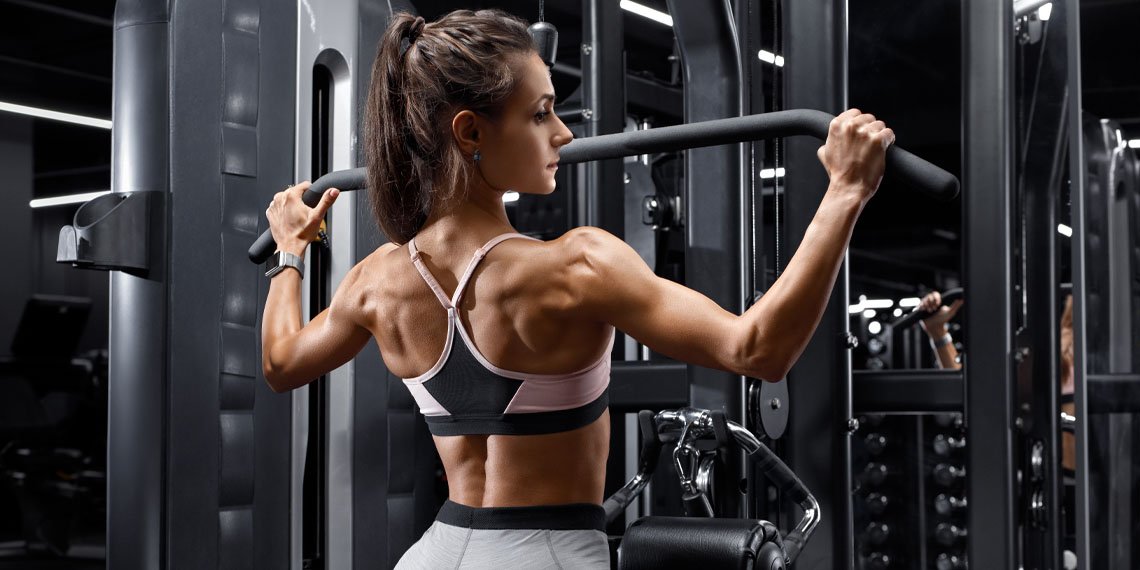
Modern society’s body standards, which emphasize both thinness and physical muscle tone, encourage unhealthy exercise and eating habits in both men and women. Although both genders internalize these pressures from internet platforms to the same extent, the psychological pathways that lead to risky behavior differ by gender. A study detailing these patterns was published in the journal Sex Roles.
Historically, researchers have assessed societal body standards as separate concepts for men and women. The classic cultural expectation for women was extreme thinness, prioritizing low body weight without emphasizing strength. What was expected of men was a very muscular and bulky physique. Now, these separate beauty standards have been unified into a focused body shape that researchers call the ideal fit, appealing to a wide range of demographics.
This new appearance standard requires very low body fat and significant muscle tone. Achieving this particular balance is biologically difficult for the average person. Getting super toned often requires a calorie surplus to build muscle mass, while staying super lean often requires a calorie deficit to burn fat. These physiological states are contradictory, making an ideal match an almost unattainable goal.
The rise of image-focused internet platforms has greatly facilitated this athletic aesthetic. Hashtags related to fitness motivation have millions of posts featuring people with toned bodies. Although often disguised as health-promoting content, these images typically prioritize physical attractiveness over actual well-being. Consuming this type of media puts pressure on users to conform to an aesthetic that is largely out of reach.
Over time, individuals may absorb these external standards and adopt them as their own personal goals. This psychological process is known as internalization. To better understand how modern exercise standards impact internalized physical and mental health, a team of Australian and Canadian researchers designed a new psychological study.
The team was led by behavioral researcher Robin Rowe of Australia’s Griffith University, and colleagues Caroline Donovan, Laura Ullman, Kyle T. Ganson, and Timothy Piatkowski. They wanted to test a sociological framework that explains how media and peers influence an individual’s body image.
This framework suggests that social pressure outwardly leads people to compare their bodies to others. Eventually, they absorb cultural norms as personal requirements. This internal pressure is thought to foster extreme dissatisfaction with one’s own appearance. That dissatisfaction ultimately leads to disordered eating and compulsive workout habits as you desperately try to change your body shape.
Lu and his team conducted a series of psychological surveys with 288 adults living in Australia. The average age of the participants was approximately 23 years. Approximately 70 percent of the group identified as female. The majority of the group was active on image-heavy internet platforms such as Instagram and TikTok, and many reported engaging in weight training on a weekly basis.
The survey asked participants to rate the level of pressure they felt from peers and social media regarding their appearance. Participants also answered questions designed to measure how often they compared their bodies to others and how deeply they had absorbed the ideal of fit as a personal goal. Another section of the survey quantified how dissatisfied participants were with their physical characteristics.
Finally, the researchers measured the extent to which participants engaged in harmful behaviors to achieve a lean, muscular body. One measure assessed compulsive exercise and identified people who felt extreme guilt when they stopped exercising, or who exercised despite illness or physical injury. Another measure assessed disordered eating patterns specifically aimed at gaining muscle, such as obsessively tracking protein intake and feeling high anxiety about food.
After collecting survey responses, the team used statistical modeling techniques to review the data. This mathematical approach allows researchers to map out a series of relationships between different psychological factors. Rather than simply determining whether two things are related, statistical models help determine whether one factor predicts a second, which in turn predicts a third. The researchers created separate models for the men and women in their study.
Mathematical models reveal that men and women absorb ideal fit to about the same extent. In both groups, higher social media exposure predicted a stronger internal desire to obtain a toned and toned body. This finding confirmed the researchers’ hypothesis that sports aesthetics represent a common goal that transcends gender today. Beyond this common starting point, the psychological pathways linking media exposure and risky behavior have diverged.
For women, the path from social pressure to harmful habits included multiple interconnected steps. Both social media and peer interactions strongly predicted that women would compare their bodies to others more often. These comparisons, along with an internalized desire to be healthy, predicted higher levels of body dissatisfaction at regular intervals. As women become less satisfied with their bodies, they are increasingly reporting poor eating habits aimed at building muscle.
Interpersonal dynamics played a uniquely visible role among the women studied. Peer pressure not only fostered body dissatisfaction through external comparisons, but was also a direct predictor of muscle-focused eating disorders. Women were more likely to engage in strict aesthetic diets when they felt pressured by friends and acquaintances about their appearance. This suggests that women are under increased scrutiny regarding their fitness goals within their immediate social networks.
Statistical models for men painted a unique picture. Just like women, men have also felt pressure from internet platforms to imbibe the toned and muscular standard. But unlike in women, this internal drive directly predicted compulsive exercise and poor eating habits, skipping the intermediate stages of body dissatisfaction. For male participants, feeling the need to achieve an ideal, regardless of how they currently felt about their bodies, was deeply associated with compulsive behavior.
Moreover, interpersonal dynamics do not seem to determine men’s behavior in the same way. The statistical paths linking peer pressure to body image concerns and unsafe eating habits were particularly weak in the male group. Broad cultural messages on the internet appear to be the main driver of these men’s extreme fitness habits.
The researchers highlighted several limitations to their study. Because the data were collected at a single point in time, this study cannot conclusively prove that one psychological factor causes changes in another. The participants were also relatively small, consisting mainly of women and mostly university students of European descent. The authors recommended that future studies include more diverse groups to see whether these patterns hold true across different demographic backgrounds.
Additionally, the sample was restricted to individuals strictly identified within the binary categories of male or female. This limitation means that the findings do not capture the experiences of nonbinary, genderqueer, or genderfluid individuals. People outside the traditional gender binary often face unique social pressures regarding body image, making this area ripe for expanded research.
Ultimately, this study shows that modern sports aesthetics are not a neutral or universally healthy concept. Although this standard appears to be the same for everyone on the surface, public health efforts may need to respond differently to different audiences. Programs designed to help women may need to focus on navigating social comparisons and peer groups. Conversely, education for men may be more successful by directly addressing how digital media content changes individual aspirations.
The study, “Who Fits in? Gendered Effects of Fit Ideals on Body Image and Behavior,” was authored by Robyn Louw, Caroline Donovan, Laura Uhlmann, Kyle T. Ganson, and Timothy Piatkowski.
