


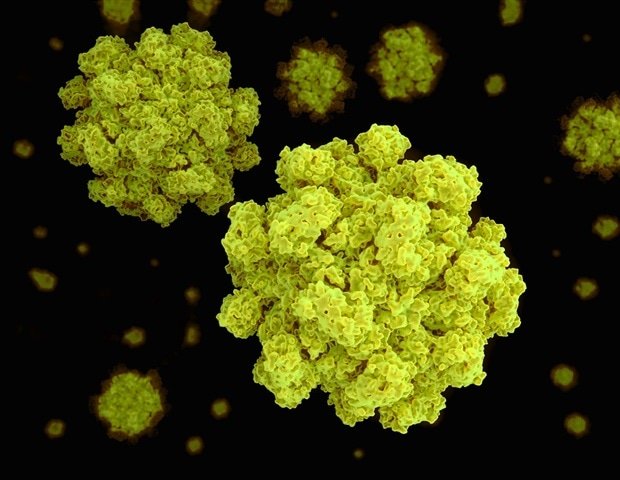
Norovirus is an all-too-common disease, as it is the leading cause of viral gastroenteritis around the world. The apparent digestive upset, not to mention its notoriously contagious reputation, has earned it the nicknames “winter vomit bug” and “stomach flu.”
Despite millions of dollars spent on research, there is still no vaccine or antiviral drug for norovirus.
But new research from Yale University offers important clues that may lead to future treatments. Researchers have discovered that to beat gastroenteritis, you have to fight it all the way to your gut.
The findings, published in the journal Science Translational Medicine, upend traditional vaccine development efforts that have focused on producing antibodies that fight noroviruses that circulate in the blood rather than colonizing the intestines.
Research shows that mucosal IgA (immunoglobulin A) antibodies are primarily present on mucosal surfaces of the body, such as the lungs, airways, intestines, and intestines, and provide important immune protection against norovirus.
Therefore, the path to a norovirus vaccine should focus on IgA production, which is gut-based immunity, the researchers say.
One of the big challenges with norovirus is the lack of a treatment or vaccine, but that’s not just due to a lack of investment. This is due to our limited understanding of the biology and immunology of norovirus infection. ”
Craig Wilen, lead study author, associate professor of laboratory medicine and immunobiology, Yale School of Medicine (YSM)
“Using a mouse model, we found that IgA is necessary and sufficient for protection against norovirus.”
The study was led by first author Arya ökten, who recently defended her Ph.D. Willen and in the laboratory of Joseph Kraft, the Paul B. Beeson Professor of Medicine (Rheumatology) and Professor of Immunobiology at YSM.
For this study, the researchers first measured the immune response during norovirus infection. They discovered that immunoglobulin G (IgG), the most common antibody in the blood that fights infections throughout the body, quickly appears. Intestinal IgA, on the other hand, developed much more slowly.
They then used genetically engineered mice to discover that while B cells (immune cells that produce antibodies) and IgA are essential to fight norovirus, CD8 T cells (specialized immune cells that identify and destroy infected cells) are not.
They then examined reinfection with norovirus and found that while previously infected mice were largely protected, mice genetically engineered to lack IgA lost protection. Looking for a way to harness IgA-mediated immunity, the researchers collaborated with Ted Crider, an assistant professor of medicine at the University of Pennsylvania. Together, they engineered mRNA lipid nanoparticles to produce anti-norovirus IgA.
This was found to completely protect the mice from norovirus infection.
This discovery opens the door to a potential norovirus treatment strategy that uses mRNA technology to deliver protective IgA antibodies directly to the intestine. In healthy adults, norovirus infection may need to last several weeks before the gut generates a strong protective IgA response on its own, the researchers noted. IgA can be a powerful treatment for immunocompromised patients with chronic infections that persist for weeks to years.
“We are currently exploring ways to test norovirus vaccine candidates that elicit an IgA response,” Willen said. “This is a new immunological approach to viruses.”
sauce:
Reference magazines:
octen, AB, others. (2026). IgA is necessary and sufficient to prevent norovirus infection in mice. scientific translational medicine. DOI: 10.1126/scitranslmed.aeb4878. https://www.science.org/doi/10.1126/scitranslmed.aeb4878
