


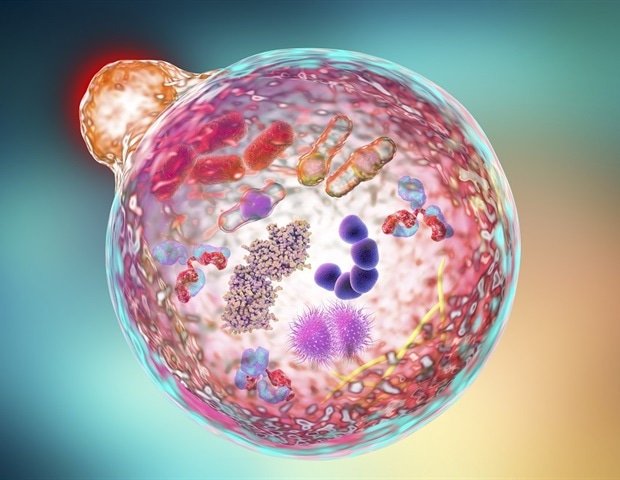
The immune system relies on molecular alarms that sense danger within cells. One of these alarms is STING (short for “stimulator of interferon genes”). STING helps cells respond to infections, DNA damage, and cancer. When activated at the right time, it protects the body. If it is activated too easily or if it fails, it can cause disease.
STING controls several immune responses, including the production of type I interferon, an antiviral molecule that helps coordinate immune defenses. It also controls inflammatory signals and a process called non-canonical autophagy that helps cells respond to stress and infection. Despite its importance, scientists still do not fully understand how the different parts of STING control these activities.
A team led by Andrea Ablasser at EPFL has created the first comprehensive map showing how nearly every possible single amino acid change affects STING in humans. The study, published in the journal Nature, reveals how different regions of proteins control immune signaling and how small genetic changes can change protein behavior.
The researchers used a technique called “deep mutation scanning.” They generated thousands of STING mutants, each with a different single amino acid substitution, and tested their effects in living cells. This allowed us to measure how each variant affected interferon signaling and non-canonical autophagy.
A mutation screen revealed that STING activity is regulated by many regions distributed throughout the protein. Some mutations activated STING without its normal trigger, while others weakened the response to cGAMP, a natural molecule that turns on STING after cells detect misplaced DNA.
Using this information, the researchers were able to identify both known regulatory sites and previously unknown regions that help keep STING inactive under normal conditions.
To understand how these mutations work, the research team used cryoelectron microscopy to determine the structures of several hyperactive STING mutants. This revealed that different mutations can shift STING into different signaling states. Some promote the formation of large filamentous aggregates associated with activation, while others alter key molecular interactions within the protein.
The study also found that STING is not a simple on-off switch. Some mutations selectively affect certain immune responses, while others remain. One mutation preserved interferon signaling but strongly impaired features of noncanonical autophagy. In other words, the different functions of STING depend on different molecular mechanisms and cellular locations.
The researchers then compared the functional map to a human genetic database. Their data helped identify a previously unrecognized variant that increases STING activity and provided evidence that rare STING variants found in patients with inflammatory lung diseases can cause excessive immune signaling. They also found that cancer-associated STING mutations tend to reduce STING activity, suggesting that some tumors may benefit from attenuating this pathway.
This study provides a resource for interpreting genetic mutations found in patients and provides new insights into how immune signaling is regulated. More broadly, we show how large-scale mutational mapping reveals the molecular rules governing complex proteins involved in human health and disease.
sauce:
Federal Institute of Technology Lausanne (EPFL)
Reference magazines:
Chan, B. others. (2026). Mutational landscape of STING-induced immunity. nature. DOI: 10.1038/s41586-026-10685-3. https://www.nature.com/articles/s41586-026-10685-3
