


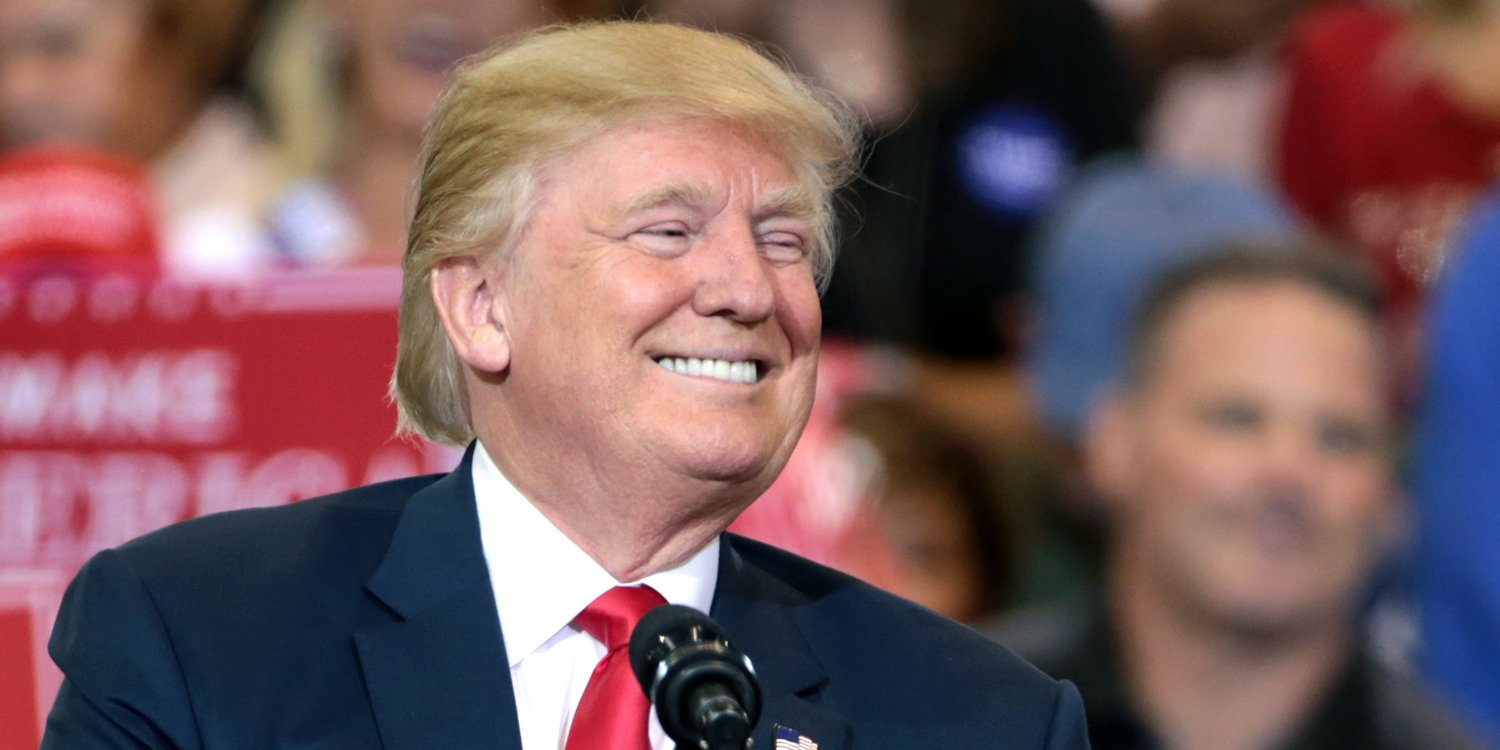
Recent research published in American behavioral scientist It suggests that a person’s political identity influences how they interpret the meaning behind a smile. The findings indicate that some people view smiling primarily as a way to build social connections, while others, especially those who identify with the Republican Party, tend to see smiling as a tool for managing social hierarchy. These insights provide evidence that party affiliation shapes not only voting habits but also how people decipher basic human facial expressions.
Smiling is generally considered to be a simple expression of happiness. However, psychological research suggests that smiling is a complex behavior that serves multiple social purposes. Rather than simply reflecting an inner emotional state, a smile serves as a means of communicating a person’s social intentions. The meaning of a smile changes slightly when the facial muscles move differently.
Some smiles have the function of promoting social bonds and rewarding others. These expressions help people build alliances and feel comfortable in diverse or newly formed groups. A smile that indicates social bonding shows that the person is approachable, friendly, and willing to work together as equals.
Other smiles serve an entirely different purpose of helping individuals manage social hierarchy. These smiles can assert dominance, establish boundaries, or indicate submission within a competitive environment. People may use a hierarchical smile to show superiority or appease someone with more power.
Because political campaigns are highly social events, politicians constantly use nonverbal cues to connect with potential voters. Political leaders may smile and welcome new supporters to their coalition government. Leaders may also use other types of smiles to project strength against political opponents or respond to external threats.
Studying these facial expressions can help reveal the true nature of politicians and the people who support them, said Patrick Stewart, a political science professor at the University of Arkansas and lead author of the study.
“In the real world of politics, you want to know who your leaders are, and the best way to accomplish that is to closely observe their actions, not just what they say,” Stewart explained. “But perhaps most importantly, understand your followers and what they want from a leader. After all, there is no leader without followers.”
The authors designed this study to see whether everyday voters expect smiles to have different functions depending on their political beliefs.
“More specifically, there is a bit of a gap in research in the field of political science,” Stewart says. “A recent cross-cultural research study by the Niedenthal Institute for Emotions inspired me to replicate and extend their findings that different cultures view smiles as serving different purposes.”
Past cross-cultural research has shown that historically diverse societies tend to rely on smiling for social bonding. The authors wanted to test whether different political groups in the United States behave like different cultural communities with their own nonverbal expectations.
“That the homogeneity or heterogeneity of an individual’s surroundings, in other words, that seeing the United States as having different cultures, depending on how many different and unique people one encounters on a regular basis, is reflected in political identity may help us understand how and why political differences exist,” Stewart told Cypost.
To explore this dynamic, Stewart and colleagues surveyed a nationally representative sample of 1,385 U.S. adults. They collected this data just before the 2024 presidential election. The sample included diverse participants across different age groups, ethnicities, and income levels.
Participants completed an online survey asking them to rate 15 different reasons why someone would smile. Participants rated each reason on a 7-point scale ranging from “strongly disagree” to “strongly agree.” These statements were specifically chosen to represent either egalitarian ties or competitive hierarchies.
Some statements focused on social bonds. For example, participants rated whether they thought people smile to make someone feel comfortable, to indicate friendly intentions, or to accept someone as an equal. Other statements focused on hierarchy and control. These include assessing whether a person laughs to manipulate someone, to show a sense of superiority, or to hide feelings of inferiority.
The survey also asked participants to provide demographic information. This includes age, gender, ethnicity, and income bracket. Most important to the study, participants reported their political ideology on a scale from liberal to conservative. They also reported their party name and which candidate they planned to vote for in the upcoming presidential election.
When researchers analyzed survey responses, they grouped the data to find underlying patterns. They found that participants’ responses generally fell into two broad categories. One category supported social bonds as the main reason for smiling, and the other supported social class management as the main motive.
The authors found that Republican identification was the strongest and most consistent predictor of how people viewed smiling. Participants who identified as Republicans were significantly more likely to endorse hierarchical control as a reason for smiling compared to non-Republicans. This relationship remained consistent even after researchers took into account various demographic factors such as age, gender, and income.
The researchers also looked at intentions to vote for Donald Trump and general conservative political ideology. Both factors were associated with seeing smiling as a tool for managing social hierarchy. However, these associations were much smaller than those with Republican identity.
This particular finding suggests that belonging to a defined political party may shape emotional interpretations more strongly than general political beliefs. Party identification serves as a powerful social signal that guides expectations about interpersonal interactions. Stewart explained that growing up in a close-knit, homogeneous community often shapes this hierarchical view of social interactions.
“When you grow up and live in a small community where everyone knows everyone else and everyone has a ‘place’ in the power structure, you don’t have to smile to show that you’re friendly and cooperative. You have to show that you know who has power and who doesn’t,” Stewart said. “And this worldview influences how individuals approach public interest, or politics.”
In contrast, living in a highly diverse environment tends to promote bond-focused interpretations of smiles.
“On the other hand, if you grew up in an environment that interacted with new people and changed regularly, you would want to appear non-threatening and even supportive to others in order to open up opportunities that wouldn’t normally exist,” Stewart said.
She added that dealing with constant social change can lead to relying on smiling as a tool for emotional regulation and connection.
“And because there’s a certain amount of uncertainty with this lifestyle, you’re probably feeling a little more anxious and wanting to change how you feel in a positive way,” Stewart explained. “As a result, you’ll probably smile more or laugh more, both of which are contagious behaviors that make others feel good and help you connect with others. And these behaviors, and the perspectives that come with them, will be reflected in your political identity.”
These environmental and cultural differences provide a basis for understanding broader political divisions across the country.
“In short, culture influences our behavior and underlying psychology, which in turn influences our approach to politics,” Stewart says. “And for societies to survive and thrive, they need a combination of stability in managing power relationships and openness in building collaborative relationships.”
Scientists also discovered an unexpected relationship with age. Younger participants were slightly more likely to interpret smiles through the lens of social class and control. The older the participants, the less likely they are to view smiling as a tool for control or manipulation.
The authors propose that younger generations may be more sensitive to power dynamics because they are more involved in digital communications. In an age dominated by social media, young people constantly navigate complex social environments that emphasize subtle rankings and influence. Because of this, young people may think of smiling not just as a spontaneous gesture of friendliness, but as a strategic behavior used to manage boundaries.
Although this study provides evidence of a link between politics and nonverbal communication, it does have certain limitations. The authors caution that the two categories of smile interpretations are not completely strict groupings.
Instead, viewing smiles as bonds and hierarchical relationships exists on a continuum. People may use both interpretations depending on the particular situation they find themselves in.
“When considering these findings, we encourage you to consider that these behaviors reflect the person’s expectations or preferred strategies for interacting with others, but not 100 percent,” Stewart said. “Life is always changing, so the strategies we use when dealing with others change based on our experiences, the people we’re dealing with, and the overall situation. But we all prefer interpersonal strategies that we developed early in life.”
Statistical grouping in the study essentially drew dividing lines into one large cluster of responses. As a result, the findings provide a broad descriptive overview of human behavior rather than strict categories.
The effect sizes for age and general political conservatism were relatively small. These factors only slightly changed a person’s view of the smile, especially when compared to the much larger influence of party identification. For this reason, the authors note that the findings regarding age should be treated as preliminary and suggestive.
The study also found sporadic associations for race and ethnicity. Although identifying as Black was sometimes associated with higher odds of endorsing a class-focused smile, this finding was not consistently robust across all statistical models. More targeted data collection is needed to fully understand how ethnicity intersects with nonverbal expectations.
Looking ahead, the researchers plan to continue investigating how context changes how people read facial expressions. Stewart said future research will aim to build on these fundamental concepts.
“It’s about building toward an understanding of people’s nonverbal behavior, whether it occurs in competitive situations, cooperative situations, or when people are unsure of what their situation is,” Stewart said. “Currently, my research team is coding the Epstein hearings for a variety of nonverbal behaviors, and smiling plays a key role.”
Continuing this line of research may help explain how nonverbal behavior silently shapes the balance of power in human societies. As long as humans engage in face-to-face politics, facial expressions will play an active role in how leaders build coalitions and manage rivals.
The study, “Follower Expectations Regarding Smile Function During the 2024 Presidential Election Reflects Political Identity,” was authored by Patrick Stewart, Austin D. Eubanks, Megan Zingerman, and Annabelle Brooks.
