

Close Menu

    Subscribe to Updates

    Get the latest creative news from FooBar about art, design and business.

    What's Hot

    Overcoming Information Overload in 2026 Medical Research

    August 14, 2026

    The Urgent Gaps in Population Health: What Leaders Must Fix Now

    August 13, 2026

    The Growing Challenge of Treatment-Resistant Depression for Clinicians and Policymakers

    August 12, 2026
    Facebook X (Twitter) Instagram
    Facebook X (Twitter) Instagram
    Health Magazine
    • Home
    • Environmental Health
    • Health Technology
    • Medical Research
    • Mental Health
    • Nutrition Science
    • Pharma
    • Public Health
    • Discover
      • Daily Health Tips
      • Financial Health & Stability
      • Holistic Health & Wellness
      • Mental Health
      • Nutrition & Dietary Trends
      • Professional & Personal Growth
    • Our Mission
    Health Magazine
    Home » News » Advanced chip-based sensor identifies traumatic brain injury markers
    Discover

    Advanced chip-based sensor identifies traumatic brain injury markers

    healthadminBy healthadminJune 23, 2026No Comments4 Mins Read
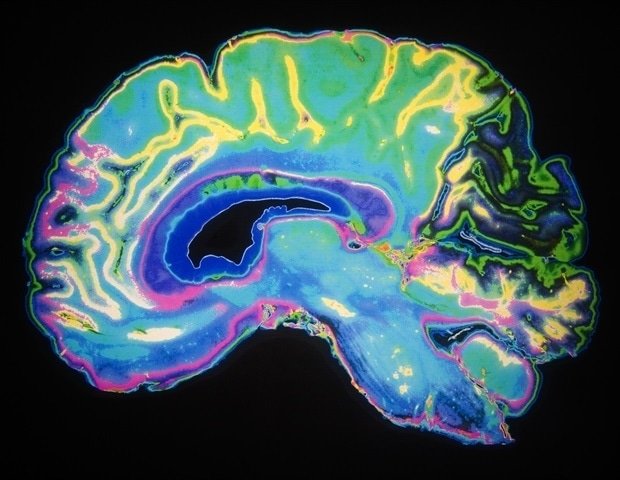
    Advanced chip-based sensor identifies traumatic brain injury markers
    Share
    Facebook Twitter Reddit Telegram Pinterest Email


    Researchers have developed a chip-based metasurface biosensor that can detect traumatic brain injury (TBI) biomarkers at extremely low levels. With further development, this technology could one day allow doctors to quickly diagnose the aftermath of a head injury, guide treatment, and provide early warning of complications as they occur.

    Metasurfaces are ultra-thin materials patterned with tiny features that can manipulate light in ways that traditional lenses cannot. Coating the metasurface with antibodies that bind to specific target molecules allows those molecules to be detected using light.

    Although several biomarkers have been validated as indicators of traumatic brain injury, current methods of measuring them are time-consuming and require multiple complex laboratory steps. To address this challenge, we developed a highly sensitive metasurface biosensor that can generate a clear and reliable optical signal even when only trace amounts of the biomarker are present. ”


    Guangyuan Li, Research Team Leader, Beijing Institute of Technology, Zhuhai, China

    in diary Optical Materials ExpressA team co-led by Li and Yunhui Liu from Shenzhen University of Technology CAS reports that the new sensor can detect the traumatic brain injury biomarkers glial fibrillary acidic protein (GFAP) and S100 calcium-binding protein beta (S100β) at levels as low as femtograms per milliliter (approximately 1/100 trillionth of a gram in one milliliter of liquid). This platform can also be adapted to create metasurface-based sensors that can detect multiple biomarkers simultaneously.

    “If this technology is developed into a point-of-care format, it could potentially provide faster and more accurate answers after brain injury, perhaps with just a finger prick,” Liu said. “This has the potential to reduce unnecessary CT scans for low-risk patients, while flagging high-risk patients early. It could also enable more accessible biomarker detection in ambulances, rural clinics, sports facilities, or time-critical emergency departments.”

    Creation of chip-based biosensors

    Detecting TBI biomarkers in a clinically useful manner requires sensors that are highly sensitive to small molecule concentrations. To achieve this, the researchers developed a metasurface biosensing device based on corrugated gold surfaces. Due to the high quality (high Q) elements, the reflection spectrum exhibits a very narrow dip when light hits the surface.

    When a target biomolecule binds to a functionalized surface, the local refractive index changes slightly, resulting in a shift in the dip wavelength. Because the dip is so narrow, even the smallest shifts can be identified, allowing ultra-sensitive detection.

    To create a high-Q corrugated gold surface, the researchers developed a manufacturing technique that reduces surface roughness and optical loss. They used a high-precision nanofabrication method to create periodic patterns.

    “We also developed a stable surface chemistry approach that allows us to specifically capture target molecules with low nonspecific adsorption, and an optical setup that collects spectra with a high signal-to-noise ratio,” Lee said. “These innovations have made it possible to create ultrasensitive biosensors in compact chips.”

    Highly sensitive traumatic brain injury biomarker detection

    To test the new platform, the researchers prepared two separate sensors functionalized with anti-S100β and anti-GFAP antibodies and measured each biomarker at concentrations ranging from 1 fg/mL to 100 ng/mL. Additionally, the non-targeted TBI biomarkers H‑FABP and UCH‑L1 were used as controls.

    This platform exhibited distinct concentration-dependent wavelength shifts and subfemtogram per milliliter detection limits for S100β and GFAP, with significantly greater responses to the targets than controls.

    The researchers note that while the manufacturing process for gold metasurfaces is scalable, it is also expensive. However, we are working to reduce costs. Improvements in packaging and fluid handling systems will also need to be developed, and the technology will need to be validated using more complex and clinically relevant samples before clinical use. Additional studies involving patient cohorts will also be required to assess the reproducibility, robustness, and real-world performance of the system.

    sauce:

    Reference magazines:

    Lin, S. Others. (2026). Ultrasensitive detection of traumatic brain injury biomarkers using high sensitivity Q optical metasurface. Optical Material Express. DOI: 10.1364/OME.601906. https://opg.optica.org/ome/fulltext.cfm?uri=ome-16-7-2151


    Source link

    Visited 11 times, 1 visit(s) today
    Share. Facebook Twitter Pinterest LinkedIn Telegram Reddit Email
    Previous ArticleZebrafish study shows how visual environment reshapes the eye’s retina
    Next Article Scientists finally uncover how H5N1 avian influenza was hiding in dairy cows
    healthadmin

    Related Posts

    Texas A&M researchers build AI tool for tuberculosis drug discovery

    July 30, 2026

    New ultrasound technology breaks blood-brain barrier to treat gliomas

    July 30, 2026

    Omalizumab wins multi-allergen oral immunotherapy in multi-food allergy trial

    July 30, 2026

    MAGFLO™ NGS beads: cost-effective nucleic acid purification

    July 30, 2026

    Qureight completes $20 million Series B funding

    July 30, 2026

    Cigarette smoke extract stimulates airway cells and increases nanoplastic damage

    July 30, 2026
    Add A Comment

    Comments are closed.

    Categories

    • Daily Health Tips
    • Discover
    • Environmental Health
    • Exercise & Fitness
    • Featured
    • Featured Videos
    • Financial Health & Stability
    • Fitness
    • Fitness Updates
    • Health
    • Health Technology
    • Healthy Aging
    • Healthy Living
    • Holistic Healing
    • Holistic Health & Wellness
    • Medical Research
    • Medical Research & Insights
    • Mental Health
    • Mental Wellness
    • Natural Remedies
    • New Workouts
    • Nutrition
    • Nutrition & Dietary Trends
    • Nutrition & Superfoods
    • Nutrition Science
    • Pharma
    • Preventive Healthcare
    • Professional & Personal Growth
    • Public Health
    • Public Health & Awareness
    • Selected
    • Sleep & Recovery
    • Top Programs
    • Weight Management
    • Workouts
    Popular Posts
    • 1773313737_bacteria_-_Sebastian_Kaulitzki_46826fb7971649bfaca04a9b4cef3309-620x480.jpgHow Sino Biological ProPure™ redefines ultra-low… March 12, 2026
    • pexels-david-bartus-442116The food industry needs to act now to cut greenhouse… January 2, 2022
    • 1773729862_TagImage-3347-458389964760995353448-620x480.jpgDespite safety concerns, parents underestimate the… March 17, 2026
    • 1774403998_image_28620e4b6b0047f7ab9154b41d739db1-620x480.jpgGait pattern helps distinguish between Lewy body… March 24, 2026
    • 1773209206_futuristic_techno_design_on_background_of_supercomputer_data_center_-_Image_-_Timofeev_Vladimir_M1_4.jpegMulti-agent AI systems outperform single models… March 11, 2026
    • Leukemia-620x480.jpgBiomimetic platform powers CAR T therapy for… March 9, 2026

    Demo
    Stay In Touch
    • Facebook
    • Twitter
    • Pinterest
    • Instagram
    • YouTube
    • Vimeo
    Don't Miss

    Overcoming Information Overload in 2026 Medical Research

    By healthadminAugust 14, 2026

    Strategies for clinical researchers and medical professionals to navigate the surge of 2026 medical research breakthroughs, including cancer vaccines, GLP-1 therapies, and AI adoption in trials.

    The Urgent Gaps in Population Health: What Leaders Must Fix Now

    August 13, 2026

    The Growing Challenge of Treatment-Resistant Depression for Clinicians and Policymakers

    August 12, 2026

    The Core Problem with 2025-2030 DGAs for Clinical Practice

    August 11, 2026

    Subscribe to Updates

    Get the latest creative news from SmartMag about art & design.

    HealthxMagazine
    HealthxMagazine

    At HealthX Magazine, we are dedicated to empowering entrepreneurs, doctors, chiropractors, healthcare professionals, personal trainers, executives, thought leaders, and anyone striving for optimal health.

    Our Picks

    The Core Problem with 2025-2030 DGAs for Clinical Practice

    August 11, 2026

    The Urgent Health Risks from Climate Change and Pollution

    August 10, 2026

    AI-Powered Wearables and Telemedicine Trends Driving Adoption

    August 9, 2026
    New Comments
      Facebook X (Twitter) Instagram Pinterest
      • Home
      • Privacy Policy
      • Our Mission
      © 2026 ThemeSphere. Designed by ThemeSphere.

      Type above and press Enter to search. Press Esc to cancel.