


An ancient genome found in a Siberian tomb reveals that plague was already deadly in small hunter-gatherer communities, reshaping ideas about when and how deadly infectious diseases first emerged.

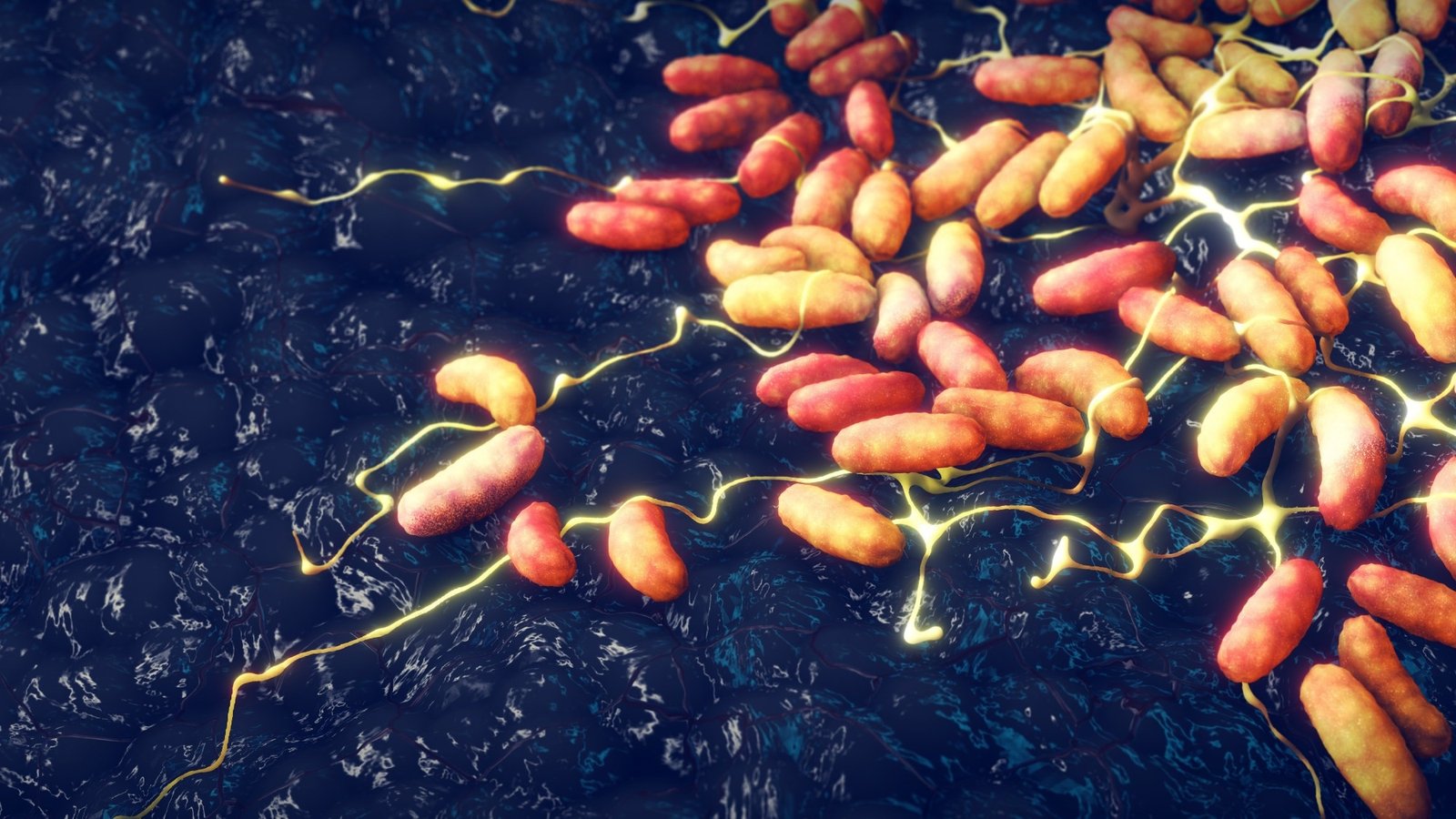
Research: 5,500 years ago, a deadly plague broke out among the hunter-gatherers of Lake Baikal. Image credit: nobeastsofierce / Shutterstock
In a recent study published in the journal naturea group of researchers investigated the origins, transmission patterns, genetic characteristics, and effects on mortality of early Y. pestis infections in prehistoric hunter-gatherer communities near Lake Baikal in Siberia.
background
Could there have been devastating outbreaks of plague long before the advent of cities, agriculture, and dense human settlements? Plague is one of the deadliest infectious diseases in human history, best known for events such as the Black Death.
Previous ancient deoxyribonucleic acid (DNA) studies had identified early plague strains in prehistoric Europe, but their ability to cause severe disease remained unclear because they lacked some of the virulence genes associated with later bubonic plague. Understanding how early strains of plague spread can help track the evolution of plague transmission.
About research
The researchers examined ancient human remains found in four hunter-gatherer cemeteries near Lake Baikal in southeastern Siberia: Ust-Ida I, Shumilka, Bratsky-Kamen and Serovo. They used shotgun sequencing on DNA from 46 Late Neolithic individuals spanning two modeled occurrence ranges, 5520–5265 and 5315–4235 (cal years BP), with the most likely range for the late stage estimated at approximately 5050–4850 cal years BP, to generate genetic data. They were then tested for the presence of infectious agents, with a particular focus on the identification of Yersinia. Yersinia pestis (bacteria that causes plague).
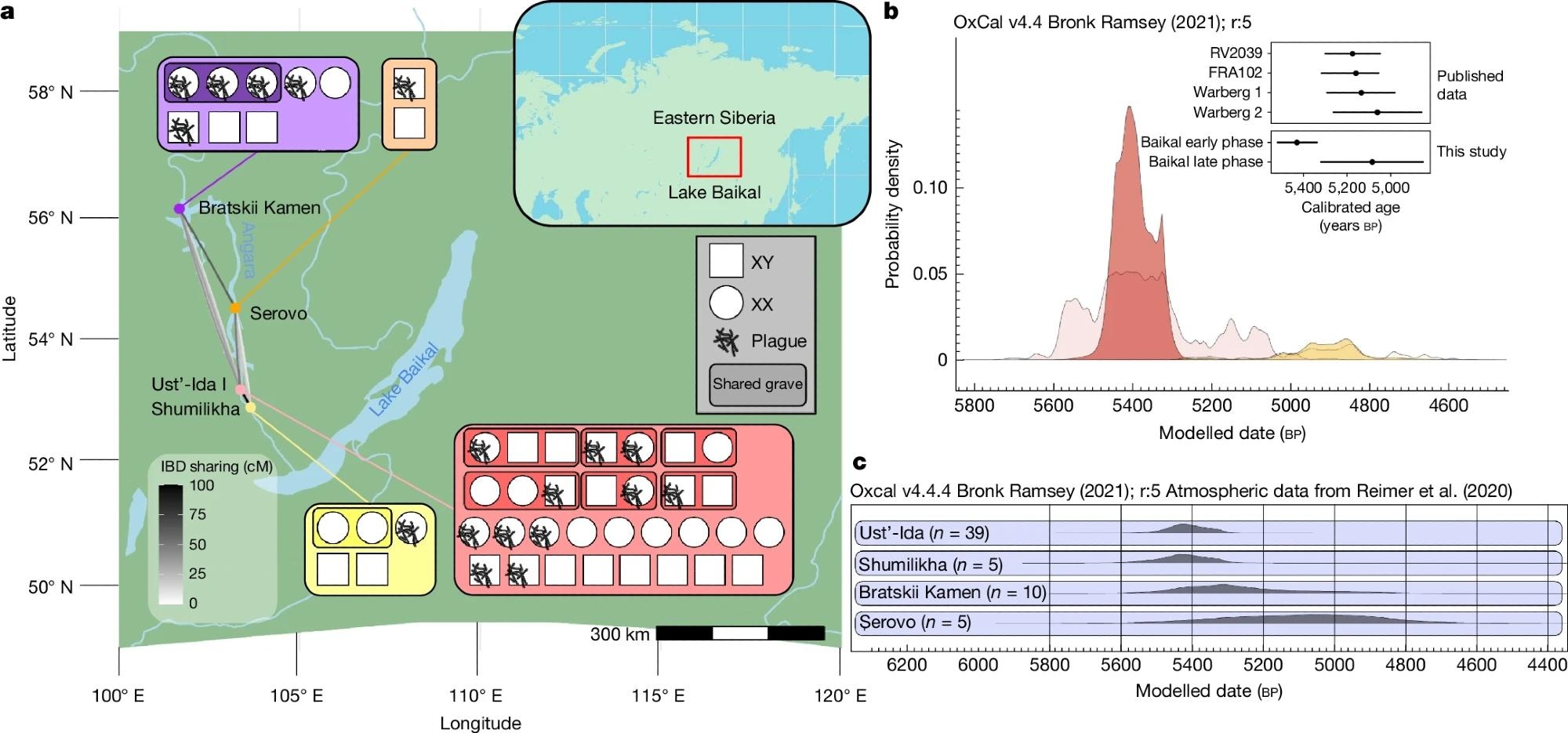
belocation of affected cemeteries along the Angara River northwest of Lake Baikal, and IBD sharing among sampled residents of cemeteries (pairwise sharing lines between sites. Grayscale ramps indicate total IBD sharing in segments of more than 3 centimorgans (cM) with a total of more than 10 cM in pairwise relationships between sites. Insets represent individuals sampled at each site (31 Ust’-Ida I, 8) Bratsky Kamen, 2 Serovo, 5 Shmilha), the detection of plague is indicated, and the common grave indicated by the shaded area around the individual. This is a map created using Natural Earth data. bGrain density estimates plotted within a Bayesian model for the date range of the early (red) and late (dark yellow) stages of the plague epidemic in Lake Baikal. The light shaded area corresponds to the total probability distribution before modeling. The dates used are for individuals identified as Plague only. The inset shows the 95.4% confidence interval for the modeled date range in Lake Baikal compared to data for other epidemic cases before the LNBA: RV2039 in Latvia, Warburg 1 and Warburg 2 in Germany, and FRA102 in Sweden. cNuclear density estimates modeled the radiocarbon age distribution of the four cemeteries for all radiocarbon-dated postweaning-age humans (or associated deer tooth pendants), regardless of DNA sampling. Radiocarbon age modeling was performed using OxCal v.4.4.4.
Radiocarbon dating was performed to establish the age of burial and developmental stages. Human genomic data was also examined to reconstruct biological relationships between individuals and identify family groups affected by infectious diseases. In addition to investigating the demographic structure of the population using mortality profiles by age and sex, identity analysis by lineage was also performed to assess patterns of kinship.
The researchers studied the evolution of the pathogen by reconstructing ancient genomic records from individuals infected with plague and comparing the results with prehistoric and modern Yersinia genomes. They used phylogenetic analysis combined with Bayesian dating and genome sequence comparisons to identify evolutionary relationships and establish the timing of plague’s emergence. Other aspects of their research include investigating pangenomic variation around the classic plague virulence genes, plasmids, and ypm loci, and utilizing pangenomic methods to investigate the virulence of ancient strains. Archaeological records, burial customs, and burial patterns were used to build a picture of the epidemiological impact of plague on hunter-gatherer societies.
Research results
This study revealed an unexpectedly high detection rate of plague infection among sampled individuals. Traces of Yersinia pestis were detected in 18 out of 46 people, corresponding to a detection rate of approximately 39%. The infected individuals were distributed across four cemeteries and belonged to two different stages of the outbreak, approximately four to six centuries apart. The data suggest that the two recorded developmental stages were not isolated events and affected hunter-gatherer populations around Lake Baikal.
Genomic studies show that the Lake Baikal strain diverged ancestrally from known clades of ancient and modern Y. pestis lineages. Because these strains diverged before all ancient and modern strains of plague had been identified to date, they help limit the origins of plague to around 5,700 years ago or earlier, indicating that the bacterium appeared earlier.
By examining genetic relationships between people, researchers found that many infected people belong to closely related families. Some of the graves that contained infected relatives, such as siblings, cousins, nephews and aunts, and groups of young children, were spatially close to each other and the modeled radiocarbon dates associated with those individuals were also similar. This clustering of transmission within families and by radiocarbon dates is consistent with the hypothesis that plague spread rapidly within a community over a short period of time. This data did not prove a specific route and was consistent with person-to-person transmission, potentially via pulmonary infection.
Mortality patterns provided strong but indirect evidence that these outbreaks were deadly. The two cemeteries where multiple plagues were detected had unusually high child mortality rates compared to hunter-gatherer burial sites in other regions. Mortality peaked in children aged approximately 7.5 to 11 years, but deaths among young adults were relatively rare. The demographic profile differed significantly from expected mortality patterns in comparable prehistoric populations.
Genetic testing of the pathogen revealed that the ancient strain lacked the Yersinia murine toxin (ymt) gene and the YpfΦ prophage. Both of these are important in the transmission of classic flea-borne bubonic plague. However, these strains carried the Yersinia pseudotuberculosis-derived mitogen (ypm) gene, which encodes a potent superantigen that causes an exaggerated immune response. The detected ypm variant was closest in sequence similarity to the modern ypmA type, which is considered the most virulent ypm variant known, but the ancient sequence differed at three positions. This finding may partially help explain the disproportionately high mortality rates observed among young people, but the authors note that functional studies are needed to assess the actual impact of the variant.
The researchers also identified ancestral genetic traits that disappeared from later plague lineages, suggesting that early plagues had a unique combination of traits during the transition from Yersinia pseudotuberculosis to Yersinia pestis. Together, archaeological, demographic, and genetic evidence provides strong support for the conclusion that these early plague strains lacked the genetic adaptations associated with classic bubonic plague, yet were capable of causing severe disease and death.
conclusion
The study shows that an outbreak of deadly plague affected hunter-gatherer communities around Lake Baikal around 5,500 years ago, making it the earliest confirmed outbreak of plague to date. This suggests that dense agricultural societies and their large populations were not inevitable precursors to the spread of plague and other infectious diseases.
Epidemiological, ecological, and genetic evidence also shows that populations affected by these two developmental stages across the four cemeteries exhibited mortality patterns consistent with acute plague-related mortality, particularly in children, likely reflecting zoonotic spillover from wild rodent reservoirs, while also showing evidence consistent with human-to-human transmission.
The results provide important insights into the early evolution of Yersinia pestis and highlight the enduring importance of zoonotic diseases in shaping human history. Further research is needed to determine whether early plague strains caused significant mortality and how they spread within prehistoric human populations.
Click here to download your PDF copy.
Reference magazines:
- Macleod, R., Seersholm, FV, De Sanctis, B., Lieverse, A., Timpson, A., Schulting, R., Stenderup, JT, Gaunitz, C., Vinner, L., Goriunova, OI, Bazaliiskii, VI, Vasilyev, SV, Jessup, E., Wang, Y., Ramsey, C., Bronk, MG, Thomas, M. Corbett-Detig, R., Iversen, AKN, Weber, AW, Sikora, M., and Willerslev, E. (2026). 5,500 years ago, a deadly plague broke out among the hunter-gatherers of Lake Baikal. Nature. 654.697-705. Doi: 10.1038/s41586-026-10540-5, https://www.nature.com/articles/s41586-026-10540-5
