


Vegetation may reveal recent airborne PFA contamination that was missed by traditional soil monitoring
A new study finds that plants can act as sensitive indicators of recent PFAS contamination, detecting air pollution that may go unnoticed by traditional soil analysis. The study showed that potato leaves contained significantly higher levels of certain per- and polyfluoroalkyl substances (PFAS), commonly known as “forever chemicals,” than the surrounding agricultural soil, suggesting direct exposure through atmospheric deposition as well as root uptake.
The findings, published in the Journal of Hazardous Materials, show that vegetation may provide an early warning system for emerging PFAS contamination and complement traditional environmental monitoring methods.
Research investigating the movement of PFAS through agricultural ecosystems
This study HHebrew University of JerusalemAgricultural Research Organization (ARO) – Volcano Research Institute, Israel National Institute of Public Health, and Southern Research and Development Center (MOP Darom).
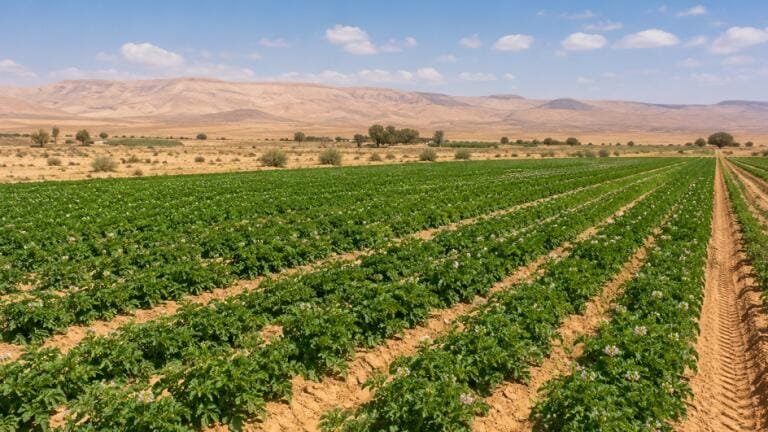
To investigate how PFAS move through agricultural environments, researchers analyzed soil, potato leaves, and potato tubers collected from agricultural areas in southern Israel. This region provided a unique opportunity to investigate environmental pollution under complex real-world conditions, including areas located near areas of active conflict.
PFAS were detected in all samples, but their distribution varied widely between soil, leaves, and edible plant tissues.
Potato leaves show much higher PFAS levels than surrounding soil
Researchers found that agricultural soils are primarily contaminated with PFAS associated with long-term sources such as treated wastewater irrigation and the use of biosolids. However, potato leaves were dominated by short-chain PFAS compounds, which are known for their ability to travel through the atmosphere.
In some locations, PFAS concentrations in potato leaves were hundreds of times higher than in nearby soil. This significant difference suggests that airborne PFAS deposition may be an important contamination pathway, allowing plants to absorb pollutants directly from the atmosphere.
The results show that while vegetation may capture recent environmental exposures, soil measurements often reflect years or even decades of accumulated pollution.
Could military activities be contributing to PFAS contamination in the air?
Although the study did not identify a specific source of contamination, the researchers noted that PFAS associated with military activities may be contributing to atmospheric deposition.
Potential sources include aqueous film-forming foam (AFFF), which is widely used in firefighting, and PFAS-containing materials associated with explosives, combustion processes, and military training activities.
Importantly, this study found no direct relationship between soil PFAS concentrations and distance from nearby conflict-affected areas. However, the increased concentrations detected in plant leaves compared to soil support the possibility that an airborne PFAS input is occurring.
The authors emphasize that further research is needed to identify specific emission sources and better understand how PFAS enter agricultural ecosystems through the atmosphere.
PFAS in edible potatoes remain relatively low
PFAS were detected in potato tubers, but concentrations were significantly lower than those measured in leaves. This finding is consistent with previous research showing that PFAS tend to accumulate more in plant leaves and roots, while their transfer to edible fruits, grains, and storage organs is generally more restricted.
This result provides additional evidence that above-ground plant tissue can serve as a valuable indicator of PFAS exposure in the environment without necessarily translating into high concentrations in harvested crops.
Why PFAS monitoring needs to go beyond soil testing
PFAS are a large group of synthetic chemicals used in products such as nonstick cookware, water-resistant coatings, food packaging, textiles, and firefighting foam. Because PFAS degrade very slowly, PFAS contamination is widespread in air, water, soil, food, and humans around the world.
PFAS are now routinely detected in most people’s blood, raising concerns about their long-term environmental and health effects.
New research highlights important challenges in environmental monitoring. That is, relying solely on soil testing can mask recent contamination events by past contamination. In contrast, vegetation may provide a more immediate snapshot of ongoing environmental exposure and deposition of air pollutants.
Plants could be an important tool for detecting PFAS contamination
Incorporating vegetation and air sampling into environmental monitoring programs could improve detection of new sources of PFAS contamination, researchers say.
The findings suggest that plants may act as sentinels in the natural environment and highlight recent PFAS contamination in the air that may be missed by traditional soil monitoring methods. As concerns about permanent chemicals continue to grow, vegetation-based monitoring can become an important tool for tracing contamination pathways, assessing environmental risks, and protecting agricultural landscapes.
This study demonstrates that plants can reveal recent PFAS contamination long before it becomes apparent in soil records. By capturing airborne pollutants directly from the atmosphere, plants provide unique insight into ongoing environmental processes and emerging sources of pollution. As researchers continue to investigate the movement of PFAS through agricultural systems, plant-based monitoring may play an increasingly important role in identifying contamination hotspots and improving environmental protection strategies.
