


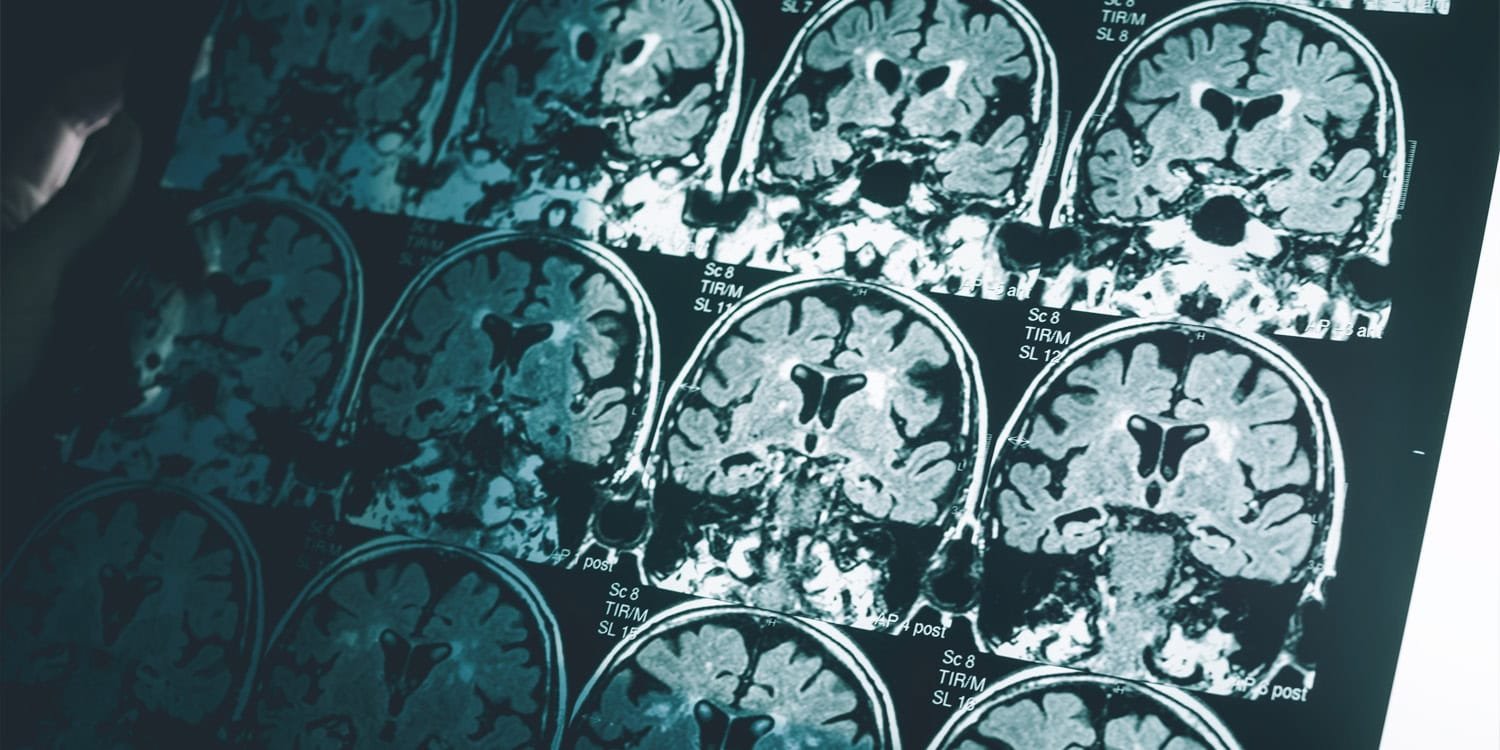
Higher levels of psychopathic personality traits reflect reduced thickness of the outer layers of the brain across multiple regions. This structural relationship holds true regardless of whether the adult male has a history of domestic violence or no criminal history at all. The findings were recently published in the scientific journal Aggression and Violent Behavior.
Psychopathy is a psychological condition characterized by specific personality traits and behaviors. People who score high on these traits often have a marked lack of empathy, a tendency to manipulate others, and a reduced ability to feel guilt and remorse. Psychologists typically divide conditions into two different categories to better understand them.
The first category includes interpersonal and emotional characteristics such as superficial charm, grandiosity, and failure to form deep emotional bonds. The second category is characterized by antisocial lifestyle behaviors, such as high impulsivity, a desire for stimulation, and a history of rule-breaking and delinquency. People with many of these characteristics are at increased risk for repeated episodes of persistent anger and violence.
Intimate partner violence is one such form of violence and involves physical, psychological, or sexual harm to a partner. Researchers are attempting to map the biological underpinnings of psychopathy to better understand the relationship between psychopathy and persistent aggressive behavior. Previous studies have looked at the brain structure of people with psychopathic traits, but few have focused specifically on men convicted of violence against their female partners.
Angel Romero Martínez, a researcher at the Department of Psychobiology at the University of Valencia, led a team that investigated how the physical anatomy of the brain correlates with these personality traits. The research team included colleagues from the University of Valencia and the La Fe Health Institute in Spain. They wanted to see whether the physical structures of the brain associated with psychopathic traits differ between perpetrators of domestic violence and nonviolent men.
Romero Martinez and his colleagues completed a systematic review of existing scientific literature before conducting their own experiments. They analyzed 29 published studies to find out which areas of the brain in adult men are most frequently associated with psychopathy. This initial step allowed us to focus on areas that consistently showed physical differences, such as decreased tissue volume or thinner layers.
The brain is covered by a folded outer layer known as the cerebral cortex, which is often packed with nerve cell bodies called gray matter. The thickness of this gray matter varies in different regions of the brain and changes depending on aging, genetics, and environment. Changes in cortical thickness are related to how well certain parts of the brain perform their functions, from memory to impulse control.
In an initial literature review, researchers pointed to specific frontal and temporal regions of the brain. The orbitofrontal cortex, a region located just behind the eyes, appeared to be particularly relevant because it helps integrate internal emotional signals and guide decision-making behavior. The insula, a region buried deep in the folds of the brain that helps us accept the perspective of others, appears repeatedly in the scientific literature.
Armed with these specific areas of interest, the researchers recruited 125 male participants for a physical brain scan study. The sample included 67 men who had been convicted of intimate partner violence and who were enrolled in a mandatory psychological intervention program. We also recruited 58 control participants from the surrounding community through advertising and social media.
The researchers rigorously screened the control participants to ensure they had no criminal history or any form of assault by an intimate partner. All participants in both groups were required to have no history of severe brain trauma, physical illness, or significant mental disorder outside the scope of the study. The men then took part in a structured interview to assess psychopathic traits using a tool known as the Revised Psychopathy Checklist.
During these interviews, experienced experts divided the men into two major categories of mental illness based on their answers and verified background information. After the behavioral assessment, participants visited the hospital and underwent magnetic resonance imaging scans of their brains. The image processor used a powerful magnetic field to create a high-resolution, three-dimensional map of each participant’s brain structure.
The researchers had automated software calculate the average thickness of gray matter in specific areas that they had previously identified. They then ran a mathematical model to see if there was a direct association between participants’ scores on the Psychopathy Checklist and the thickness of brain regions. They took into account variables such as age, education level, head size, and drug and alcohol use to ensure that these external factors did not skew the results.
Across all 125 men, higher total scores on psychopathic traits were mathematically correlated with thinner cerebral cortex in several key areas. The left orbitofrontal cortex, bilateral superior frontal gyri, and right dorsomedial prefrontal cortex all showed decreased thickness in men with higher traits. This pattern of reduced thickness was also present in the left insular cortex and right anterior cingulate cortex.
These inverse relationships were primarily caused by the first category of psychopathology, which deals with emotional isolation and interpersonal manipulation. The second category, dealing with antisocial lifestyle choices, was only correlated with thin left superior frontal gyrus. Decreased organization in these specific frontal and deep brain regions may explain why people high in psychopathic traits struggle to suppress emotions, predict behavior, and recognize the emotions of others.
The researchers then tested whether being a convicted domestic violence perpetrator moderated the relationship between brain structure and personality traits. Including participants’ group status in the statistical model did not significantly increase the amount of explained variance in the data. The biological relationships linking high psychopathic traits and thinner cortex were similar in control and violent offender groups. Nonviolent men with elevated psychopathy scores showed the same structural brain profile as criminals with similar scores.
The authors noted several limitations with the study. Because this study was conducted at a single time point, the results cannot prove that cortical thinning directly causes psychopathic traits or violent behavior. The study also relied on a specific population, mainly Spanish men without severe mental health disorders, so the findings may not apply to women or other cultural groups.
Future efforts will need to study a wider range of people and incorporate techniques that measure brain activity, rather than just anatomy, in real time. Continued biological research of this kind will help psychologists build more accurate profiles of individuals prone to violent behavior. Experts hope that combining neuroimaging results with standard psychological assessments will ultimately improve treatment interventions and reduce domestic violence recidivism rates.
The study, “Decreased frontotemporoparietal cortical thickness associated with advanced psychopathic traits: A review and conclusions of empirical studies in perpetrators of intimate partner violence,” was co-authored by Ángel Romero Martínez, María Bethel Robles, Leonor Cerda Alberich, Fernando Aparisi, Luis Martí Bommatti, Carolina Zarate Costa, Marisol Lira and Luis Moya-Albiol.
