


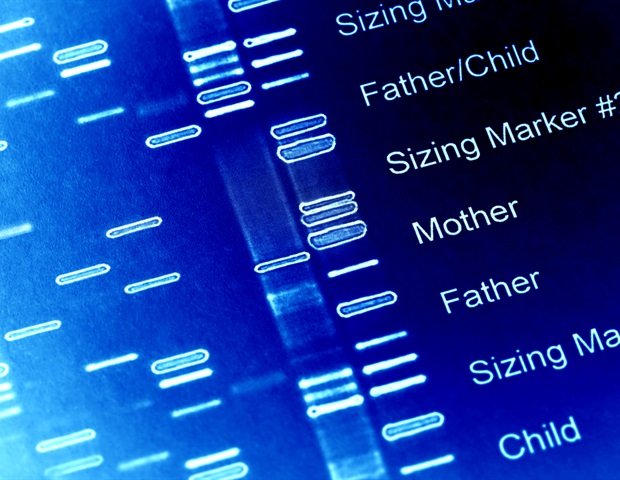
The new test provides a much more complete picture of your DNA than current standard diagnostics and more often leads to a diagnosis. This test can replace the other 15 tests, making it faster and more efficient. Researchers at Radboud University Medical Center recommend the test be adopted everywhere as first-line treatment for rare genetic diseases, in the New England Journal of Medicine.
A condition that affects fewer than 1 in 2,000 people is considered rare. Yet, up to 400 million people worldwide are affected by rare diseases, of which there are more than 7,000 types. 80% of these have a genetic cause. It often takes years to obtain a diagnosis. However, diagnosis is important. A diagnosis provides clarity, insight into the future, the possibility to contact other people in a similar situation and assess the risks when planning to have a child.
Researchers from Radboudumc and Maastricht UMC+ are collaborating to improve the chances of diagnosing genetic diseases. Researchers compared the new DNA test in 1,000 patients with the current standard of diagnosis, which requires multiple tests to arrive at a diagnosis. “We have shown that the new test increases diagnoses by 3% and can also replace 15 other tests. We recommend that this test be used as a first-line test worldwide,” said Lisenka Visas, professor of translational genomics.
jigsaw puzzle
The new test is based on so-called long-read genomic sequencing. When looking for genetic abnormalities, doctors test a person’s complete DNA. Currently, this is done with about 300 component pieces, which are then pieced together into a complete DNA sequence. The new test reads segments of up to 20,000 building blocks. Like a jigsaw puzzle, assembling a DNA puzzle is much easier with these larger pieces, giving a more complete picture.
Additionally, the new test reads not just the building blocks, but also modifications on the outside of the DNA. These modifications can turn genes on or off, causing rare diseases.
Therefore, it is important to measure them as well. Current diagnostics require additional specialized tests, but a long read captures these changes as a two-in-one bonus. ”
Christian Gillissen, Professor of Genomic Bioinformatics
new diagnosis
Genome technology professor Alexander Huischen said the number of diagnoses is expected to continue to rise. He and his team have previously linked genetic abnormalities to a variety of diseases. “Thanks to long readings, we now have a more complete picture of the DNA, allowing us to detect complex and hard-to-see abnormalities. We then associate these with specific conditions. In this way, our knowledge increases and we can make more diagnoses.”
Long-read sequencing was also used at the recent Undiagnosed Hackathon in Nijmegen, organized by UMCNL. Nearly 150 experts from all university medical centers in the Netherlands came together to search for diagnoses in 33 families. A new test has mapped the DNA of every family member in great detail. The combined expertise of so many experts resulted in five new diagnoses.
sauce:
Radboud University Medical Center
Reference magazines:
by Bitter, TJJ, Others. (2026). Clinical long-read genome sequencing for rare disease diagnosis. New England Medical Journal. DOI: 10.1056/NEJMc2602512. https://www.nejm.org/doi/10.1056/NEJMc2602512
