


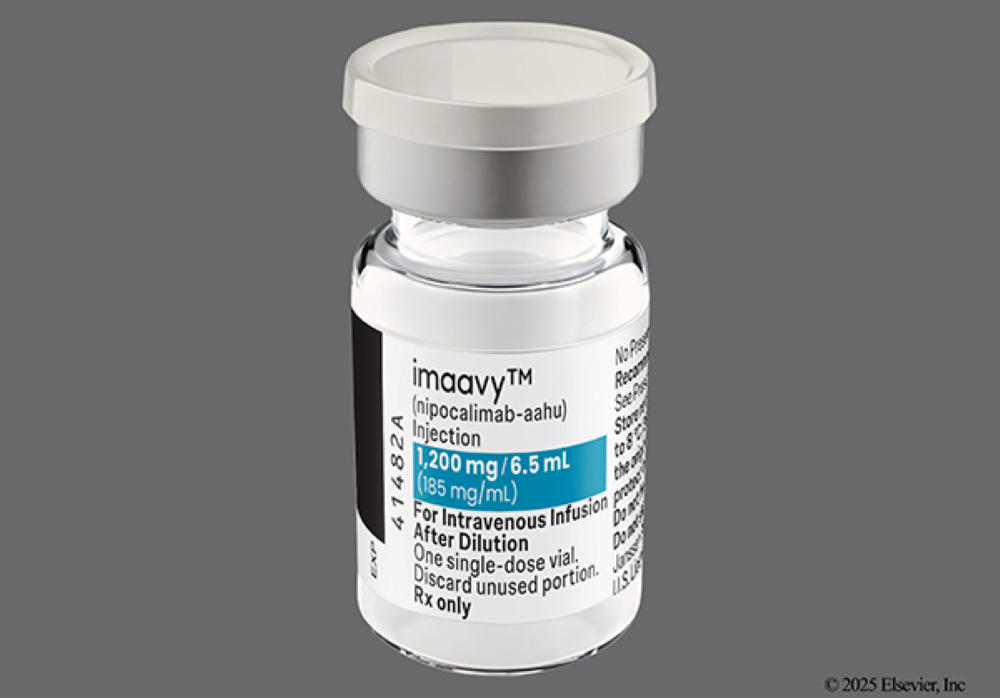
Last year, Johnson & Johnson was a late entrant, announcing Imavi as the third FcRn blocker approved after 2021 to treat patients with generalized myasthenia gravis (gMG).
But J&J is also pinning its hopes on monoclonal antibodies in several other indications, including warm autoimmune hemolytic anemia (wAIHA), one rare disease where monoclonal antibodies appear to be setting the pace.
The company announced Thursday data from a pivotal Phase 2/3 trial that could pave the way for Imaavy’s label expansion.
In the Energy study, Imaavy worked quickly to elicit statistically significant and sustained red blood cell count responses in patients with wAIHA, a life-threatening disease with no approved treatment. J&J says there is an urgent unmet need for this indication, and patients must rely on corticosteroids and immunosuppressive therapies that do not address the underlying cause of the disease.
The study, which randomized 115 participants in a 1:1:1 ratio to receive two different doses of Imaavy or a placebo, showed that three times as many patients injected with the 30 mg/kg dose of Imaavy reached sustained hemoglobin (Hgb) levels after 24 weeks compared to patients who received placebo.
The primary endpoints of the study were defined as an increase in Hgb from baseline of at least 2 g/dL and an increase in Hgb concentration of at least 10 g/dL for at least 28 days without the need for rescue therapy or changes in background therapy. Nearly two-thirds of treated patients achieved both of these goals by week 24, according to J&J.
“Achieving hemoglobin improvements this quickly and on this scale is important in clinical practice, as it may help reverse the debilitating fatigue experienced by people with thermal autoimmune hemolytic anemia,” Bruno Fattizzo, MD, of the Department of Oncology and Hematology-Oncology at the University of Milan, Italy, said in the release.
Changes in patient-reported fatigue were seen as early as the second week of the trial and persisted throughout the treatment period, which was an important secondary endpoint. Another secondary goal, reducing steroid use, was also achieved, J&J said. Imaavy also demonstrated a safety profile consistent with use in gMG.
J&J has already applied for approval for the 30 mg/kg dose and received FDA priority review designation in April, the first such designation for this indication.
According to Leonard Dragon, M.D., J&J’s autoantibody and rheumatology leader, the key to Imaavy’s efficacy in this indication lies in its “immunoselective approach.”
Imaavy “targets the underlying autoantibodies that cause disease, while preserving key immune functions, which is important for people who frequently have comorbidities and live with this disease,” he said in a release.
J&J acquired Imavi in 2020 with its $6.5 billion acquisition of Momenta Pharmaceuticals. The company expects peak sales for the therapy could be more than $5 billion and is investigating its use in a number of autoimmune diseases, including Sjögren’s disease, hemolytic disease of the fetus, and neonatal and fetal alloimmune thrombocytopenia. Each program is in Phase 3 testing and has received FDA Fast Track designation.
J&J also advanced Imaavy to Phase 3 for chronic inflammatory demyelinating polyneuropathy and Phase 2 for systemic lupus erythematosus and idiopathic inflammatory myopathy.
Last year, the company rescued an attempt to promote Imaavy as a combination drug for rheumatoid arthritis after a Phase 2a trial fell short.
The last to beat J&J with FcRn blockers for the treatment of gMG were Argenx, which won approval for Vibgart in 2021 and reported sales of $4.2 billion in 2025, and UCB, which won FDA approval for Listigo in 2023 and reported sales of €332 million ($375 million) in 2025.
J&J has not yet disclosed the sales status of Imavi, which was launched last April, but it has the broadest label of any indication.
