


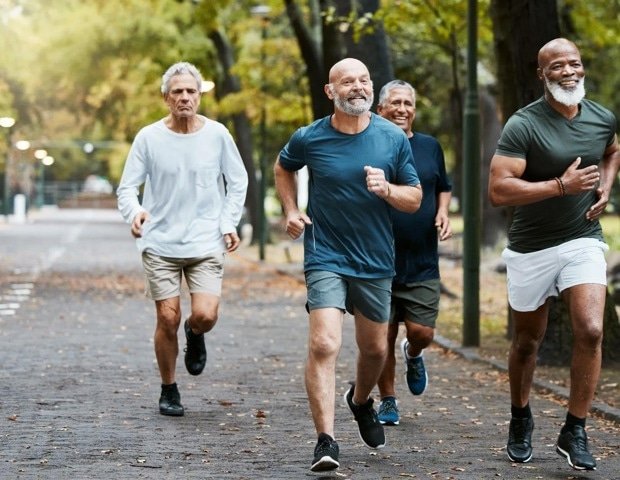
New Australian research has revealed why we walk slower and get more tired as we age. As a result, the body is increasingly sacrificing efficiency to maintain an upright position.
The study, led by Flinders University and the University of Canberra, reveals that as we age, our bodies adopt a “safety first” gait that prioritizes stability at the expense of speed and energy efficiency, helping to explain why older people tire more easily and are at increased risk of falls.
Analyzing movement data from 107 healthy adults aged 26 to 86, researchers identified subtle but important changes in the way the ankle and surrounding muscles control each step.
Lead author Dr. Cody Lindsey, a sports and exercise technology expert, said the ankle plays an important role in both balance and forward movement.
As we age, our bodies begin to prioritize stability over efficiency. This helps keep us upright, but makes walking even more difficult. ”
Dr Cody Lindsay, Flinders Caring Futures Institute
The study found that older adults increasingly activated opposite muscles around the ankle at the same time, a pattern known as co-contraction, which stiffens the joint and improves balance when the foot hits the ground.
But Dr. Lindsay says this comes at a cost.
“Stiffer joints make walking safer, but it also means the muscles work harder, creating less forward movement,” he says.
The study also showed that older adults put out less force with each step, resulting in shorter strides and slower walking speeds.
Co-author Associate Professor Maarten Immink said this reflects a broader change in the way the body controls movement.
“The nervous system takes a safety-first approach, compensating for age-related changes by prioritizing stability over performance,” says Associate Professor Immink, leader of the Active Life Research Program at Flinders University’s Caring Futures Institute.
“These changes can increase fatigue and make walking long distances more difficult, as well as reduce the ability to recover from trips and slips, which are major contributors to falls in older adults.”
“Even gradual changes can affect your confidence and independence, and you may find yourself getting tired quickly and feeling less stable, especially on uneven ground.”
Importantly, the findings point to a new approach to maintaining mobility as we age.
Researchers say that instead of focusing solely on strength, exercise programs should also target balance and coordination, identifying how muscles work together during each step.
“For older Australians, simple actions such as regular physical activity, balance exercises such as tai chi, strengthening lower extremities and activities that challenge coordination can make a difference,” says Dr Lindsay, from Flinders University School of Health and Enablement.
“Staying active is one of the most important things people can do, and doing small, consistent exercises can help them stay confident, mobile and independent for longer.”
Researchers hope their findings will inform better prevention and rehabilitation strategies to reduce falls and support healthy aging.
sauce:
Reference magazines:
Lindsay, C. others. (2026). Aging changes ankle mechanics and muscle co-contraction patterns throughout the gait cycle. gait and posture. DOI: 10.1016/j.gaitpost.2026.110202. https://www.sciencedirect.com/science/article/pii/S0966636226001128?via%3Dihub
