


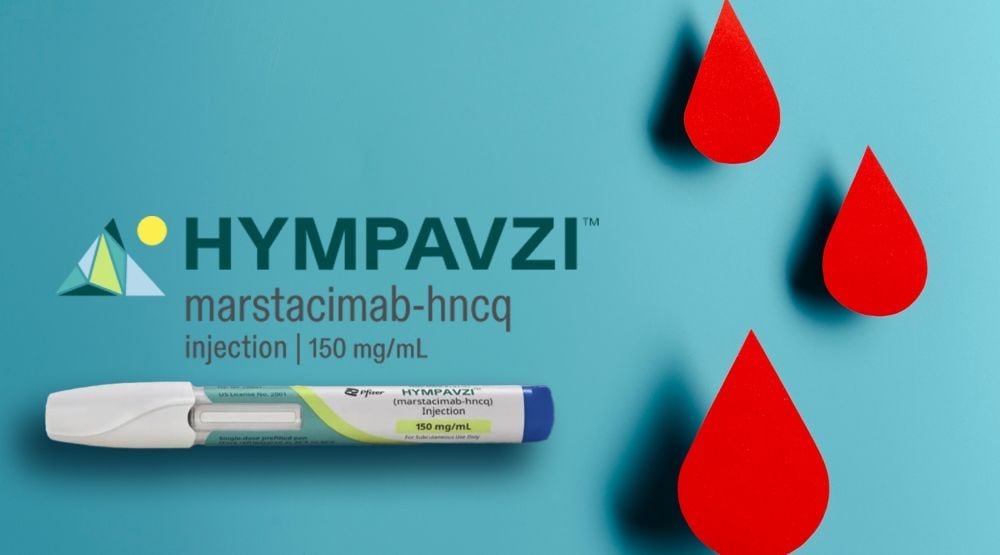
The FDA has expanded the labeling of Pfizer’s subcutaneous hemophilia treatment Himpazi to include patients 6 years of age and older with hemophilia A or B.
Anti-tissue factor pathway inhibitors were first approved in October 2024 for patients 12 years and older with hemophilia A or B who have not developed antibodies (also called inhibitors) produced by the immune system that block or destroy injected clotting factor drugs.
The new expansion includes all patients 6 years of age and older, regardless of inhibitor status. With this new approval, treatment is now available to people aged 12 and older who develop inhibitors.
Himpazi is the first hemophilia treatment to be administered via a prefilled auto-injector pen, administered weekly, and used as a prophylactic medication to reduce the risk of painful bleeding episodes associated with the disease.
“Treatment options are often limited and burdensome for children who must deal with bleeding symptoms from an early age and for hemophilia patients who develop inhibitors,” Guy Young, MD, director of the Hemostasis and Thrombosis Center at Children’s Hospital Los Angeles, said in a release.
Hympavzi provides control with “a level of simplicity that this community has needed for a long time,” Young added.
Hemophilia, a disease in which blood does not clot properly, causing painful bleeding in the joints, affects more than 800,000 people worldwide, Pfizer said. Children’s joints are especially susceptible to damage from bleeding episodes because of growing cartilage and bone, the company added.
Inhibitory antibodies occur in approximately 20% of hemophilia A patients and 3% of hemophilia B patients and are associated with an increased risk of uncontrolled bleeding. Factor replacement therapy may become ineffective in those classified as inhibitors.
The phase 3 Basis trial supported the approval of Hympavzi as a treatment for patients 12 years and older with inhibitors, showing a 93% reduction in annual bleeding rates after patients switched from their previous regimen. In the phase 3 Basis Kids trial of patients aged 6 to 17 years, annual bleeding rates were also significantly reduced in patients who received the inhibitor versus those who did not.
Pfizer did not mention sales of Himpaji in its first quarter financial report.
Himpazi was one of two hemophilia drugs that Pfizer won approval for in 2024. The other, the hemophilia B gene therapy BecBev, priced at $3.5 million, failed to garner much interest from patients or doctors and was removed from the market last February.
Roche’s Hemlibra is the best-selling branded hemophilia drug on the market, with sales reaching 4.5 billion Swiss francs ($5.7 billion) last year. For patients with hemophilia A.
Novo Nordisk’s once-daily subcutaneous Alhemo for patients with hemophilia A or B was approved in 2024. Last year, Sanofi and Alnylam received FDA approval for Qfitlia, which is administered subcutaneously every one to two months. This product can be used by patients with either type of hemophilia, regardless of their inhibitor status.
