


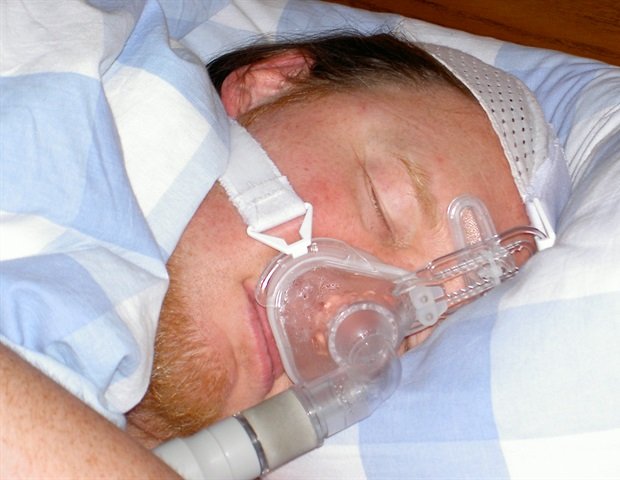
Research in mice has uncovered a new target that could potentially treat and prevent life-threatening cardiovascular complications in millions of sleep apnea patients worldwide. The study, presented at ASM Microbe 2026, showed how microbes modify bile to protect mice from the cardiac and metabolic damage caused by sleep apnea.
Obstructive sleep apnea is a widespread sleep disorder in which breathing repeatedly stops and starts throughout the night. This deprives the body of oxygen and causes carbon dioxide to build up, causing various problems in the body. Previous studies have shown that bile acids change when oxygen is lacking. Bile acids are compounds made in the liver, stored in the gallbladder, and released into the intestines to digest fats. However, bile acids also act as chemical messengers to various receptors in the body.
In a previous paper, researchers showed that bile acids are modified by microorganisms and can influence the amount of fatty plaques (atherosclerosis) present in the heart at the end of the study. As bile acids are absorbed into the bloodstream, they bind to receptors throughout the body and can cause changes in physiology.
We were convinced from previous research that bile acids, especially bile acids modified by microbes, were key to controlling the disease, so we wanted to find out what happens when one of the important receptors for bile acids is missing: does the disease go away? ”
Celeste Allaband, DVM, Ph.D., lead author of the study, University of California, San Diego
Alaband explained that there were two types of mice in the study. One is heart disease-prone mice (called ApoE knockouts), and the other is heart disease-prone mice that also lack a specific bile acid receptor, farnesoid X receptor (FXR) (these mice are called ApoE/FXR knockouts). The researchers exposed both types of mice to both normal indoor air sleep conditions and sleep apnea-like sleep conditions. The researchers then looked at microbes and metabolites in the gut (via fecal samples) during the study, and fatty plaques in the heart at the end of the study.
“Our study shows that the FXR host receptor, which can be activated or inactivated by bile acids, plays a central role in promoting fatty plaque accumulation in arteries during conditions like sleep apnea,” Alaband said. “Surprisingly, removing this receptor from mice significantly reduced the development of arterial plaque in some areas and minimized disruption of the gut microbiome.”
The researchers found that knocking out bile acid receptors significantly reduced fatty plaques in both the aorta and aortic arch, but that fatty plaques were still present in the pulmonary arteries. They also confirmed that conditions like sleep apnea had a reduced impact on the gut microbiome and metabolome.
“These results indicate that microbially modified bile acids and how they signal through the knockout receptor (FXR) appear to be key to the effects of sleep apnea-like conditions in the mouse model. We also identified specific bile acids to target for further investigation,” Alaband said.
The researchers are exploring several different ways to track these results, including checking human datasets to see if similar trends are seen. “We also plan to take some of the important bile acids and see if supplements of these compounds alone can help prevent or reduce disease,” Alaband said. “We can also take some key microorganisms that are important and see if we can administer them prophylactically as probiotics. There’s a lot of interesting research ahead.”
sauce:
American Society for Microbiology
