


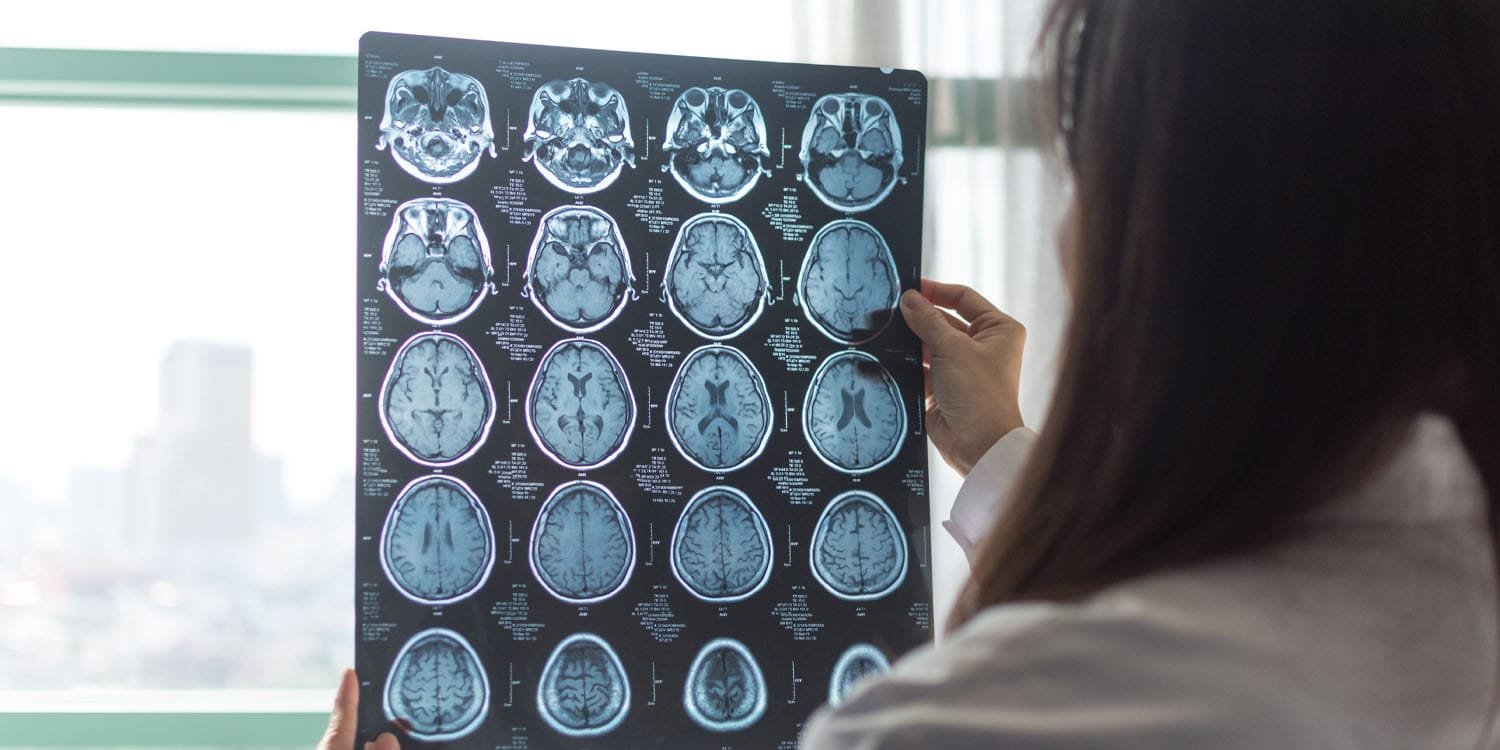
Schizophrenia may be associated with an increased risk of aggressive behavior, but the physical brain differences associated with this trait remain poorly understood. A new analysis of thousands of brain scans reveals that reduced brain volume and worsened neural pathways are associated with increased aggression in psychiatric patients. The study results were published in the journal Molecular Psychiatry.
Schizophrenia has a low lifetime prevalence, affecting approximately one-half of one percent of the general population. Despite these rare cases, researchers estimate that this disorder accounts for a disproportionate share of all violence. Approximately 1 in 10 people with this disorder will commit a serious act of violence during their lifetime. These incidents take a heavy toll on patients and caregivers, leading to intense social stigma and hospitalization.
Aggressive behavior in this clinical population results from a combination of biological, psychological, and social risk factors. Well-documented risks include social adversity, substance abuse, and positive psychiatric symptoms. In psychiatry, positive symptoms refer to active distortions of reality, such as hallucinations, severe delusions, and disorganized thought patterns. Problems with executive functions, such as the ability to concentrate, problem-solve, and inhibit impulsive physical reactions, also increase the risk of conflict.
Researchers wanted to know whether measurable structural changes in the brain could bridge the gap between these cognitive deficits and violent outbursts. Lead author Jere Ramsma, a researcher at the Vrije Universiteit Amsterdam, collaborated with an international team of psychiatrists and neuroscientists on the study. Previous research on brain structure and aggression in psychotic disorders was mainly based on small studies or indirect comparisons. The researchers hypothesized that tissue defects in specific areas of the brain could disrupt neural networks that control self-control and emotion regulation.
To investigate this idea, researchers needed to examine the two major tissue types that make up the central nervous system. The brain is made up of gray matter and white matter. Gray matter is made up of dense cell bodies where the brain processes information, forms memories, and generates thoughts. White matter is made up of long nerve fibers that connect different areas of the brain, acting like shielded communication cables that transmit electrical signals.
Normal human behavior relies on large-scale anatomical networks that coordinate activity across these different tissue types. For example, the brain uses the frontoparietal network to manage executive functions and the default mode network to process self-referential thoughts. If the gray matter volume of any of these networks is reduced in key nodes, or if the white matter cables that connect them become frayed, behavior can change significantly.
The research team pooled magnetic resonance imaging data from 20 different clinical sites across 13 countries. The resulting dataset included 2,095 patients diagnosed with schizophrenia and 2,861 healthy control subjects. This collaboration was coordinated through the ENIGMA consortium, an international group dedicated to mapping the human brain through large-scale data sharing.
All participants underwent high-resolution brain scans to assess their physical neuroanatomy. Clinicians also collected extensive medical data and evaluated patients using standardized psychiatric rating scales. These structured interviews assess the severity of clinical features such as hostility, agitation, and lack of insight into the illness based on a numerical scoring system.
Lamsma and his team used a statistical approach called normative modeling. Standard neuroimaging studies typically compare the average brain metrics of a group of patients to the average of a healthy group. Standard modeling works differently by establishing statistical curves of healthy brain structure for the entire population, taking into account characteristics such as age and gender. The researchers then measured how far individual patients strayed from that expected baseline.
Statistical models revealed that physical brain shrinkage corresponded to concurrent aggressive behavior in clinical assessments. Aggression was associated with a smaller total cortical volume, which is the size of the entire outer layer of the brain. Aggressive traits were also associated with an overall decrease in white matter in the brain. This suggests that reduced physical communication across the brain causes generalized fluctuation risk.
In addition to global brain measurements, specific brain regions stood out in the analysis. Decreased gray matter volume in the dorsolateral prefrontal cortex was associated with higher aggression. This region is located near the front of the brain and is deeply involved in high-level cognitive control, planning, and information retention in working memory. When this area is lacking in normal amounts, a person may have trouble suppressing immediate impulses or anticipating the negative consequences of their actions.
The volume of the inferior parietal lobule was similarly reduced in aggressive patients. The inferior parietal lobule is located at the back of the brain and is central to a function called theory of mind. Theory of mind is the ability to recognize that other people have their own thoughts, feelings, and intentions. Patients with structural deficiencies in this area may easily misinterpret social cues and blur the line between their own fears and the intentions of others.
The researchers also discovered structural abnormalities in a large bundle of white matter called the internal capsule. This high-traffic region connects the prefrontal cortex with deeper evolutionary structures in the brain, such as reward and memory centers. When this communication pathway is compromised, individuals may struggle with reward sensitivity and emotional regulation. If the braking mechanism from the prefrontal cortex is unable to transmit electrical signals in time, overwhelming negative emotions can cause a person to lash out.
Because biological brain structures do not generate behavior in a vacuum, the researchers investigated whether psychological symptoms bridge the gap between anatomy and outward behavior. Through statistical mediation tests, they found that delusions and hallucinations partly explained the association between reduced brain volume and aggressive behavior. Frightening auditory hallucinations and paranoid delusions can easily motivate defensive hostility. Researchers found that poor impulse control and disorganized thinking play a similar mediating role in bridging the gap between brain volume and violence.
The researchers performed a series of secondary mathematical checks to validate their findings. The correlation between brain structure and aggression remained even when the researchers adjusted the data to account for current antipsychotic medication doses. The relationship was also stable across patients’ age, disease duration, and substance abuse history.
The researchers noted some notable limitations regarding their methodology. Because all scan data and clinical interviews were collected at a single time point in this project, the results cannot prove that brain shrinkage directly causes aggression. The observed association may reflect an underlying biological vulnerability to transient aggression rather than a persistent behavioral trait. This dataset also lacked information on co-occurring antisocial personality disorder. Antisocial personality disorder often begins early in life and involves a unique pattern of brain differences.
Researchers also lacked detailed longitudinal information about patients’ socioeconomic status, childhood trauma history, and specific neuropsychological test scores. Environmental factors have a profound influence on human behavior, sometimes overriding biological tendencies. Future research should incorporate these social variables to build a complete picture of the risks faced by people with schizophrenia.
The authors recommend that future studies follow patients for several years. These longitudinal studies may reveal the actual sequence of events linking progressive brain tissue loss and new behavioral symptoms. The researchers also noted that ecological momentary assessment, a method in which patients record their emotions and symptoms in real time on a mobile device, could help scientists capture the volatile and fleeting nature of human aggression.
Despite the limitations, the results indicate that physical brain markers could one day help clinical psychiatrists predict a patient’s risk profile. Current risk assessment tools in psychiatry are error-prone, so incorporating brain structure into their metrics could improve preventive care. The specific neural pathways identified in the study may ultimately serve as targets for neuromodulatory therapies such as deep brain stimulation and transcranial magnetic stimulation.
Until specialized brain stimulation technologies mature, behavioral interventions will remain the most practical tools to avert tragedy. Interventions like cognitive behavioral therapy can help patients manage positive symptoms, improve impulse control, and recognize the boundaries of their condition. Because the roots of aggression span biology, psychology, and personal circumstances, treating mental illness requires a truly holistic approach.
The study, “Structural brain abnormalities and aggression in schizophrenia: A mega-analysis of data from 2095 patients and 2861 healthy controls by the ENIGMA consortium,” was authored by Jelle Lamsma, Adrian Raine, Seyed M. Kia, Wiepke Cahn, Dominic Arold, Anna Baraj, Nerisa, Kana, Broone Rachel Brouwer, and Arturo. Brunetti, Vince D. Calhoun, Kian H. Chiu, Suna Choi, Yong-chul Chong, Mariateresa Ciccarelli, Delin Cobia, Cirio Cocozza, Udo Dunrowski, Paola Dach. Zan, Andrea de Bartolomeis, Marta Di Forti, Alexandre Dumais, Stelica T. Edrica, Arman, Jesse Arman, Jesse Erlich, Ciccarelli, Delincobia. Flinkenflügel, Foivos Georgiadis, David C. Grahn, Yannick Goltermann, Melissa J. Green, Dominik Grotegert, Amalia Guerrero-Pedraza, Minji Ha, Elliott L. Hong, Hilleke Hulshov Pol, Felice Iasevoli, Stefan Kaiser, Vasily Kaleda, Andriana Kalk, Mina Kir, Tilo Kircher, Matt Kirch, Peter Kirch Kochunov, Jun Su Kwon, Irina Lebedeva, Rebecca Lenser, Tiago R. Marquez, Suzanne Meinert, Robin Murray, Igor Nenadic, Dana Nguyen, Godfrey Persson, Fabrizio Piras, Edith Pomarol-Clote, Giuseppe Pontillo, Stephane Potrian Adrian, Kuide, Amanda, Yari, Kevin, Kelly Lutes-Murdy, Raymond Salvador, Kang Shim, Antonin Scoch, Gianfranco Spalletta, Philippe. Spaniel, Frederike Stein, Florian Thomas-Odenthal, Andras Tikas, David Tomechek, Alexander Tomisev, Mario Tranfa, Uyanga Tsogt, Jessica A. Turner, Theo GM, Van Ergjevan Hergé, Van Ness, Jim Van Haren. Daniela Vecchio, Ray Wang, Adrian Roblewski, Thomas Nickell-Jocshat.
