


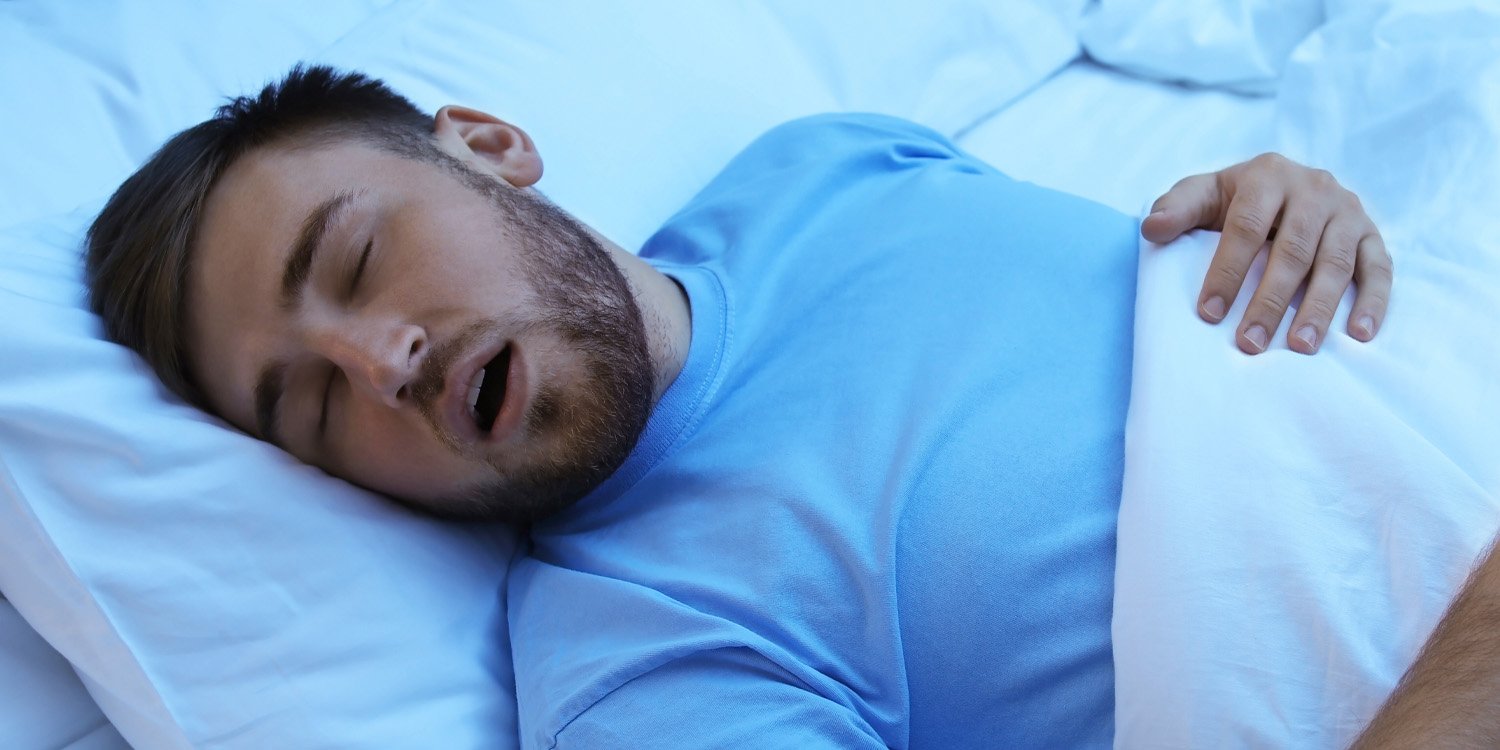
Sleep apnea is significantly more severe on weekends than on weekdays, and the effects are even greater in people who sleep less or shift their sleep schedules on weekends, according to a new study published in . American Journal of Respiratory and Critical Care Medicine.
Obstructive sleep apnea (OSA) is a common but serious sleep disorder in which your airway repeatedly collapses during sleep, causing you to stop breathing repeatedly throughout the night. The severity of OSA is usually measured by counting how many times per hour a person’s breathing stops or is severely restricted. This number is known as the apnea-hypopnea index (AHI).
Researchers have long known that the severity of OSA can vary significantly from night to night, so diagnostic tests (almost always performed on weeknights) can miss or underestimate the condition in about 20% of patients. What was unclear was whether this variation followed a predictable weekly pattern associated with social behavior.
Researchers behind the new study suspected that the same social factors that disrupt sleep timing throughout the week could also worsen OSA. Weekend activities such as staying up late or sleeping longer than usual are all known to affect breathing during sleep, and tend to be more concentrated on weekends. No previous study has examined whether these patterns systematically worsen OSA on specific days.
A team led by Lucia Pinilla analyzed three years of sleep data from January 2020 to September 2023 from 70,052 adult users of validated under-mattress sleep monitoring devices. The mean age of the sample was 53 years, the majority were male (81%), and the mean BMI was within the overweight range.
Eligible participants had to use the device regularly enough to provide at least 4 nights per week, at least 28 nights per year of valid recorded data, and averaged at least 5 apnea events per hour per year. A statistical model was used to estimate the probability of OSA by day of the week while controlling for individual differences across months and seasons.
The results revealed a clear and consistent pattern, which the researchers dubbed “social apnea.” Across the global sample, the odds of moderate-to-severe OSA (defined as 15 or more events per hour) were 18% higher on Saturday compared to Wednesday. This effect was surprisingly consistent across different geographic regions. This effect was stronger for men (21% higher odds) than for women (9%) and for adults under 60 years of age (24%) than over 60 years of age (7%).
The picture became even clearer when we considered weekend sleep behavior. People who slept more than 45 minutes on the weekend had an additional 47% increased odds of OSA over the weekend, and those with social jet lag of more than 60 minutes (meaning their weekend sleep times were more than an hour off compared to weekdays) had an additional 38% increase. People whose sleep patterns were consistent throughout the week didn’t see any meaningful spikes over the weekend. On average, AHI was 6% higher on weekends compared to weekdays, representing an average increase of 0.76 cases per hour at the group level.
This finding has important practical implications. They suggest that overnight diagnostic sleep testing (almost exclusively performed on weeknights) may systematically underestimate the severity of OSA in many patients. They also question CPAP therapy, the main treatment for OSA. CPAP therapy has historically been considered sufficient to be used for at least 4 hours per night on 5 out of 7 nights, an approach that explicitly considers reducing weekend usage.
As the authors note, “no-therapy or low-therapy use on weekends may partially explain our findings,” suggesting that current CPAP compliance standards may not adequately protect patients at night, when OSA is actually at its worst.
The study is not without limitations. This sample consists of people who have chosen to purchase a sleep monitoring device and may differ significantly from the general population in their health consciousness and lifestyle. Furthermore, no data were available on factors that could help mechanistically explain the weekend effects, such as diet, alcohol intake, smoking, exercise, or CPAP use. Additionally, the device’s ability to detect napping during the day was not evaluated, and strictly defining “weekend” as Friday and Saturday nights may have misclassified participants with non-standard work schedules, such as shift workers.
The study, “‘Social Apnea’: Obstructive sleep apnea is worse on weekends,” was authored by Lucia Pinilla, Bastien Lechat, Hannah Scott, Amy C. Reynolds, Jack Manners, Kelly Sansom, Robert Adams, Pierre Escourrou, Peter Catchesside, and Danny J. Eckert.
