


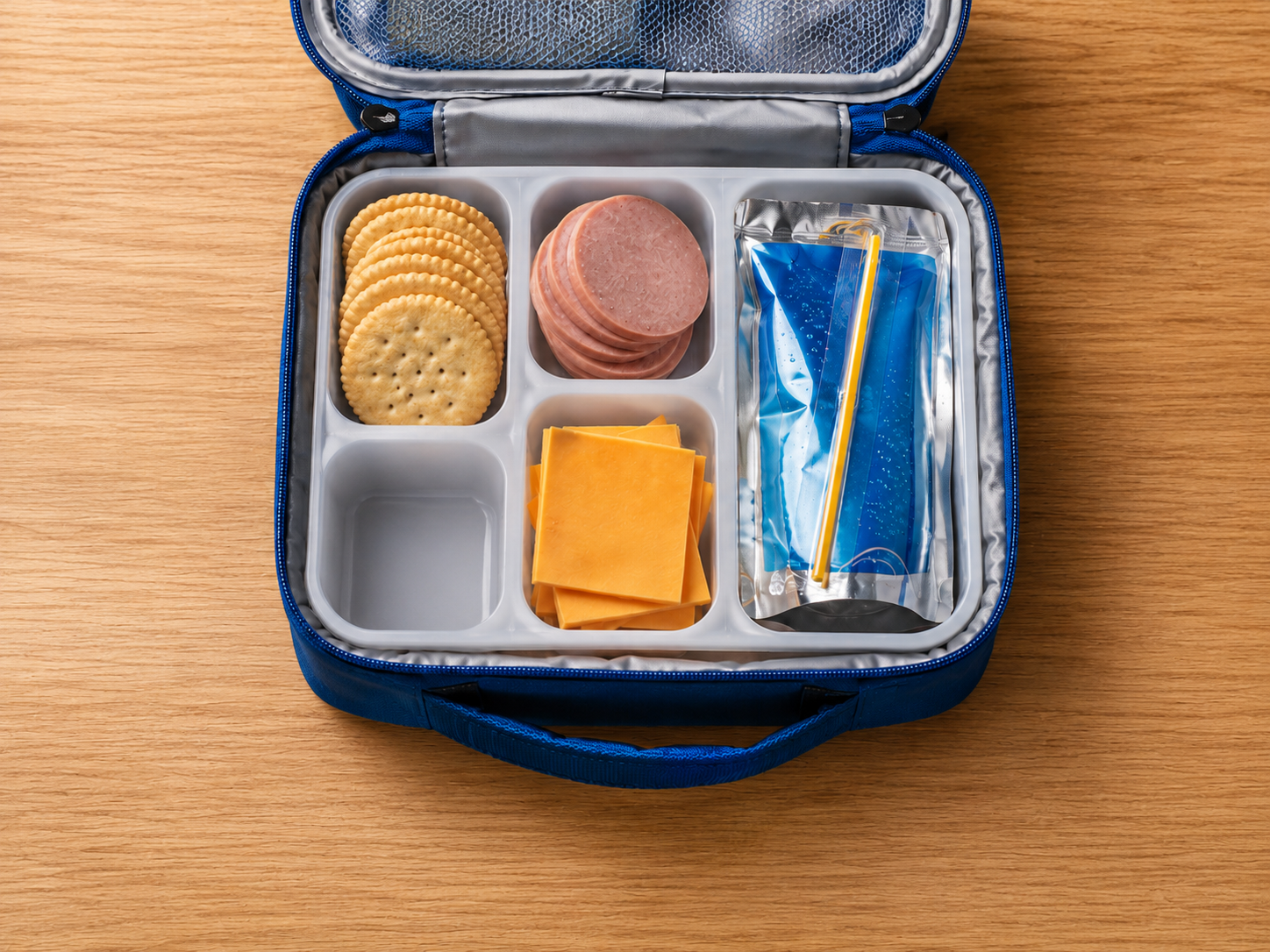
Internal documents reveal how cigarette-era product engineering, consumer psychology and “better-for-you” reformulation strategies helped shape America’s most famous children’s ultra-processed food brand.
The tobacco industry’s contribution to the development of ultra-processed foods in the United States, 1985-2007: A case study of lunch menus.
Recent research published in American Journal of Public Health We tracked the product development of Lunchables, a prepackaged food brand owned by tobacco company Philip Morris Companies (PMC).
In 2023, two new formulations of Kraft Heinz Lunchables qualified for the United States (US) National School Lunch Program (NSLP). However, Kraft Heinz pulled Lunchables from the NSLP a year later, citing poor market performance following negative publicity, Consumer Reports findings of high sodium and heavy metals, and school district reports of nutritional concerns. Approximately 20% of children in the United States are obese, a rate that has nearly quadrupled since before ultra-processed foods (UPFs) like Lunchables became popular in the country.
Clinical studies in adults have confirmed that diets high in UPF are associated with weight gain and overeating. From 1963 to 2008, the largest food companies in the United States were owned by tobacco companies (Philip Morris and RJ Reynolds), during which time tobacco marketing strategies were applied to promote the UPF. Therefore, understanding UPF design and formulation is necessary to understand why these products cause weight gain and overeating and to help develop appropriate guardrails.
Marvelous Original New Launchable Commercial (1991)play
Philip Morris Lunchables Case Study
In this historical case study and analytical essay, author Professor Laura A. Schmidt of the University of California, San Francisco, evaluated the technological contributions of tobacco companies in the design and formulation of UPFs. Specifically, this study tracked Luntables’ product development using previously private company documents. PMC, now known as Altria Group, acquired General Foods in 1985 when Lunchables was still in the pre-market development stage. At the time, PMC already owned a sugar sweetened beverage (SSB) company and an alcohol subsidiary.
PMC merged Kraft and General Foods in 1987 to form Kraft General Foods (KGF). By 1989, KGF’s management team consisted of tobacco executives, including the CEO by 1990. In 1988, a Technical Synergy Committee was established to reduce costs and increase the effectiveness of research and development (R&D) across PMC. The committee streamlined research and development across six of PMC’s alcohol, food, and tobacco subsidiaries throughout the 1990s.
In one project, genetically modified yeast was used to improve the texture of frozen foods. Other projects aimed at developing innovative flavor encapsulation technologies and natural food flavors. In 1991, PMC acquired the SSB company and added sterile juice pouches to create Lunchables Fun Packs, and in 1995 acquired Del Monte’s pudding division to launch Lunchables with Pudding.
UPF due to synergistic effect of tobacco
By then, Lunchables had become a $200 million food category, and technological synergies are credited with making the product KGF’s fastest-growing business. In particular, sharing product development expertise between food and tobacco product developers was critical to optimizing synergies. Specifically, PMC created a cross-functional team of market researchers and product engineers.
This approach enabled decision-making at each stage of product development. At an R&D symposium, product developers at Luntables revealed how their consumer-driven strategy optimized their products. Focus groups involving children suggested that this product could satisfy children’s desire for independence and play. As such, Lunchables’ early prototypes adopted a food playground paradigm.
The consumer test also focused on busy mothers and female workers aged 25-49, with mothers weighing convenience (such as ease of packing and cleaning) against health concerns. But as concerns about childhood obesity grew in the 1990s, Lunchables faced challenges. In response, PMC adopted a healthier strategy originally developed to produce filtered Marlboro cigarettes for health-conscious consumers, launching low-fat Lunchables in 1995.
PMC’s extensive low-fat and fat replacement research program included applying carbon dioxide supercritical fluid technology (CO2 SFE) and neurosensory research to chemical flavor additives to develop more palatable fat replacement ingredients. The paper argues that CO2 SFE has the potential to be applied across product lines, such as extracting nicotine from cigarettes and fat from processed meat. Neurosensory research has helped compensate for the flavor loss of low-fat foods, similar to the case with low-nicotine cigarettes.
UPF regulations and public health
In summary, this study highlights the important role tobacco companies played in the food industry in the 1980s and 1990s. Because UPF and cigarette manufacturing were similar businesses, PMC benefited from technological synergies that enabled the co-evolution of both tobacco and food product lines. Policy makers and public health workers treat UPF, tobacco, and alcohol as separate health determinants.
Furthermore, research into the health hazards of these products is mainly conducted in isolated scientific departments, leading to clear policy recommendations. Therefore, accelerated efforts are needed to understand the synergistic effects of UPF and tobacco in public health practice and research. Overall, the findings highlight the need for public health research and policy to extend current tobacco control models to UPF, including consumer protection approaches and possible legal remedies.
