


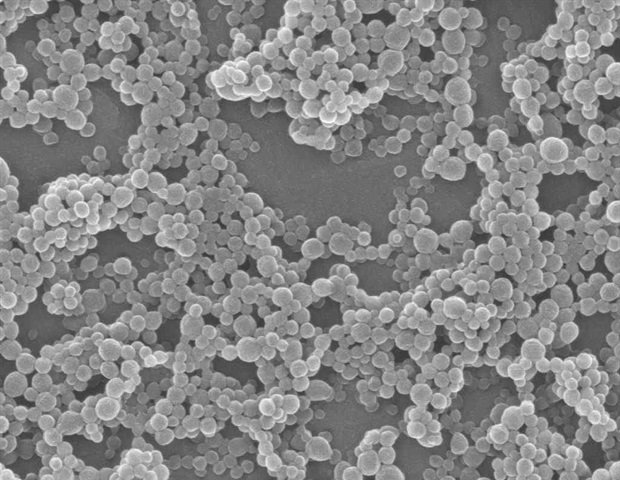
The CIC biomaGUNE Biomaterials Collaborative Research Center has developed lung surfactant nanoparticles, a mixture of lipids and proteins that line the alveoli and enable breathing. It is encapsulated in drugs used to treat lung diseases. fibrosis. These nanoparticles were shown to have a very high ability to remain entrapped in diseased tissues after being administered via the pulmonary route. This allows for lower doses of antifibrotic drugs and reduces potential side effects associated with traditional treatments. Studies conducted in mice have shown therapeutic efficacy against pulmonary fibrosis.
This research advanced health care material The journal by CIC biomaGUNE’s Molecular Functional Biomarkers Group presents a simple, automated, and reproducible synthesis method that ensures effective drug encapsulation, proper distribution by particle size, and high stability using microfluidics, a technology that allows fluids to be controlled with high precision on a microscopic scale.
Pulmonary fibrosis is a relatively common chronic disease in which lung tissue progressively forms uncontrolled scars. The most common risk factors include smoking, occupational exposure to dust and chemicals, exposure to drugs such as chemotherapy and radiation therapy, and viral illnesses such as coronavirus disease (COVID-19). This thickened, hard tissue prevents the lungs from functioning properly, making breathing progressively more difficult. Conventional treatments for pulmonary fibrosis (orally administered) frequently cause side effects, so there is great interest in improving treatments.
Although the administration of drugs by inhalation allows targeted therapy to the lungs, their clinical efficacy is often limited by inflammation, uneven distribution, and physiological barriers.
To reduce the side effects caused by drugs used to treat pulmonary fibrosis, the best way is to directly target the diseased tissue. Inhalation is a very direct way of delivering drugs to the lungs. However, the lungs are designed to protect against inhaled pathogens, and the body’s very protective mechanisms make this type of administration by inhalation more complex. ”
Dr. Susana Caregal, Researcher Ikerbask
power of imitation
To ensure that this type of therapy works effectively, extensive research is currently being conducted focused on finding ways to evade the immune system, preventing the lungs from recognizing the drug as a pathogen or foreign object and allowing it to reach its target. In this regard, a research team led by Dr. Karegal has developed a biomimetic platform based on pulmonary surfactant nanoparticles. “We preserve the natural proteins and lipids of the surfactant and its biophysical function, thereby improving delivery to the lungs,” said Dr. Caregal, the study’s principal investigator.
“The lungs are filled with pulmonary surfactant, which is the interface where air and fluid exchange takes place,” she explained. “When drugs intended for the treatment of lung diseases are encapsulated in pulmonary surfactant, their surface properties improve their distribution throughout the lungs. In other words, the use of endogenous substances allows drugs to be distributed more effectively within the lungs when administered by inhalation.”
The CIC biomaGUNE research team “found that 90% of the administered nanomedicine was retained in the lungs of the mouse model. The retention rate is very high. This means that with this treatment, the amount of drug reaching the liver is much lower than with conventional treatments, thereby reducing side effects,” Carregal noted. In order to reduce drug doses and reduce side effects, it is important that drugs act only where they are supposed to.
The synthetic method developed at CIC biomaGUNE could facilitate the use of inhaled drugs. “Synthesis of these nanoparticles is greatly simplified, producing materials or nanomedicines with highly controlled size and direct encapsulation of the drug, thus helping to standardize the product. This is a highly homogeneous and highly reproducible system. This opens new avenues for the development of inhaled treatments for lung diseases,” said Dr. Karegal.
The study was carried out by a research group led by Professor Jesús Luis Cabello of Ikerbasque Research, in collaboration with a team from the Department of Biochemistry and Molecular Biology, led by Professor Jesús Pérez Gil of the Complutense University of Madrid.
