


If humanity is to limit global warming to 1.5 degrees Celsius, we must use new technologies to suck carbon out of the atmosphere even faster than we can deploy solar panels, a report has found.
Researchers say new forms of carbon dioxide removal (CDR) need to grow at a “very ambitious rate” to close the gap between what governments have promised to clean up and what is needed to comply with the Paris climate agreement. They said the next five years will be critical in establishing the role of technology in limiting climate damage.
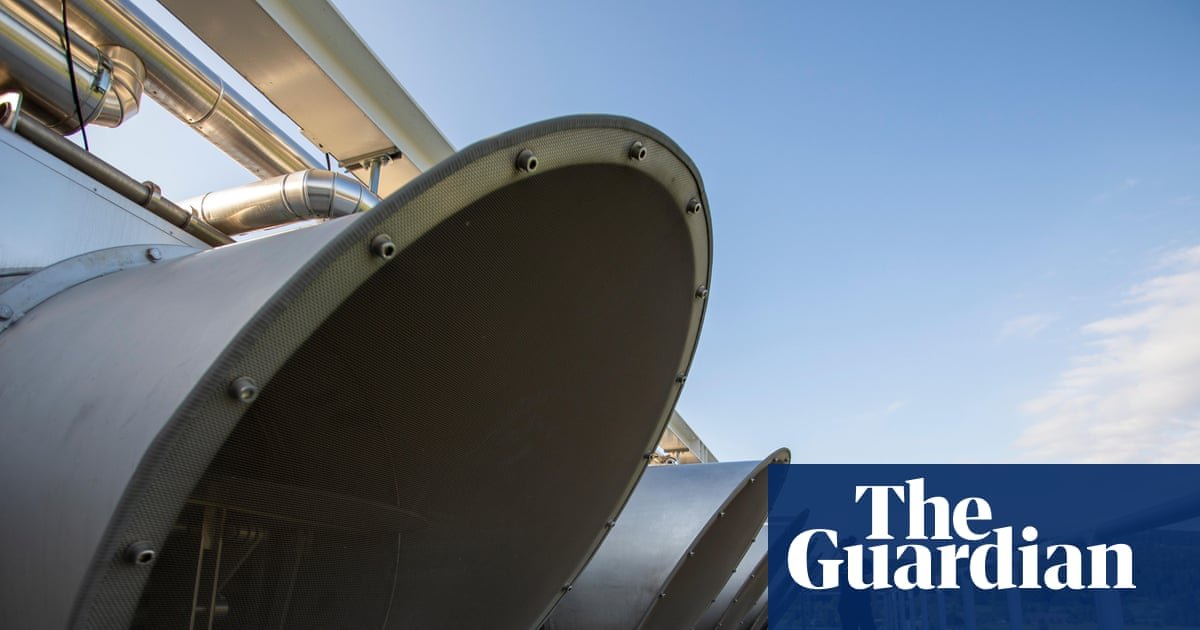
Machines that suck carbon directly from the air and chemical technologies such as biochar production account for just 0.1% of the 2.2 billion tonnes of carbon dioxide removed each year worldwide, according to a report published Tuesday. The remainder comes from land-based activities such as tree planting where space is limited.
The report found that new forms of CDR are growing at a rate of 40% a year, but because they started from such a small base, they will need to reach growth rates between solar panels and electric vehicles, which are growing faster than any other climate technology. In recent years, it has been found that only one-fifth of the planned production capacity has been supplied.
“Countries have committed to removing around 2.7 billion tonnes of carbon by 2035 and 3.6 billion tonnes by 2050, but climate pathways require even more carbon removal, especially in the long term,” said William Lamb, a scientist at the Potsdam Institute for Climate Impact Research and a co-author of the report. “This widens the gap significantly over time.”
CDR is a small but important element of the roadmap to stop global warming. It could offset the warming caused by hard-to-avoid emissions and reduce temperatures by as much as 1.5 degrees Celsius after an “overshoot” period that scientists see as inevitable.
Scientists liken removing carbon dioxide to cleaning a beach littered with trash. The cheapest solution is to throw things in the trash instead of throwing them away, but scavengers can clean up pollution that washes up on our shores and repair the damage done by decades of denial.
An independent scientific assessment, now in its third edition, found some indicators showed “weak” support. For example, the United States under President Donald Trump withdrew from the Paris climate accord and scrapped environmental regulations while promoting fossil fuels. The researchers said “policy disorganization and instability” in the United States was undermining trust and putting pressure on other jurisdictions.
Microsoft, identified in the report as the purchaser of 82% of new CDR credits, reportedly suspended purchases in April. The researchers said the recent adjustment in the pace of procurement shows that while first movers play an important role, “vulnerabilities will emerge” unless their actions are more widely disseminated.
A Microsoft spokesperson said the carbon removal program has not yet ended, but did not say when purchases would resume. “As we continue to refine our approach to our sustainability goals, we may also adjust the pace and amount of our carbon removal sourcing,” said Melanie Nakagawa, Microsoft’s chief sustainability officer. “Any adjustments we make are part of our disciplined approach and do not change our ambitions.”
Ana Hernández of Spain’s Climate Research Foundation, who was not involved in the study, said these cases contributed to lower corporate ambitions and increased vulnerability of support systems. “To put it into perspective, G20 countries do not have legally binding removal targets and the NDCs (official climate action plans) submitted for 2025 did not increase their carbon removal ambitions.”
A scientific pathway to halt global warming foresees a sharp and rapid reduction in fossil fuel combustion and a reversal of the destruction of nature, alongside technologies to remove residual CO2 from the atmosphere. However, many forms of carbon removal cannot even store carbon permanently.
Without large-scale carbon removal, extreme climate impacts are likely to continue to worsen beyond this century, said Thomas Gasser, a scientist at the International Institute for Applied Systems Analysis and co-author of a study that found last week that non-permanent methods can also offset warming from short-lived climate pollutants.
“Although we are certainly far behind in terms of CDR development, in the long term it remains the only option to reverse climate change, but only if greenhouse gas emissions are also reduced to near zero,” he said.
