

Close Menu

    Subscribe to Updates

    Get the latest creative news from FooBar about art, design and business.

    What's Hot

    Irregular brain maturation in childhood predicts emotional habits in early adolescence

    May 31, 2026

    New solar desalination breakthrough allows you to create fresh water without toxic salt water

    May 31, 2026

    Why is cancer more prevalent in middle age than in old age?

    May 31, 2026
    Facebook X (Twitter) Instagram
    Facebook X (Twitter) Instagram
    Health Magazine
    • Home
    • Environmental Health
    • Health Technology
    • Medical Research
    • Mental Health
    • Nutrition Science
    • Pharma
    • Public Health
    • Discover
      • Daily Health Tips
      • Financial Health & Stability
      • Holistic Health & Wellness
      • Mental Health
      • Nutrition & Dietary Trends
      • Professional & Personal Growth
    • Our Mission
    Health Magazine
    Home » News » Research reveals that chimpanzees and bonobos have human-like friend circles
    Nutrition Science

    Research reveals that chimpanzees and bonobos have human-like friend circles

    healthadminBy healthadminMay 31, 2026No Comments3 Mins Read
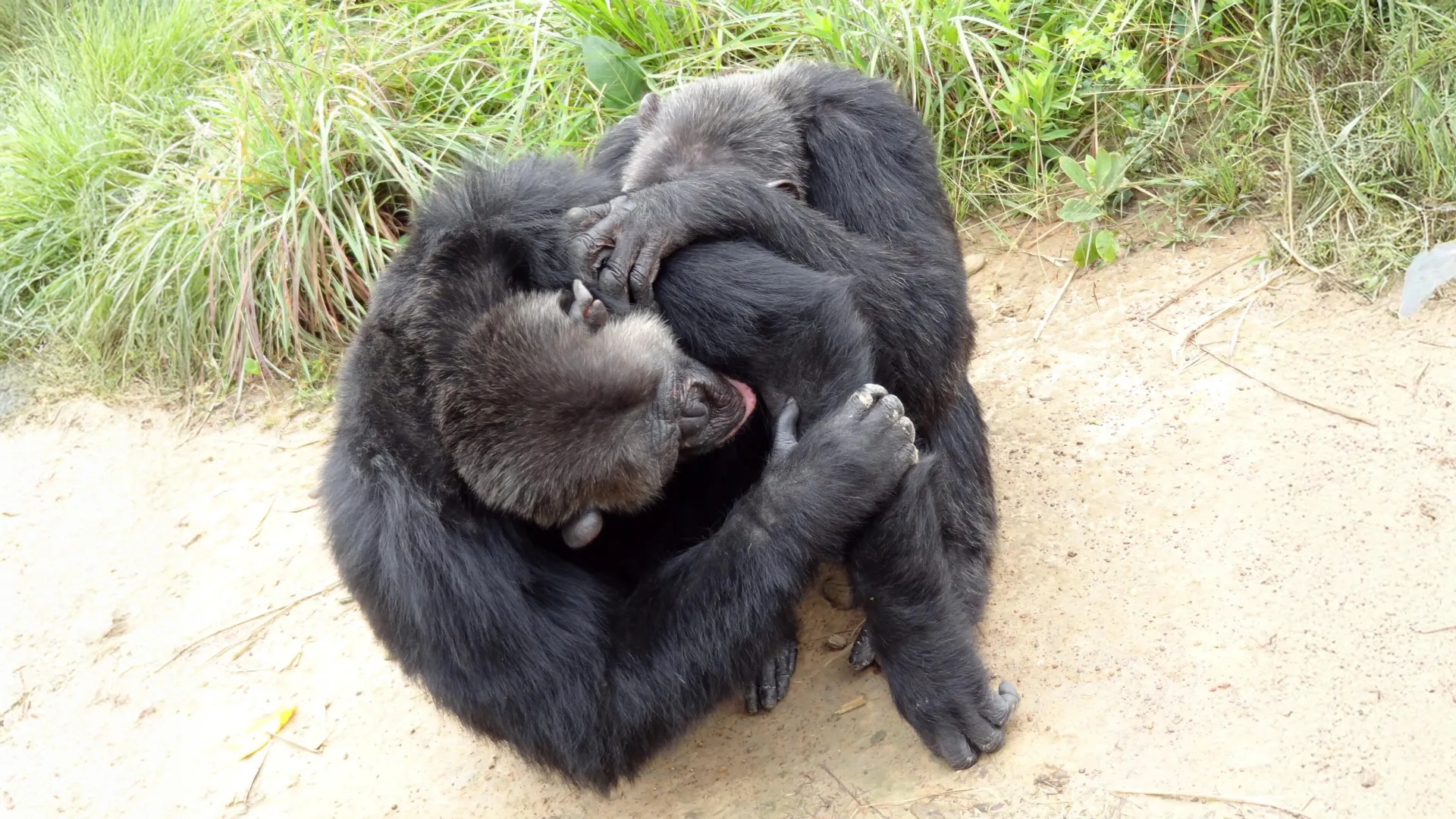
    Research reveals that chimpanzees and bonobos have human-like friend circles
    Share
    Facebook Twitter Reddit Telegram Pinterest Email


    Humans often organize their relationships in layers, spending the most time with a small number of close friends and family, but maintaining weak ties with a large number of acquaintances. New international research suggests this pattern is not unique to people.

    Researchers from Utrecht University and Carlos III de Madrid University have discovered that our closest living relatives, chimpanzees and bonobos, also form social networks similar to human friendship circles. This discovery provides new insights into how complex social relationships evolved.

    Great apes build human-like social networks

    To investigate how great apes manage their social lives, researchers examined the social grooming behavior of 24 groups of chimpanzees and bonobos. Grooming is one of the most important social activities among great apes, helping to strengthen bonds and maintain relationships.

    The research team used a mathematical model to analyze how individuals allocate their limited time and social effort among other members of their group.

    The results revealed a familiar pattern. Most apes spent the majority of their grooming time with a small number of preferred partners and maintained less intensive relationships with many others. This hierarchical structure is very similar to the way human social circles are organized.

    The study also found that apes living in larger groups tend to be more selective about where they focus their social attention, a trend also observed in human social networks.

    Chimpanzees and bonobos take different approaches

    Although both species exhibited social structures similar to humans, they did not manage relationships in exactly the same way.

    Bonobos distributed grooming time more evenly among group members, forming more egalitarian social networks. In contrast, chimpanzees focused much of their effort on a small number of friendly allies.

    These differences reflect broader differences in the social behavior of the two species.

    Chimpanzee friendships change with aging

    As people grow older, they often become more selective about their relationships, focusing on the close ties of a smaller inner circle. Researchers found a similar pattern in chimpanzees.

    As chimpanzees get older, they invest in fewer social partners. However, bonobos did not experience the same narrowing of their social circles over time.

    “Perhaps this is due to bonobos’ more egalitarian social system. Bonobos seem to have social bonds that transcend group boundaries and live together in more fluid relationships, which is rarely seen in chimpanzees,” van Leeuwen explains.

    Clues to the evolution of friendship

    Lead author Edwin van Leeuwen said the results suggest that similar principles govern how social relationships are formed and maintained across species.

    “Our findings suggest that the basic rules that determine how individuals allocate their social effort apply across species,” van Leeuwen says. “This reveals deep evolutionary continuity in how complex societies are organized.”

    At the same time, the differences between chimpanzees and bonobos suggest multiple evolutionary strategies for managing social connections.

    Van Leeuwen points out that understanding these patterns can improve scientists’ understanding of cooperation, social learning, and mental well-being between humans and other animals.

    “Understanding these patterns may provide important insights for studying cooperation, social learning, and emotional well-being in humans and other animals.”


    Source link

    Visited 3 times, 3 visit(s) today
    Share. Facebook Twitter Pinterest LinkedIn Telegram Reddit Email
    Previous ArticleScientists have discovered a hidden switch that promotes brain inflammation in Alzheimer’s disease
    Next Article Good members go to Congress because they choose to run, not because voters value their skills.
    healthadmin

    Related Posts

    New solar desalination breakthrough allows you to create fresh water without toxic salt water

    May 31, 2026

    Why is cancer more prevalent in middle age than in old age?

    May 31, 2026

    Scientists have discovered a hidden switch that promotes brain inflammation in Alzheimer’s disease

    May 31, 2026

    Ocean health may depend on tiny microbes inside fish

    May 31, 2026

    Quantum metasurface breakthrough could finally close the terahertz gap

    May 31, 2026

    Navigating the 2025–2030 Dietary Guidelines: Resolving Confusion for Clinical Practice

    May 31, 2026
    Add A Comment
    Leave A Reply Cancel Reply

    Categories

    • Daily Health Tips
    • Discover
    • Environmental Health
    • Exercise & Fitness
    • Featured
    • Featured Videos
    • Financial Health & Stability
    • Fitness
    • Fitness Updates
    • Health
    • Health Technology
    • Healthy Aging
    • Healthy Living
    • Holistic Healing
    • Holistic Health & Wellness
    • Medical Research
    • Medical Research & Insights
    • Mental Health
    • Mental Wellness
    • Natural Remedies
    • New Workouts
    • Nutrition
    • Nutrition & Dietary Trends
    • Nutrition & Superfoods
    • Nutrition Science
    • Pharma
    • Preventive Healthcare
    • Professional & Personal Growth
    • Public Health
    • Public Health & Awareness
    • Selected
    • Sleep & Recovery
    • Top Programs
    • Weight Management
    • Workouts
    Popular Posts
    • 1773313737_bacteria_-_Sebastian_Kaulitzki_46826fb7971649bfaca04a9b4cef3309-620x480.jpgHow Sino Biological ProPure™ redefines ultra-low… March 12, 2026
    • pexels-david-bartus-442116The food industry needs to act now to cut greenhouse… January 2, 2022
    • the-pros-and-cons-of-paleo-dietsThe Pros and Cons of Paleo Diets: What Science Really Says April 16, 2025
    • 1773729862_TagImage-3347-458389964760995353448-620x480.jpgDespite safety concerns, parents underestimate the… March 17, 2026
    • 1773209206_futuristic_techno_design_on_background_of_supercomputer_data_center_-_Image_-_Timofeev_Vladimir_M1_4.jpegMulti-agent AI systems outperform single models… March 11, 2026
    • 1774403998_image_28620e4b6b0047f7ab9154b41d739db1-620x480.jpgGait pattern helps distinguish between Lewy body… March 24, 2026

    Demo
    Stay In Touch
    • Facebook
    • Twitter
    • Pinterest
    • Instagram
    • YouTube
    • Vimeo
    Don't Miss

    Irregular brain maturation in childhood predicts emotional habits in early adolescence

    By healthadminMay 31, 2026

    The difference between a child’s chronological age and their apparent brain age can predict whether…

    New solar desalination breakthrough allows you to create fresh water without toxic salt water

    May 31, 2026

    Why is cancer more prevalent in middle age than in old age?

    May 31, 2026

    Good members go to Congress because they choose to run, not because voters value their skills.

    May 31, 2026

    Subscribe to Updates

    Get the latest creative news from SmartMag about art & design.

    HealthxMagazine
    HealthxMagazine

    At HealthX Magazine, we are dedicated to empowering entrepreneurs, doctors, chiropractors, healthcare professionals, personal trainers, executives, thought leaders, and anyone striving for optimal health.

    Our Picks

    Good members go to Congress because they choose to run, not because voters value their skills.

    May 31, 2026

    Research reveals that chimpanzees and bonobos have human-like friend circles

    May 31, 2026

    Scientists have discovered a hidden switch that promotes brain inflammation in Alzheimer’s disease

    May 31, 2026
    New Comments
      Facebook X (Twitter) Instagram Pinterest
      • Home
      • Privacy Policy
      • Our Mission
      © 2026 ThemeSphere. Designed by ThemeSphere.

      Type above and press Enter to search. Press Esc to cancel.