

Close Menu

    Subscribe to Updates

    Get the latest creative news from FooBar about art, design and business.

    What's Hot

    NASA’s James Webb captures feeding of a supermassive black hole

    July 18, 2026

    Mediterranean diet may activate small proteins that protect heart and brain

    July 18, 2026

    Highly synchronized brains perform poorly on complex tasks

    July 18, 2026
    Facebook X (Twitter) Instagram
    Facebook X (Twitter) Instagram
    Health Magazine
    • Home
    • Environmental Health
    • Health Technology
    • Medical Research
    • Mental Health
    • Nutrition Science
    • Pharma
    • Public Health
    • Discover
      • Daily Health Tips
      • Financial Health & Stability
      • Holistic Health & Wellness
      • Mental Health
      • Nutrition & Dietary Trends
      • Professional & Personal Growth
    • Our Mission
    Health Magazine
    Home » News » Persistent gut microbiota changes are associated with persistent colorectal cancer risk
    Discover

    Persistent gut microbiota changes are associated with persistent colorectal cancer risk

    healthadminBy healthadminMay 27, 2026No Comments3 Mins Read
    Persistent gut microbiota changes are associated with persistent colorectal cancer risk
    Share
    Facebook Twitter Reddit Telegram Pinterest Email


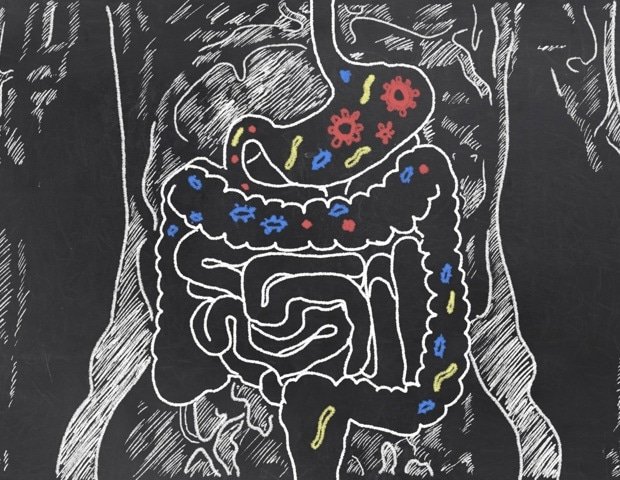
    More than a decade after adenomas (precancerous masses) are removed from the colon, changes in the gut microbiome and metabolites persist and may increase the risk of colorectal cancer (CRC), according to a new study led by researchers at Harvard’s T.H. Chan School of Public Health. The study also found that diet and physical activity were more closely related to the abundance of colon cancer-associated gut microbes in people with a history of adenomas than in people without adenomas, suggesting that lifestyle may play a particularly important role in shaping these microbes in this high-risk group.

    CRC is the second most common cause of cancer-related death worldwide, and adenoma removal is one of the most effective preventive measures. However, people who undergo this procedure still face an increased risk of colorectal cancer. The biological reason for this remains unknown, but the gut microbiome (a collection of trillions of bacteria living in the digestive tract) may be suspected.

    Our study is the first to address whether changes in gut microbiome and metabolism are still detectable years after adenoma removal. The answer is yes, and removing the adenoma does not return the intestine to a lower-risk state, thus suggesting that the gut microbiome may make a significant biological contribution to persistent colorectal cancer risk. ”


    Minyan Song, corresponding author, Associate Professor of Clinical Epidemiology and Nutrition

    The study is scheduled to be published on May 27th. Cell hosts and microorganisms.

    Previous studies linking the gut microbiome and colorectal cancer risk only looked at patients’ gut microbiomes around the time of adenoma removal. In this study, researchers took a longitudinal approach using health data and stool samples from women enrolled in the Nurses’ Health Study II. They studied the microbiomes of 354 participants who had adenomas removed from their colons and compared them with the microbiomes of 354 age- and background-matched participants without adenomas. Stool samples were collected on average 12 years after adenoma removal.

    The study found that significant differences existed between the gut microbiota and metabolites of participants without adenomas and those who had adenomas, even more than 10 years after resection. The latter group had a microbiome that was partially similar to that of colorectal cancer patients. Among participants with a history of adenoma, those who ate a less healthy diet and were less physically active harbored more microorganisms that are typically increased in both adenoma and colorectal cancer patients. These associations between lifestyle and microbes were stronger in participants with a history of adenoma than in those without adenoma.

    “The fact that gut microbial and metabolic signatures associated with colorectal cancer are still detectable 10 years later suggests that the gut microbiome may be part of persistent colorectal cancer risk,” said first author Ana Nogal, a postdoctoral researcher in the Department of Epidemiology. “Diet and lifestyle are closely linked to these microorganisms, raising the possibility that these habits influence the gut environment of people at high risk.”

    The researchers noted that this study shows an association, not causation, and that future studies are needed to directly test whether altering the gut microbiome through dietary and exercise habits successfully alters colorectal cancer risk.

    sauce:

    Harvard University TH Chan School of Public Health

    Reference magazines:

    Nogal, A. others. (2026). Relationship between long-term changes in the gut microbiota and fecal metabolome and colorectal cancer after colorectal adenoma removal. Cell hosts and microorganisms. DOI: 10.1016/j.chom.2026.05.001. https://www.sciencedirect.com/science/article/pii/S1931312826001770?via%3Dihub


    Source link

    Visited 12 times, 1 visit(s) today
    Share. Facebook Twitter Pinterest LinkedIn Telegram Reddit Email
    Previous ArticleExtreme trait values ​​are often more easily explained genetically than thought
    Next Article The real cost of long-term coronavirus infections could be twice as much as current estimates, research shows
    healthadmin

    Related Posts

    New portable strip test accurately detects mosquito-borne viruses

    July 17, 2026

    Training helps pediatricians independently treat anxiety and depression in children

    July 17, 2026

    New ctDNA blood test improves personalized prostate cancer treatment

    July 17, 2026

    Anti-vaccine bills surge across the U.S. due to political polarization

    July 17, 2026

    Multidisciplinary surgery improves outcome in rare corpus callosum glioma

    July 17, 2026

    ECT-like brain stimulation causes unexpected nuclear reprogramming of mature neurons

    July 17, 2026
    Add A Comment

    Comments are closed.

    Categories

    • Daily Health Tips
    • Discover
    • Environmental Health
    • Exercise & Fitness
    • Featured
    • Featured Videos
    • Financial Health & Stability
    • Fitness
    • Fitness Updates
    • Health
    • Health Technology
    • Healthy Aging
    • Healthy Living
    • Holistic Healing
    • Holistic Health & Wellness
    • Medical Research
    • Medical Research & Insights
    • Mental Health
    • Mental Wellness
    • Natural Remedies
    • New Workouts
    • Nutrition
    • Nutrition & Dietary Trends
    • Nutrition & Superfoods
    • Nutrition Science
    • Pharma
    • Preventive Healthcare
    • Professional & Personal Growth
    • Public Health
    • Public Health & Awareness
    • Selected
    • Sleep & Recovery
    • Top Programs
    • Weight Management
    • Workouts
    Popular Posts
    • 1773313737_bacteria_-_Sebastian_Kaulitzki_46826fb7971649bfaca04a9b4cef3309-620x480.jpgHow Sino Biological ProPure™ redefines ultra-low… March 12, 2026
    • pexels-david-bartus-442116The food industry needs to act now to cut greenhouse… January 2, 2022
    • 1773729862_TagImage-3347-458389964760995353448-620x480.jpgDespite safety concerns, parents underestimate the… March 17, 2026
    • 1773209206_futuristic_techno_design_on_background_of_supercomputer_data_center_-_Image_-_Timofeev_Vladimir_M1_4.jpegMulti-agent AI systems outperform single models… March 11, 2026
    • 1774403998_image_28620e4b6b0047f7ab9154b41d739db1-620x480.jpgGait pattern helps distinguish between Lewy body… March 24, 2026
    • Leukemia-620x480.jpgBiomimetic platform powers CAR T therapy for… March 9, 2026

    Demo
    Stay In Touch
    • Facebook
    • Twitter
    • Pinterest
    • Instagram
    • YouTube
    • Vimeo
    Don't Miss

    NASA’s James Webb captures feeding of a supermassive black hole

    By healthadminJuly 18, 2026

    New observations from the James Webb Space Telescope (JWST) give astronomers the clearest picture yet…

    Mediterranean diet may activate small proteins that protect heart and brain

    July 18, 2026

    Highly synchronized brains perform poorly on complex tasks

    July 18, 2026

    How different types of exercise affect mood and brain chemistry

    July 17, 2026

    Subscribe to Updates

    Get the latest creative news from SmartMag about art & design.

    HealthxMagazine
    HealthxMagazine

    At HealthX Magazine, we are dedicated to empowering entrepreneurs, doctors, chiropractors, healthcare professionals, personal trainers, executives, thought leaders, and anyone striving for optimal health.

    Our Picks

    How different types of exercise affect mood and brain chemistry

    July 17, 2026

    New portable strip test accurately detects mosquito-borne viruses

    July 17, 2026

    Exposure to high temperatures during pregnancy may slow the growth of your child’s thalamus

    July 17, 2026
    New Comments
      Facebook X (Twitter) Instagram Pinterest
      • Home
      • Privacy Policy
      • Our Mission
      © 2026 ThemeSphere. Designed by ThemeSphere.

      Type above and press Enter to search. Press Esc to cancel.