


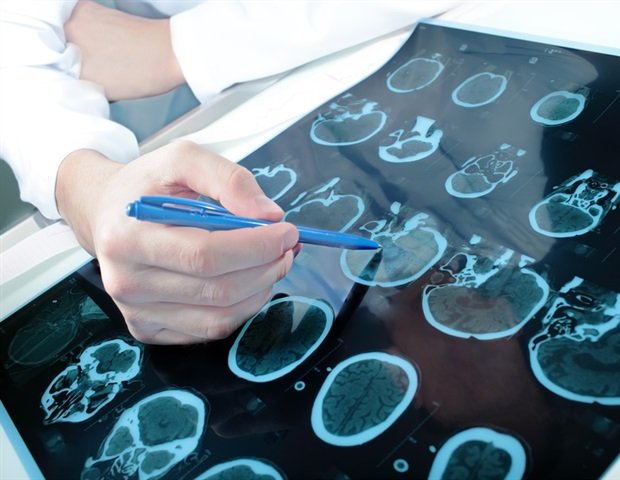
“Standard MRI shows white matter hyperintensity, which is common in healthy older people,” explains Professor Tan. “DTI captures the microstructural integrity of white matter, namely fractional anisotropy (FA) and mean diffusivity (MD), which is much more sensitive to subtle damage caused by small vessel disease.”
The team built DenseNet, a densely connected convolutional neural network that learns hierarchical features directly from raw DTI volumes. They trained and validated it on an internal dataset of 134 SVCI patients and 171 SIVD patients. To confirm that the model works with data from different scanners and populations, we used unsupervised domain adaptation (UDA) on an external cohort of 90 patients with SVCI and 103 patients with SIVD. Only unlabeled target domain images were used for adaptation. An independent test set (45 SVCI, 50 SIVD) was conducted for final evaluation.
The best model using FA and MD together achieved an accuracy of 0.902 on the internal test set and 0.926 on the target domain test set, with an area under the ROC curve (AUC) of 0.951 and 0.942, respectively. “This is significantly better than previous machine learning approaches that required manual feature engineering,” said Professor Li. “More importantly, the model’s predicted SVCI probabilities are strongly correlated with the actual neuropsychological scores (MoCA, MMSE, memory recall tests, and trail-making tests), so the probabilities themselves provide clinicians with a continuous measure of cognitive severity.”
To make the “black box” interpretable, the researchers used guided backpropagation to generate a salient map, a voxel-wise contribution to the model’s decisions. This model focused on 11 white matter regions, including the corona radiata, superior longitudinal fasciculus, corpus callosum, internal capsule, and retrothalamic radiation. These are precisely the vessels known to be damaged in small vessel disease and are functionally linked to attention, executive control, and memory. “When we took only the DTI data within these salient regions and trained a separate CNN to predict neuropsychological scores, the predictions were significantly correlated with the true scores, proving that the model’s attention is neuropsychologically meaningful,” said Professor Qin.
SVCI is non-uniform. One patient may have primarily memory problems, while another may have executive dysfunction. The team wanted to go beyond binary diagnoses and develop an image-based tool that could estimate an individual’s risk in each cognitive domain. They first calculated voxel-wise mutual information (MI) between FA-MD images and six neuropsychological scales in SVCI patients. This created six domain-specific “relevance maps” showing where white matter damage conveys the most information about cognitive performance. The overlap between these maps was low (average Dice 0.057), confirming that each cognitive domain has a distinct structural footprint.
The researchers then calculated, for each SVCI patient, a structural similarity index measure (SSIM) between the patient’s own saliency weight map (from DenseNet) and each of the six domain-specific MI maps. “SSIM tells us how closely a patient’s pattern of white matter abnormalities resembles the population-level patterns that are most beneficial for, for example, memory and executive function,” explains Dr. He. They used unsupervised K-means clustering on SSIM scores to classify patients into low, medium, and high similarity subgroups by cognitive domain. In all domains, patients in highly similar clusters had significantly worse neuropsychological performance, such as lower MoCA scores or longer trailmaking times. “This means that from a single DTI scan, we can stratify SVCI patients not only by their overall diagnosis, but also by their predicted risk of specific cognitive impairments.”
This framework requires only standard DTI sequences, which are already part of many clinical MRI protocols. It is particularly valuable in the elderly and in resource-limited settings because it does not rely on time-consuming neuropsychological testing. The authors acknowledge that there are limitations. The cohort size is modest for deep learning, and the current analysis is cross-sectional. However, their VIVA cohort was followed up annually, which allows for long-term prediction of cognitive decline. Future studies will incorporate multimodal imaging and blood biomarkers.
Our study shows that deep learning can not only accurately identify SVCI from SIVD, but also extract a personalized “cognitive risk signature” from the same brain scan. This brings us closer to precision medicine for vascular cognitive disorders, allowing for early and targeted interventions tailored to each patient’s unique pattern of white matter damage. ”
Yi Tang, Professor, Department of Neurology and Center for Neurological Disease Innovation, National Center for Neurological Diseases, Capital Medical University, Xuanwu Hospital
Authors of this paper include Miao He, Yunsi ying, Junda Qu, Yan Wang, Xinwei Que, Xinyi Xia, Tongtong Zhang, Jianting Li, Junyi Shen, Weihong Song, Qi Qin, Chunlin Li, and Yi Tang.
This study was supported by the Capital Health Improvement Research Fund (2024-2-1032), the National Key Research and Development Program of China (2022YFC3602600 and 2023YFF1203502), the National Natural Science Foundation of China (82201568 and 62576226), the Beijing Natural Science Foundation (L251023), and the Beijing Nova Program. (20240484566), Beijing Outstanding Young Scientist Program (JWZQ20240101023), STI2030-Key Projects (2021ZD0201801), Nonprofit Central Research Institute Fund of Chinese Academy of Medical Sciences (2024-JKCS-12), Xuanwu Hospital Talent Fusion Program (HZ2025PYYX005).
sauce:
Beijing Institute of Technology
Reference magazines:
He, Mr. M. and others. (2026). Deep learning for classification and cognitive profiling of subcortical vascular cognitive disorders. Cyborgs and bionic systems. https://doi.org/10.34133/cbsystems.0561. https://spj.science.org/doi/10.34133/cbsystems.0561
