


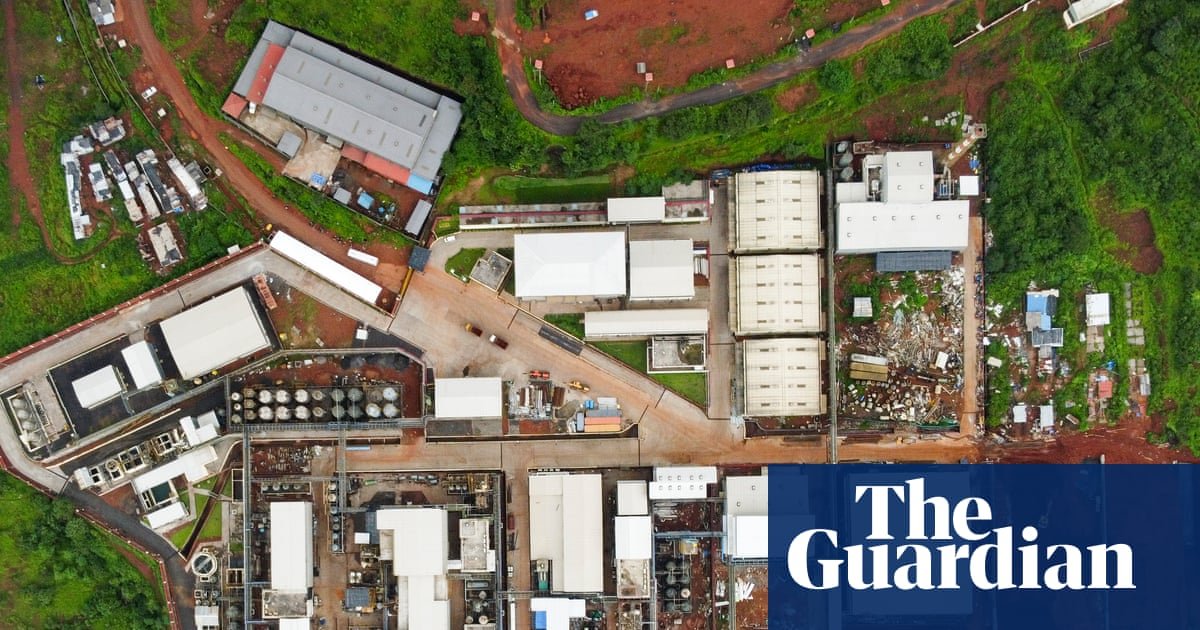
Protests against the production of the cancer-linked Pfas chemical have spread across India after an investigation revealed that an Italian factory closed due to environmental concerns had been acquired and partially rebuilt by an Indian company.
Late last year, the Guardian newspaper It has been announced that the former Mitheni factory in Vicenza has been acquired by the Indian company Lakshmi Organic Industries. The factory, which produced Pfas, was shut down in 2018 after being linked to Italy’s worst environmental pollution scandal.
In June 2025, former Myteni executives were found guilty of pollution related to the factory, a first-instance court decision widely seen as a milestone for environmental justice in Europe.
The factory left Europe’s largest contaminated aquifer, affecting more than 350,000 people in the provinces of Vicenza, Verona and Padua via drinking water. Myteni employees were the most severely affected, with one former employee exhibiting one of the highest concentrations of Pfas ever recorded in human blood.
High levels of Pfas in the blood are associated with increased risk of cancer, cardiovascular disease, liver and kidney damage, and reproductive problems.
The factory equipment was dismantled, transported and reassembled at Rote Pashuram in south Mumbai. Its purpose remains the same: to produce Pfas, also known as the “forever chemical” because it persists in the environment.
The investigation revealed that Lakshmi had incorporated some of the same products in its portfolio that were previously manufactured by Mytheni and maintained commercial relationships with customers that previously sourced from Mytheni. Lakshmi denies the contamination allegations.
Since early 2025, Lakshmi’s factory in Rote Pashuram has been fully operational, producing chemicals used in pesticides, pharmaceuticals, dyes, cosmetics and other products.
Protests and political debate spread across India after the Guardian’s findings were published. The first protest took place outside the Lotte factory gates on January 8, and was subsequently broadcast live by multiple television channels.
On February 2, the issue reached the Indian Parliament. In the Rajya Sabha upper house, Pramod Tiwari called for a federal probe into the licensing process and stressed that India still lacks specific regulations regarding Pfas.
“This pollution-related controversy has revealed major concerns over the relocation of pollution-related industrial equipment from Europe to India and the lack of Pfas regulation in the country,” Tiwari said.
A few days later, Environment Minister Kirti Vardhan Singh acknowledged in a written statement that there are no specific environmental regulations that prohibit Pfas production in India.
Several important questions regarding the transfer remain unanswered. Documents viewed guardian By March 2018, months before the Italian factory was shut down, plans for the Indian facility were prepared and work on an environmental impact assessment report and construction permit application was started, it said.
The documents raise questions about how long plans to move operations from Europe to India had been in the works before closing the Italian site.
In early March, Indian activists, representatives of contaminated regions in Europe, scientists and members of the European Parliament came together for the first time via video call. The conference was held as part of a series of events organized by MEP Cristina Guarda and the European Environment Agency as part of the debate over a proposed ban on Pfas in Europe.
The story gained renewed attention in India on March 5, when activists gathered outside the European Commission headquarters in Brussels.
On April 3, Lakshmi held a press conference denying the contamination allegations and saying it was operating in full compliance with Indian regulations. The company did not respond to multiple requests for comment for this article.
By April, thousands of people took to the streets of Lotte again to protest Pfas production and demand regulation. The demonstrations are expected to draw environmentalists, local residents and political representatives, further escalating the national debate.
“For years, we have been told this is the price of development. But no community should have to choose between work and health. What is rejected in Europe cannot simply be moved elsewhere and repackaged as progress,” said Varun Sukhraj, author, filmmaker and founder of the new activist group The Next Indian.
Additional interviews: Anna Violato, Filippo Tommasoli
This research was supported by Journalism Fund Europe and IJ4EU.
