


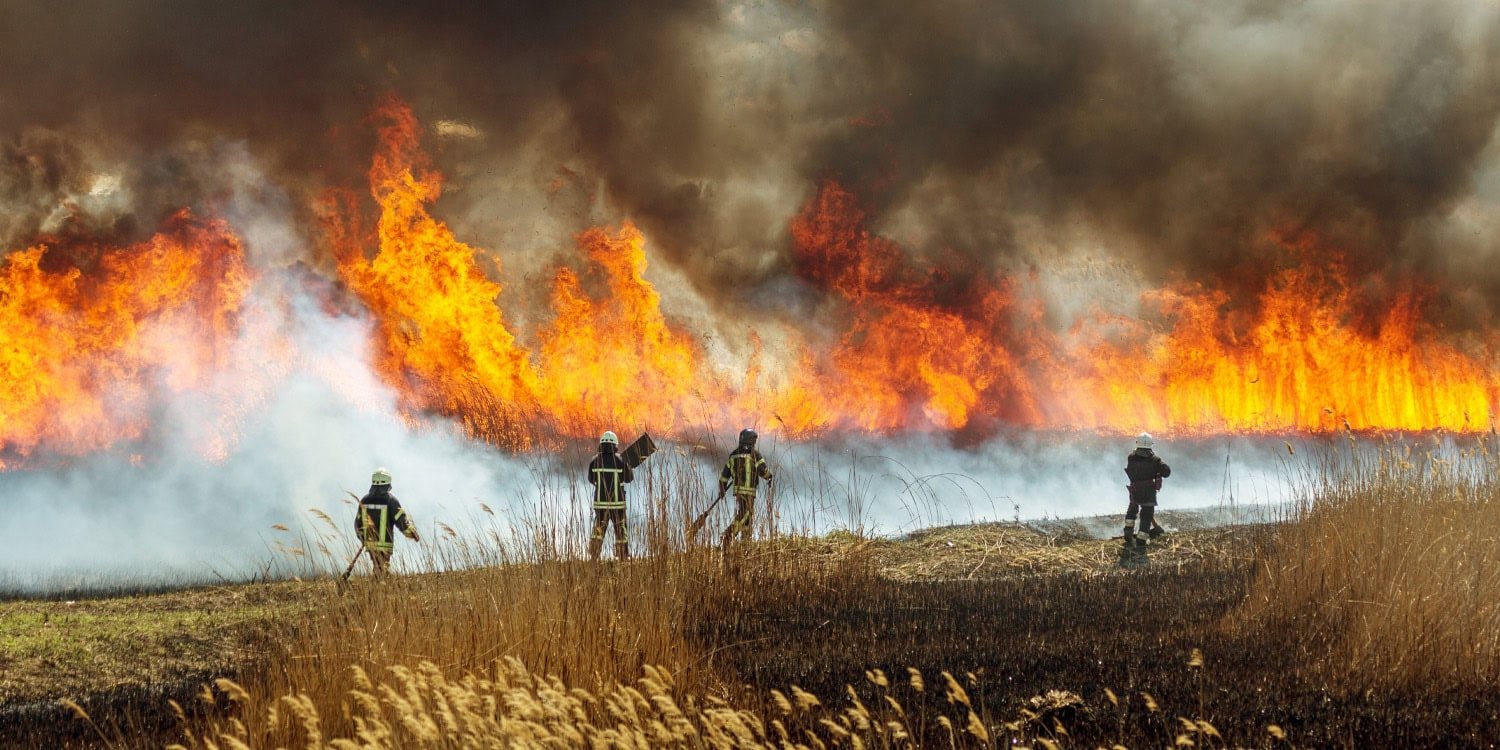
Fine particulate matter from wildfires is associated with an increase in mental health emergencies in children and teens, according to a recent multi-country analysis. Researchers observed an increase in patients presenting to emergency departments with symptoms such as anxiety, depression, and schizophrenia after days of exposure to wildfire smoke. These results are detailed in a paper published in Nature Mental Health.
Particulate matter consists of tiny water droplets and ash debris suspended in the air. These particles are incredibly small, about one-thirtieth the width of a human hair. Because of their small size, they can be inhaled deep into the lungs and easily enter the bloodstream.
Children and teens are especially vulnerable to this type of air pollution. Young people breathe more air relative to their body size compared to adults. They also have less efficient body systems to detoxify harmful chemicals, and their rapidly developing brains are highly sensitive to environmental stressors.
The smoke produced by wildfires is different from the normal air pollution found in cities. Wildfire smoke contains high concentrations of oxidizing compounds and toxic chemicals produced by the combustion of plant and organic matter. Particles in wildfire smoke also tend to be smaller than car exhaust, allowing them to travel farther on the wind and penetrate deeper into human tissue.
The study was led by public health researcher Ewen Chan from Australia’s Monash University. The study was co-supervised by Monash University epidemiologists Yuming Guo and Shanshan Li. The research team started this project to better understand how physical exposure to smoke affects the brain.
Much of the previous research on wildfires has focused on the psychological trauma of surviving a disaster. The researchers wanted to isolate the specific biological effects of breathing in the pollution itself, rather than the stress of fire. By testing air pollution, we can better measure how smoke levels are associated with sudden changes in mental health.
Researchers analyzed hospital records from 2004 to 2019 in Australia, Brazil and Canada. This large dataset included more than 3.1 million emergency department visits for youth under 20 years of age. To estimate smoke exposure, the team used advanced computer atmospheric models and machine learning programs to separate wildfire smoke from general urban pollution across 845 different communities.
The team employed a time-stratified, self-controlled study design. They compared the local air quality on the day the child visited the hospital with air quality on similar days in the same month when the child did not require emergency treatment. This method allowed the researchers to hold individual family characteristics, such as genetics and socioeconomic status, constant throughout the study period.
This analysis revealed a consistent association between spikes in wildfire smoke and hospital visits for mental health problems in children. For every microgram of wildfire particles per cubic meter of air, there was a 1.4 percent increase in emergency room visits for all mental health conditions. This increased risk lasted for six days after the first smoke exposure.
The strength of this association varied markedly across different psychiatric conditions. The diagnosis of schizophrenia had the strongest response, with a 3.7% increase in emergency department visits following smoke exposure. Anxiety-related emergency visits increased by 3%, and depression-related visits increased by 2.6%.
The researchers estimated the total annual burden of these smoke events on the health care system. Across the three countries, wildfire smoke caused an estimated 22,459 mental health emergency visits per year during the study period. Wildfire smoke accounted for a disproportionately large proportion of air pollution-related mental health visits, given that fire outbreaks are extremely rare compared to daily urban pollution.
Researchers found that certain demographic groups faced higher risk. Boys experienced a stronger association between smoking and common mental health disorders compared to girls. However, girls were shown to be at higher risk of schizophrenic emergencies, especially on smoky days.
Age also influenced how children responded to environmental hazards. Children under the age of five have increased vulnerability in most mental health categories. Researchers noted that mental health conditions in young children are rarely recognized early, largely because symptoms often manifest as behavioral outbursts or physical complaints.
Socioeconomic factors significantly varied the risk of mental health emergencies. Communities with lower average incomes and highly urbanized areas had a much higher burden of smoke-related hospital visits. Frequent exposure to non-wildfire air pollution also made children more vulnerable when wildfire smoke suddenly flooded into their neighborhoods.
Geographical differences were significant among the three countries tested. The highest association between wildfire smoke and mental health emergencies was in Brazil. On the other hand, Canadian data did not yield statistically significant associations for the youth population.
Researchers believe this discrepancy may involve a combination of chronic stress, inequality, and access to health care. Brazil experiences frequent large-scale agricultural and forest fires, and severe pollution is rapidly increasing. The country also faces high income inequality, and the public health system lacks the resources to treat the majority of severe mental illnesses.
The biological mechanisms underlying the relationship between smoke and mental health are an area of active research. When small particles enter the brain, they can cause inflammation and disrupt the biological barrier that protects the central nervous system from toxins. This contamination can also interfere with the complex hormonal systems that regulate mammalian stress responses.
Apart from direct chemical stimulation, air pollution can worsen mental health through indirect pathways. Thick smoke changes weather patterns and reduces ambient sunlight, often keeping children indoors. These environmental changes can easily disrupt sleep schedules, and sleep deprivation is well known to trigger a variety of emotional and psychological disorders.
The authors noted several limitations regarding the dataset and analysis methods. The study included data from only three countries, so the findings may not be fully representative of the world’s population as a whole. Researchers also relied on average air pollution levels across the community, which can mask differences in individual exposure.
Certain families may be altering their actual pollution intake by staying indoors, using air purifiers, or living in more enclosed homes. Because the grid resolution of atmospheric models cannot capture all local variations, scientists believe that current estimates of health risks may actually be conservative. Diagnosing the mental health of young children is also notoriously difficult, and the true number of young children affected may be underreported.
Future research on climate change will need to track individual patients more closely. Additional studies could incorporate local exposure sensors to provide more accurate measurements of what children are breathing. Researchers also want to investigate how other climate change stressors, such as extreme heat and climate anxiety, combine with air pollution to shape the well-being of future generations.
The study, “Wildfire-induced fine particulate matter and psychiatric disorders in children and adolescents,” was written by Yiwen Zhang, Shuang Zhou, Rongbin Xu, Zhengyu Yang, Wenzhong Huang, Paulo HN Saldiva, Wenhua Yu, Gongbo Chen, Micheline SZS Coelho, Tingting Ye, Yanming Liu, Pei Yu, Eric Lavigne, Jiangning Song, Yuming Guo and Xiangxiang Li.
