


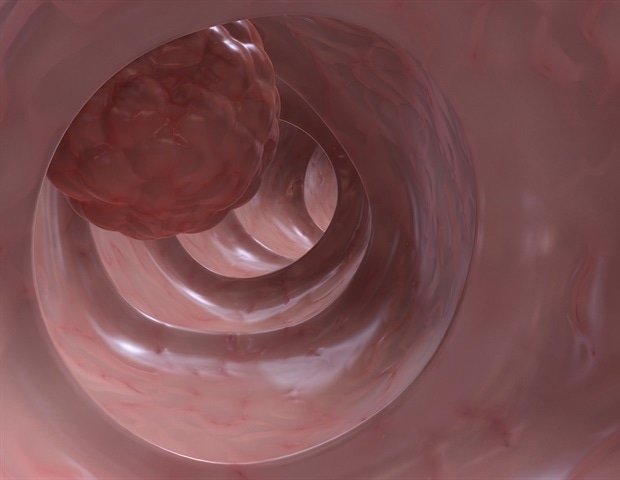
Chemotherapy drugs that target mutations common in colorectal cancer rapidly lose effectiveness in patients, leading to recurrence. Colorectal tumors often find multiple ways to resist treatment, including additional genetic mutations and activation of cellular pathways typically associated with inflammation and regeneration, according to a new preclinical study by researchers at Weill Cornell Medical Institute and MD Anderson Cancer Center. Targeting this tumor-specific inflammatory process may increase the efficacy of some anti-cancer therapies and prevent drug resistance.
Almost half of people with colorectal cancer have a mutation in the KRAS gene that causes normal cells to grow and divide uncontrollably, forming tumors. KRAS inhibitors bind to mutated KRAS proteins, inactivating them and stopping the runaway cell division that promotes tumor growth in colon cancer. The study was published on May 21st. cancer cellsshowed that tumors treated with KRAS inhibitors were able to avoid death by triggering cellular changes associated with inflammation.
“While we see many genetic changes in the tumors of patients receiving treatment, we also see non-genetic adaptive responses in drug-resistant tumors,” said Dr. Lucas Dow, professor of medical biochemistry at Weill Cornell University, who led the study. “Genetic changes often occur only in a small subset of cells, whereas inflammatory adaptive responses are more common. Inhibiting that process in preclinical models reduces the development of drug resistance.”
Co-lead author Dr. Salvador Alonso, currently an assistant professor of gastrointestinal oncology at the University of Texas MD Anderson Cancer Center, and Kevan Chu, a graduate student in the Dow lab, helped lead the study in collaboration with Dr. Rona Yeager of Memorial Sloan Kettering Cancer Center.
Tumor survival mechanism
To learn how tumors evade the effects of KRAS inhibitors, researchers analyzed mutations and gene expression to see which genes were turned on or off in the cells of patients’ colon biopsy samples taken before, during, and after treatment.
We wanted to understand exactly how tumors evade these drugs so we could get ahead of them. What we discovered was more complex and more informative than we expected. ”
Dr. Salvador Alonso, Assistant Professor of Gastrointestinal Oncology, University of Texas MD Anderson Cancer Center
The research team found that some resistant tumors carry extra copies of the drug target itself, KRAS, but acquired mutations are rare. Interestingly, some tumors have both genetic and non-genetic alterations, highlighting the challenge of identifying and addressing the causes of treatment failure. Genetic changes are changes in the DNA sequence, which is the body’s biological “instruction manual.” Non-genetic changes affect how these instructions are used without changing the underlying DNA code itself.
Genetic mutations are not the smoking gun, so the researchers looked at non-genetic mechanisms that might help tumors adapt to KRAS inhibitors. By analyzing hundreds of thousands of individual cells within tumor slices, the researchers discovered consistent gene expression changes during the early stages of treatment. Of note, inflammation-related transcripts were often increased in malignant cells of tumors during the early stages of treatment and then decreased after resistance developed.
The researchers then looked closely at whether immune cells recruited to the tumor site to fight cancer caused the increase in inflammatory factors, or whether the cancer cells themselves were to blame. They conducted experiments on organoids. Organoids are malignant colorectal cells that grow in a three-dimensional matrix in a dish and are not exposed to other cells. The researchers observed a similar increase in inflammation-related gene expression immediately after treatment.
“When we block these inflammatory signals with organoids treated with KRAS inhibitors, we see a reduction in drug resistance,” said Dr. Dow, who is also a member of the Sandra Edward Meyer Cancer Center at Weill Cornell University. “This result suggests that the drug causes changes within tumor cells that ultimately contribute to the emergence of resistance to the drug.”
better together
Researchers screened for drugs that inhibit kinases involved in inflammatory signaling and identified TBK1 as a promising target. Combining TBK1 and KRAS inhibitors in patient-derived tumor models significantly slowed cancer cell growth compared to either drug alone. Importantly, the researchers showed that because TBK1 inflammatory signals occur inside tumor cells, targeting them could disrupt the cancer’s internal alarms rather than broadly suppressing a patient’s immune defenses.
“We believe that selectively blocking drug-induced inflammation rather than interfering with the immune system as a whole may prevent tumor cells from adapting to treatment and help improve outcomes with KRAS inhibitors,” Dr. Dow said.
sauce:
Reference magazines:
Alonso, S. Others. (2026). Co-occurrence of genetic and non-genetic resistance mechanisms to KRAS inhibition in colorectal cancer. cancer cells. DOI: 10.1016/j.ccell.2026.04.009. https://www.cell.com/cancer-cell/abstract/S1535-6108(26)00220-5
