


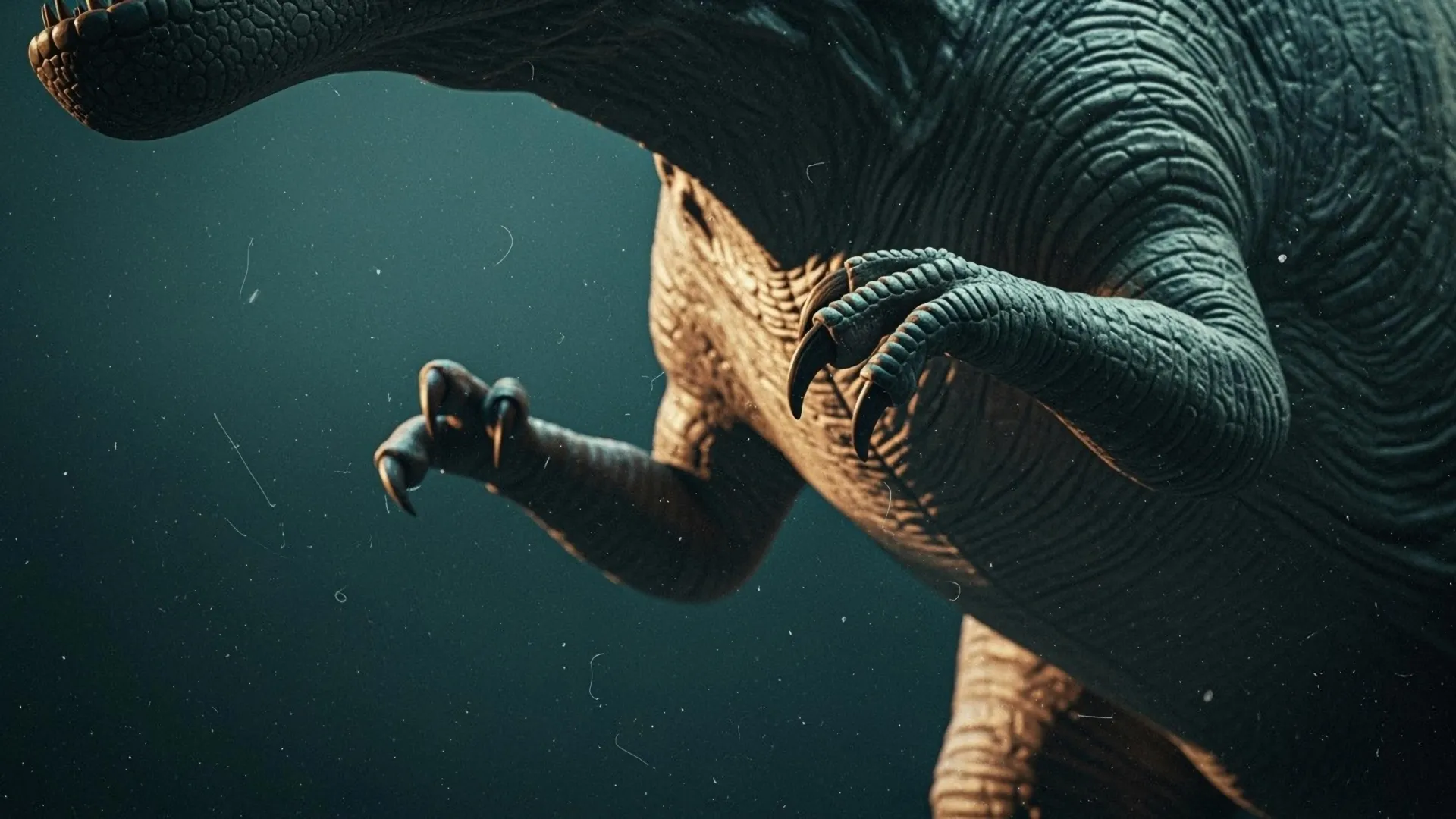
The famous little arm tyrannosaurus rex A new study led by researchers from University College London and the University of Cambridge says this may have been the result of a major change in the way giant carnivorous dinosaurs hunted.
This study Proceedings of the Royal Society Bstudied 82 species of theropods, a group of primarily carnivorous two-legged dinosaurs. Scientists have found that reduced forelimbs evolved independently in at least five dinosaur lineages, including the tyrannosaurids. tyrannosaurus.
The study suggests that arm reduction is closely related to the evolution of large, powerful skulls and jaws, rather than simply a side effect of increasing body size.
A giant skull has taken over the hunt.
Researchers found that dinosaurs with short arms tended to have particularly strong skulls. The connection was stronger than the connection between small arms and overall body size.
The researchers say this may reflect a major evolutionary change in hunting strategy. As giant plant-eating dinosaurs like sauropods became more common, predators may have come to rely less on grabbing prey with their claws and more on delivering devastating bites.
Lead author Charlie Roger Scherer, a PhD student in UCL Earth Sciences, said: tyrannosaurus had small arms, but other giant theropod dinosaurs also evolved relatively small forelimbs. of carnotaurus The arms were ridiculously small, smaller than a person’s. tyrannosaurus.
“We sought to understand what was causing this change and found a strong relationship between shorter arms and a larger, more powerfully built head. The head took over the arm as a means of attack. It’s a case of ‘use it or lose it’; the arm is no longer useful and shrinks in size over time.”
“These adaptations often occurred in areas with large prey. Trying to grab a 100-foot-long sauropod by pulling it with your claws is not ideal. Attacking and grabbing it with your jaws might have been more effective.”
Scherer added that evidence shows that the skull strengthens before the arm begins to shrink.
“Our study identifies a correlation, so we can’t prove cause and effect, but it’s very likely that a more robustly built skull came before shorter forelimbs. It makes no evolutionary sense for it to happen the other way and for these predators to abandon their attack mechanism without backup.”
Measuring the strength of dinosaur skulls
To investigate the relationship between arm size and skull forces, researchers developed a new method to measure skull robustness. Their approach took into account several factors, including occlusal forces, skull shape, and strength of cranial connections. A compact skull was thought to be stronger than a long, narrow skull.
Using this system, tyrannosaurus It was ranked as the strongest skull in the study. who was right behind tyrannotitananother giant theropod that lived in what is now Argentina more than 30 million years ago tyrannosaurus Early Cretaceous.
The researchers believe that giant prey animals may have triggered an “evolutionary arms race” in which predators evolved stronger jaws and skulls to overwhelm increasingly large herbivores. Often these hunters themselves also grew to enormous sizes.
Multiple dinosaur groups evolved small arms
The researchers compared forelimb length to skull length and identified five groups of dinosaurs with significantly shortened forelimbs. These include tyrannosaurids, abelisaurids, and carcharodontosaurids ( tyrannotitan), megalosauridae, ceratosauridae.
Their analysis found that small arms were more strongly associated with skull sturdiness than either skull size or whole-body size.
The study also highlighted that not all of these predators are huge. MajungasaurusFor example, it weighed only about 1.6 tons, and although it weighed about a fifth of its body weight, it had a massive skull and very small weapons. tyrannosaurus. This dinosaur lived in Madagascar about 70 million years ago and was still considered an apex predator.
Different paths to the same result
Scientists also discovered that dinosaur groups shrunk their forelimbs in different ways over time.
In abelisaurids, the hand and lower part of the arm from the elbow were dramatically smaller, and in later species Majungasaurus Very small hands are developed. However, tyrannosaurs showed a more balanced reduction across the forelimb.
The researchers concluded that separate dinosaur lineages likely followed different evolutionary and developmental paths to the same outcome.
The research was carried out by UCL’s extensive research group focused on dinosaur evolution, in close collaboration with the Natural History Museum. The group includes research fellows, postdocs, and more than 10 PhD students who study dinosaurs and other vertebrates such as crocodiles and birds.
