

Close Menu

    Subscribe to Updates

    Get the latest creative news from FooBar about art, design and business.

    What's Hot

    Tyrannosaurus’ tiny arms may have evolved for surprisingly brutal reasons

    May 20, 2026

    Senate Democrats push for first new Medicare benefits in decades | Status

    May 20, 2026

    Lost for 150,000 years: discovery of rainforest changes human history forever

    May 20, 2026
    Facebook X (Twitter) Instagram
    Facebook X (Twitter) Instagram
    Health Magazine
    • Home
    • Environmental Health
    • Health Technology
    • Medical Research
    • Mental Health
    • Nutrition Science
    • Pharma
    • Public Health
    • Discover
      • Daily Health Tips
      • Financial Health & Stability
      • Holistic Health & Wellness
      • Mental Health
      • Nutrition & Dietary Trends
      • Professional & Personal Growth
    • Our Mission
    Health Magazine
    Home » News » Scientists use DNA from poop to save world’s rarest marsupial
    Nutrition Science

    Scientists use DNA from poop to save world’s rarest marsupial

    healthadminBy healthadminMay 20, 2026No Comments4 Mins Read
    Scientists use DNA from poop to save world’s rarest marsupial
    Share
    Facebook Twitter Reddit Telegram Pinterest Email


    New research from Edith Cowan University (ECU) could provide an important boost to efforts to save the world’s rarest marsupials.

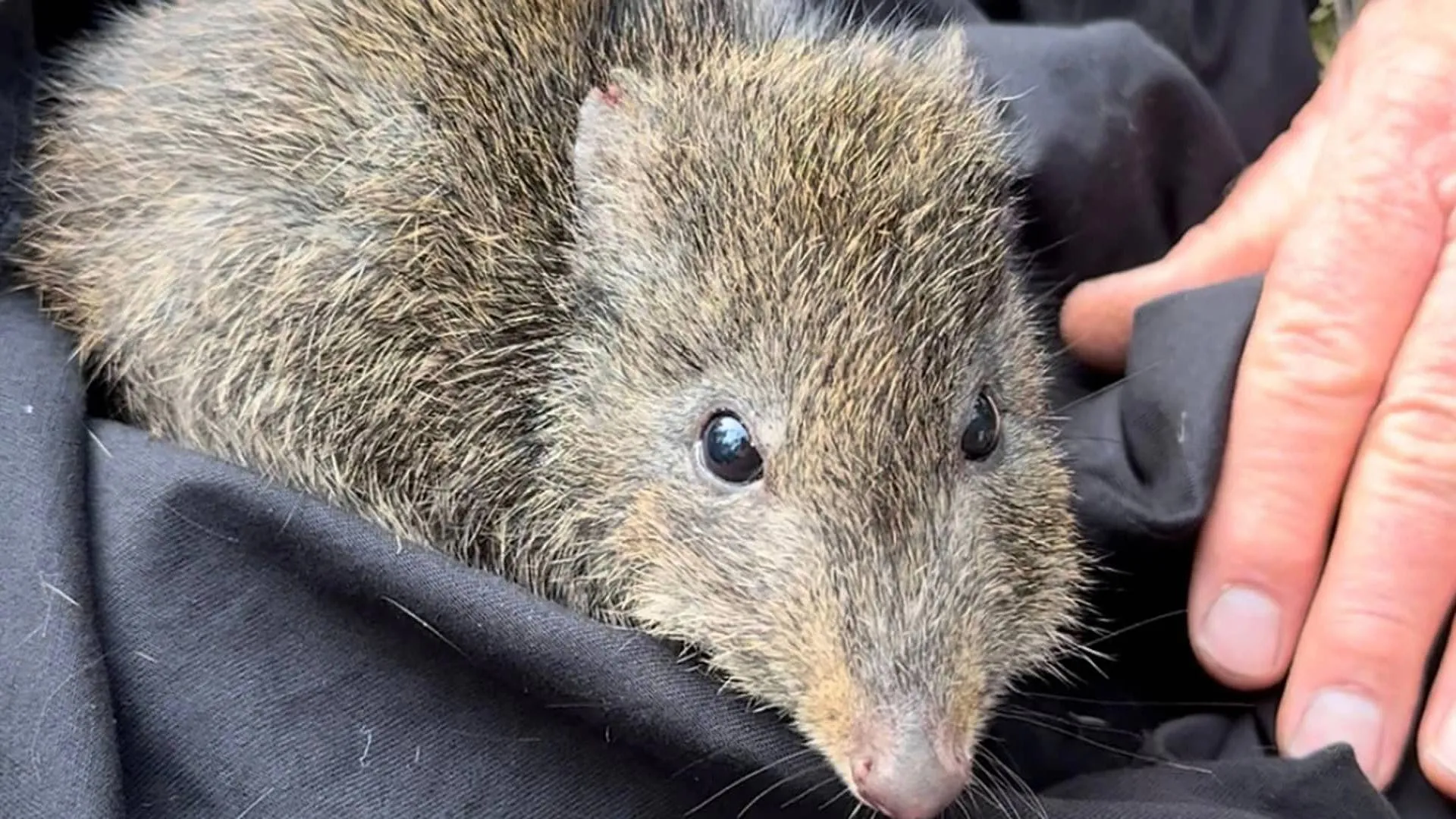
    The Gilbert Potoroo is an endangered species found only in Western Australia, with fewer than 150 animals left in the wild. Scientists from ECU and the Department of Biodiversity, Conservation and Attractions (DBCA) are working together to better understand what the small marsupials eat, so conservation teams can identify suitable new habitats and secure the future of the species.

    “We aim to recover species through translocation, where we move organisms from one place to another, creating an insurance population in case something happens to an existing population,” explains Rebecca Quar, a PhD student in the School of Science.

    “One of the challenges then was to determine what they eat and where those resources can be found. Studying the diet of mycophagus, or fungi-eating mammals, is very difficult because many fungi have not yet been described.”

    Researching diet using fecal and urine DNA

    To investigate the potoroo’s diet, the researchers used environmental DNA (eDNA) metabarcoding of fecal (fecal) samples. This technique is becoming increasingly popular in wildlife research because it allows scientists to study animals without disturbing them.

    “Traditionally, researchers looked at undigested material in feces to study an animal’s diet, but identifying fungal spores remained a challenge,” Quah said.

    “In this study, we used a molecular technique known as eDNA metabarcoding to decipher what the animals were eating. It’s a non-invasive way to study diet, and all it takes is fresh feces from the environment.”

    The researchers also investigated whether the diets of more common fungi-eating mammals overlap with Gilbert Potoroo. The researchers focused on species that historically shared the same habitat.

    “We looked at quokka, quenda and woodrat faeces and found that there is some overlap in the diets of the four mammal species, and that the habitat use of quokkas and potoroos is also very similar,” Kua said.

    “Based on our results, we recommend focusing on areas where all three species persist together as indicators of suitable food or habitat for future potoro translocation sites.”

    Thought to be extinct but rediscovered

    Gilbert’s Potoroo was thought to be completely extinct until it was rediscovered in 1994. Since then, conservation teams have tried several approaches to increase the population.

    “Shortly after their rediscovery, attempts to breed them in captivity were unsuccessful, especially because they are very picky about food resources,” she said.

    “This is why wild-to-wild translocation is so important. In 2015, wildfires destroyed 90 per cent of the core potoroo habitat in Two People’s Bay, home to the only natural population of Gilbert’s potoroo. Fortunately, insurance populations had been established by the DBCA in fenced enclosures at Bald Island and Waychinicup National Park.”

    DBCA researcher Dr Tony Friend said researchers were now looking for other suitable locations on the mainland to establish additional populations. The species is now spread to four locations, including two islands off the coast of Western Australia.

    “Searching for new translocation sites is an important next step in restoring the Gilbert potoroo from the brink of extinction. This paper shows that examining the mammalian mycophagy associated with the potoroo may help decide where to establish new populations,” said Dr. Friend.

    Why fungi-eating mammals are important

    Mr. Quah’s extensive doctoral research focuses on the conservation and migration of fungi-eating mammals, which play a critical role in maintaining healthy ecosystems.

    “Fungi-eating mammals are ecosystem engineers, seeking out fungi to aid soil metabolism and acting as vectors to spread fungal spores.

    “Fungi have several ecological functions, including mutually beneficial relationships with plants, so fungi-eating mammals are critical to maintaining healthy ecosystems.

    “Unfortunately, many of Australia’s mammals are at risk of extinction due to predation by non-native cats and foxes. That’s why it’s important that we do everything we can to protect our native wildlife, and translocation is one important way to achieve that goal.”


    Source link

    Visited 3 times, 3 visit(s) today
    Share. Facebook Twitter Pinterest LinkedIn Telegram Reddit Email
    Previous ArticleHumpback whale breaks migration record with 15,000km ocean journey
    Next Article Lost for 150,000 years: discovery of rainforest changes human history forever
    healthadmin

    Related Posts

    Tyrannosaurus’ tiny arms may have evolved for surprisingly brutal reasons

    May 20, 2026

    Lost for 150,000 years: discovery of rainforest changes human history forever

    May 20, 2026

    Humpback whale breaks migration record with 15,000km ocean journey

    May 20, 2026

    Scientists discover strange link between vitamin D and pain

    May 20, 2026

    Breakthrough drug reverses skin aging and dramatically speeds healing

    May 20, 2026

    Hidden earthquake fault beneath Seattle may be more dangerous than expected

    May 19, 2026
    Add A Comment
    Leave A Reply Cancel Reply

    Categories

    • Daily Health Tips
    • Discover
    • Environmental Health
    • Exercise & Fitness
    • Featured
    • Featured Videos
    • Financial Health & Stability
    • Fitness
    • Fitness Updates
    • Health
    • Health Technology
    • Healthy Aging
    • Healthy Living
    • Holistic Healing
    • Holistic Health & Wellness
    • Medical Research
    • Medical Research & Insights
    • Mental Health
    • Mental Wellness
    • Natural Remedies
    • New Workouts
    • Nutrition
    • Nutrition & Dietary Trends
    • Nutrition & Superfoods
    • Nutrition Science
    • Pharma
    • Preventive Healthcare
    • Professional & Personal Growth
    • Public Health
    • Public Health & Awareness
    • Selected
    • Sleep & Recovery
    • Top Programs
    • Weight Management
    • Workouts
    Popular Posts
    • 1773313737_bacteria_-_Sebastian_Kaulitzki_46826fb7971649bfaca04a9b4cef3309-620x480.jpgHow Sino Biological ProPure™ redefines ultra-low… March 12, 2026
    • the-pros-and-cons-of-paleo-dietsThe Pros and Cons of Paleo Diets: What Science Really Says April 16, 2025
    • pexels-david-bartus-442116The food industry needs to act now to cut greenhouse… January 2, 2022
    • 1773729862_TagImage-3347-458389964760995353448-620x480.jpgDespite safety concerns, parents underestimate the… March 17, 2026
    • 1773209206_futuristic_techno_design_on_background_of_supercomputer_data_center_-_Image_-_Timofeev_Vladimir_M1_4.jpegMulti-agent AI systems outperform single models… March 11, 2026
    • 1774403998_image_28620e4b6b0047f7ab9154b41d739db1-620x480.jpgGait pattern helps distinguish between Lewy body… March 24, 2026

    Demo
    Stay In Touch
    • Facebook
    • Twitter
    • Pinterest
    • Instagram
    • YouTube
    • Vimeo
    Don't Miss

    Tyrannosaurus’ tiny arms may have evolved for surprisingly brutal reasons

    By healthadminMay 20, 2026

    The famous little arm tyrannosaurus rex A new study led by researchers from University College…

    Senate Democrats push for first new Medicare benefits in decades | Status

    May 20, 2026

    Lost for 150,000 years: discovery of rainforest changes human history forever

    May 20, 2026

    Scientists use DNA from poop to save world’s rarest marsupial

    May 20, 2026

    Subscribe to Updates

    Get the latest creative news from SmartMag about art & design.

    HealthxMagazine
    HealthxMagazine

    At HealthX Magazine, we are dedicated to empowering entrepreneurs, doctors, chiropractors, healthcare professionals, personal trainers, executives, thought leaders, and anyone striving for optimal health.

    Our Picks

    Scientists use DNA from poop to save world’s rarest marsupial

    May 20, 2026

    Humpback whale breaks migration record with 15,000km ocean journey

    May 20, 2026

    Scientists discover strange link between vitamin D and pain

    May 20, 2026
    New Comments
      Facebook X (Twitter) Instagram Pinterest
      • Home
      • Privacy Policy
      • Our Mission
      © 2026 ThemeSphere. Designed by ThemeSphere.

      Type above and press Enter to search. Press Esc to cancel.