


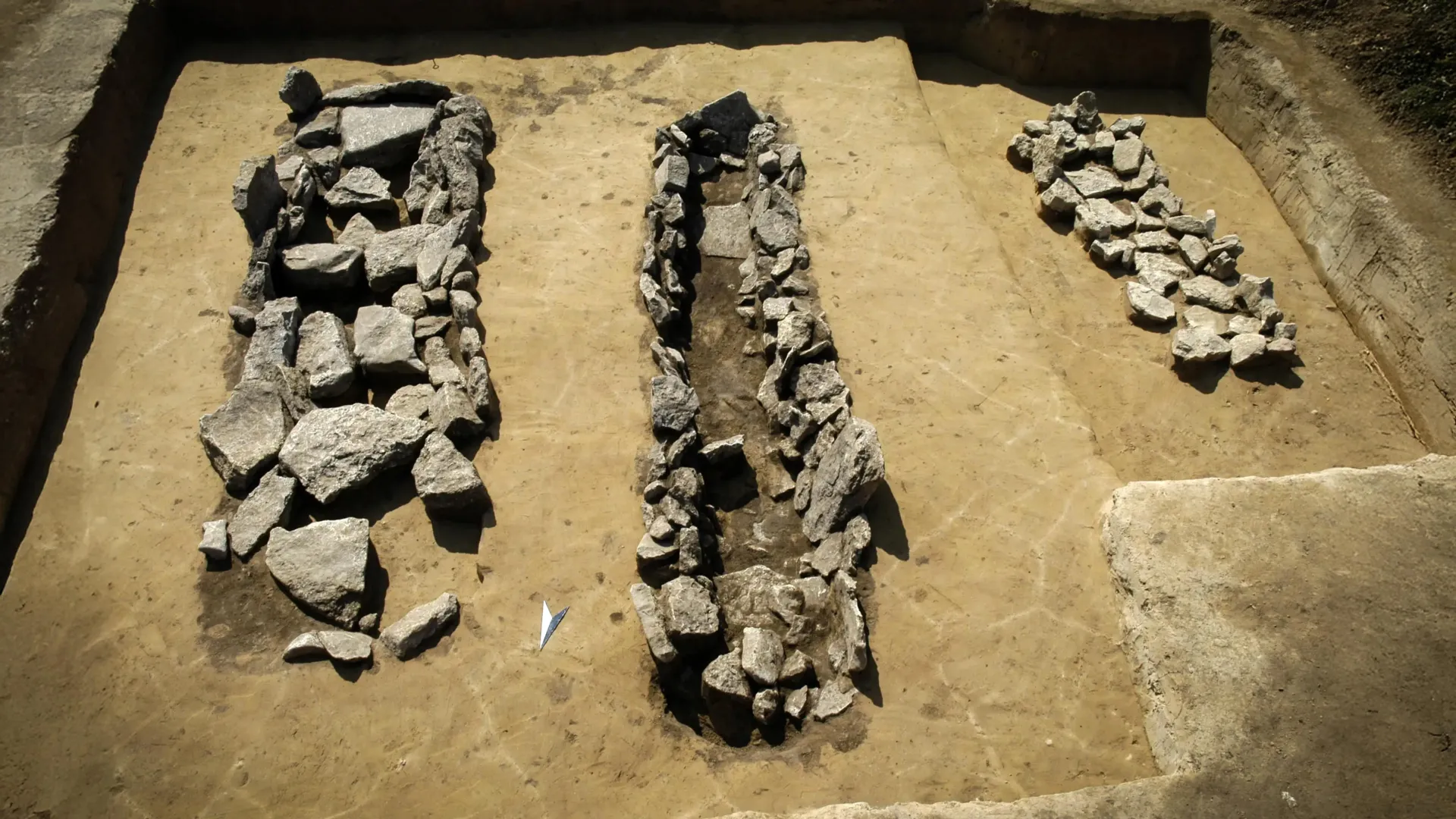
A major new study sheds light on daily life in central Europe during the Late Bronze Age (c. 1300-800 BC). This period was known as the Wurnfield Culture, which saw major social and cultural changes such as the widespread use of cremation.
Published in nature communicationsThe study combines archaeology, ancient DNA analysis, isotopic studies and skeletal evidence to reconstruct how people lived, moved, ate and buried their dead nearly 3,000 years ago. It has long been difficult to study this period in detail because cremation destroys much of the biological material that scientists typically study.
To overcome this challenge, an international research team focused on rare non-cremated burials discovered in Germany, the Czech Republic, and Poland. They also analyzed cremated remains from archaeological sites in central Germany, such as Cuckenburg and Esperstedt, excavated by the Saxony-Anhalt Department of Heritage Management and Archaeology.
Ancient DNA reveals gradual changes
The researchers examined ancient DNA, stable isotopes of oxygen and strontium, and buried human bones. They then compared their results to genetic data from neighboring regions to better understand how the community changed over time.
“This study tells us how people lived through change,” says Eleftheria Orfanou, a doctoral candidate at the Max Planck Institute for Evolutionary Anthropology in Leipzig and lead author of the study. “The Late Bronze Age was not experienced as a single moment of change, but as a series of choices about food and survival strategies, burials, and social relationships, made within communities closely tied not only to the landscape but also to their neighbors.”
Genetic evidence points to slow, regionally diverse ancestry changes rather than sudden population turnover. In central Germany, these changes became mainly noticeable during the later stages of the Late Bronze Age. The findings suggest that the community is increasingly connected to areas south and southeast of the Danube, while maintaining strong local traditions.
Most people stayed close to home
Isotope analysis has helped scientists determine where individuals were likely raised and whether they moved during their lifetime. Strontium and oxygen isotopes preserved in human remains act like chemical fingerprints tied to the local environment.
Most people studied in central Germany, both cremated and non-cremated, appeared to live locally in the area where they were buried. The researchers say this suggests that ideas and cultural practices spread primarily through contact, trade and social interaction, rather than large-scale movements of people.
Millet changed the diet of the Bronze Age
The study also revealed changes in dietary habits during the Late Bronze Age. Researchers found evidence that local communities began eating broom sorghum millet at an early stage. This crop only recently arrived in Europe from northeastern China.
Scientists believe that millet became popular because it has adapted well to environmental and economic pressures. However, the introduction of millet was not accompanied by major genetic changes, indicating that local populations accepted the new crop without large-scale population turnover.
Interestingly, millet consumption has since declined. Later in the Late Bronze Age, people seem to have returned to more traditional crops such as wheat and barley. Researchers say this pattern reflects experimentation and adaptability rather than permanent agricultural transformation.
Evidence that life is tough but there are almost no epidemics
The researchers also looked for signs of illness and physical stress. DNA evidence revealed bacteria associated with oral health problems, including dental disease, but there were no signs of widespread epidemic infection.
Skeletal evidence showed signs of childhood stress, joint wear, and occasional injuries, suggesting a physically demanding lifestyle. Despite these challenges, most people were generally in good overall health.
Diverse burial rituals in Bronze Age Europe
The findings also highlight the wide variety of funeral rites practiced during the Wurnfield era. Communities practiced cremation, traditional burials, skull-only burials, and complex multi-stage burial rituals, sometimes within the same settlement.
“These practices don’t seem peripheral or atypical,” Orfanou explains. “But it was part of a wider repertoire that people were able to choose from during the Arnfield period, and was associated with the creation of memories, identities and ideas about what it meant to be a person in the Late Bronze Age.”
Using a combination of archaeological, anthropological, genetic, and isotopic evidence, researchers describe Late Bronze Age Europe as a dynamic, interconnected world where local communities combined innovation with long-standing traditions.
Wolfgang Haack, project leader at the Max Planck Institute for Evolutionary Anthropology, concluded: “Change and innovation were integrated into existing traditions. These communities actively shaped their lifestyles and created hybrid practices that had local meaning in an increasingly interconnected world.”
