


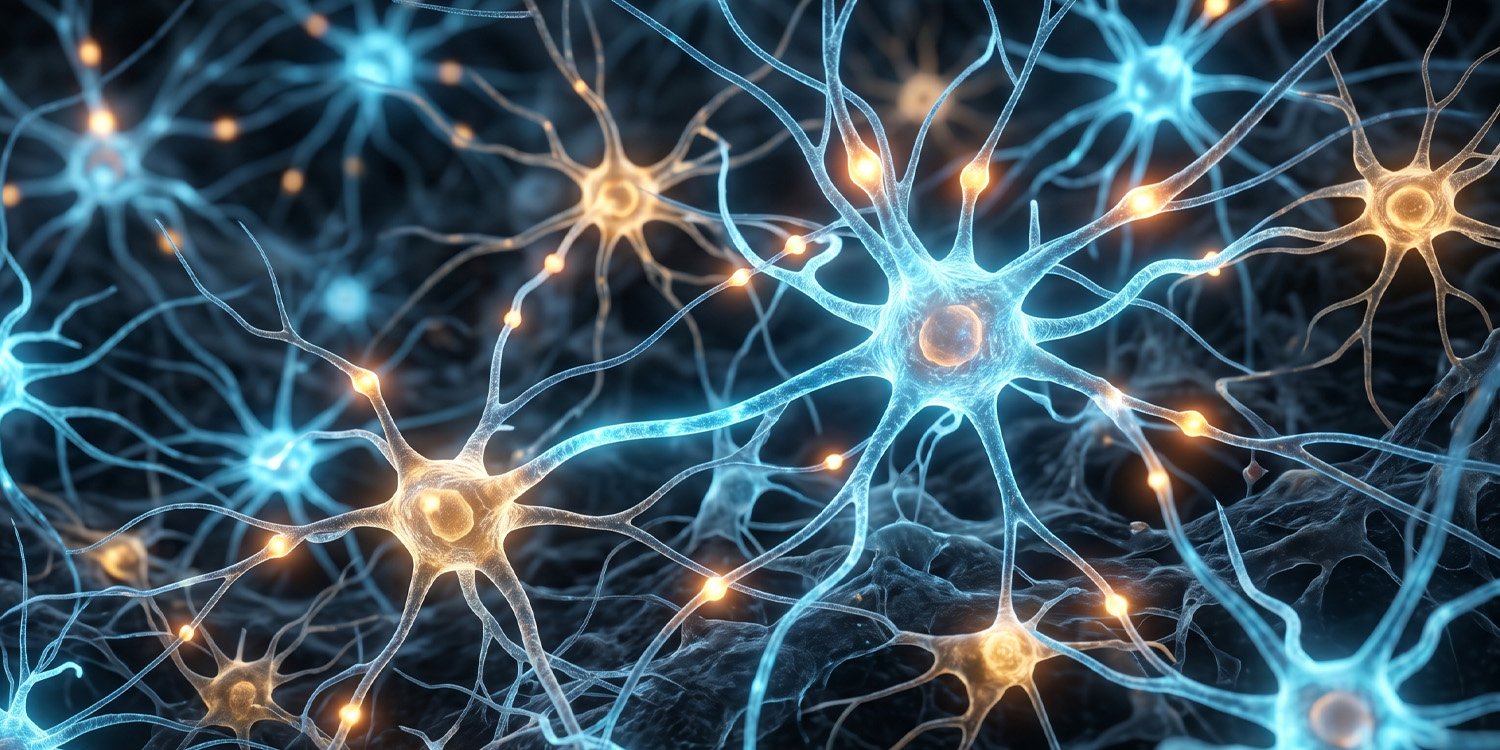
Assembling a healthy brain requires new cells to travel incredibly long distances before reaching their correct final destination. Recent studies in laboratory mice have revealed that dopamine receptors on resting support cells act like traffic lights, slowing the migration of neurons so that they settle in the correct area. These findings, published in the European Journal of Neuroscience, suggest that early disruptions in dopamine signaling can permanently alter the brain’s wiring and network connectivity.
Principal investigator Anne-Gaëlle Touttin, a neurobiology researcher at the Institut Fer à Moulin in Paris, conducted the study with corresponding author Christine Metane and several other academic collaborators. The research team focused on analyzing the cerebral cortex, the brain’s wrinkled outer blanket responsible for higher cognitive functions. For the entire brain to function properly, the cellular composition of this cortical region must be perfectly balanced.
Most individual cells in the cortex are excitatory neurons, which periodically send active signaling impulses to other parts of the mammalian brain. To prevent the brain from becoming overactive or overwhelmed, the cortex also relies heavily on inhibitory cells known as interneurons. These tiny interneurons act as an important cellular brake system, periodically releasing chemicals that calm activity throughout the network.
While excitatory neurons are born locally in the developing cortex, inhibitory interneurons face a much more difficult and demanding physical journey. They originally appear deep in the center of the fetal brain in a structure known to developmental biologists as the medial ganglionic eminence. From there, they must travel long distances outward and upward to settle in the developing outer cortex.
Neuroscientists have long recognized that this migration of brain cells is a highly planned and delicate biological process. To arrive safely at the correct destination, migrating interneurons must continuously read chemical cues distributed throughout the cellular environment. Among these developmental cues is dopamine, a common brain chemical well known for increasing feelings of reward and motivation in the adult brain.
Biologists have evidence that dopamine is actually present very early in fetal development, long before the brain is fully wired and functional. Developing embryonic cells commonly detect this chemical using specific surface proteins called D1 dopamine receptors. Tuten and the entire research team wanted to know exactly how these sensory receptors physically guide migrating interneurons over long distances.
Research on fetal dopamine signaling has far-reaching and tangible public health implications. For example, human babies exposed to illicit drugs such as cocaine in the womb often have smaller head sizes and an increased biological risk of seizures. Addictive substances directly attack the dopamine system, thereby altering the delicate chemical balance needed to properly wire the fragile fetal brain.
To precisely map the cell’s topography, the researchers engineered laboratory mice to produce a fluorescent protein that glowed wherever D1 receptors were active. This built-in visual marker allowed scientists to directly map the exact physical location of dopamine-sensing cells in the fetal brain. They soon observed a strangely high concentration of D1 receptors clustered in the deepest layers of the newly developing cortex.
Cells enriched with these unique receptors formed a remarkably dense and continuous cell layer along the physical path that migrating interneurons typically follow toward the surface. The research team also used analytical chemistry techniques to quantitatively confirm that raw dopamine was floating freely in these precise regions. This confirmed that deep cortical cells actively responded to chemicals, while interneurons were actively passing through the cells.
To find out exactly how the D1 receptor affects this cell movement, the researchers set up isolated cell cultures in flat laboratory dishes. They extracted migrating interneurons and placed them on top of an artificial substratum composed of completely stationary cortical cells. The research team also introduced a highly targeted genetic tool to selectively remove D1 receptors from different tissues before ultimately combining the tissues.
This mixing and matching allowed the researchers to observe exactly what happens when the receptor is completely missing from migrating cells, quiescent cells, or both cells. They used sophisticated time-lapse video microscopy to track the tiny movements of the cells over 20 continuous hours. The footage obtained as a result of this particular biological experiment defied initial scientific expectations about how brain cells normally behave.
Genetically removing D1 receptors from the migrating interneurons themselves did little to change typical travel habits. But when the researchers removed the sensory receptors from the resting cortical cells, the migrating interneurons suddenly started moving at incredibly fast speeds. Migrating cells darted forward rapidly and at a much higher frequency, with significantly shorter rest periods than fully unmodified cells.
This kind of strange phenomenon is known in developmental biology as a non-cell autonomous effect. Specific genetic changes in one individual supporting cell essentially determine the physical movement behavior of completely different brain cells. Active D1 receptors on resting cortical cells normally act exactly like rough terrain, significantly slowing down the speed of migrating neurons to a much more manageable physiological pace.
To see whether this fast-paced embryonic migration permanently changes the brain’s functional anatomy, the researchers took a closer look at fully grown adult mice. They engineered a dedicated group of test mice so that only quiescent cortical cells lacked D1 receptors. Because migrating interneurons in these mice retain completely normal genetics, subsequent structural changes can undoubtedly be attributed to changes in cellular topography.
The researchers counted two distinct biological populations of interneurons to see where they ultimately settle in the adult brain. One population consists of somatostatin-producing cells, which typically migrate very early in the general timeline of embryonic development. The other group consists of parvalbumin-producing cells, which typically migrate a few days after the normal fetal maturation schedule.
Both subsets of cells significantly overshot their originally intended marks because they traversed the slippery cellular terrain too quickly. Early somatostatin cells accumulated in unusually high numbers at the anterior and middle edges of the fully formed cortex. Later parvalbumin cells essentially accumulated in dense sensory areas deep within the mature brain.
Finally, the researchers evaluated mice that completely lacked the critical D1 receptor and had genetic instructions that prevented any cells in the body from detecting the targeted dopamine signal. This deep genetic model closely resembles the biological reality of severe mutations throughout organisms. Without the primary D1 receptors that guide early cortical growth, the overall physical volume of the cerebral cortex was dramatically reduced by about a quarter.
Despite experiencing this significant reduction in total brain volume, interneurons still clustered in exactly the same abnormal structural pattern at the outer edges of the cortex. This crucial stage of research showed that the physical environment created by cortical cells is overwhelmingly dominant in the cell migration process. Even in stunted biological brains, the cellular speed bump was lost, causing migrating cells to fly blindly toward their outermost boundaries.
There are still some experimental pieces missing in this fascinating neurobiological puzzle. The exact biological mechanism that quiescent cortical cells use to slow down sweeping interneurons is still unknown to the scientific community at large. Active dopamine receptors can alter the overall physical shape of supporting cells and ultimately subtly alter the stickiness or slipperiness of the cell surface.
Future researchers will critically need to disentangle the hidden physical and chemical interactions that occur at the precise microscopic locations where these two cell types frequently come into contact. Uncovering these hidden mechanisms may ultimately shed light on a variety of poorly understood developmental disorders. The brains of some patients medically diagnosed with schizophrenia or autism have a well-established feature of abnormally high or low density of local interneurons.
Interference with fetal dopamine signaling by genetic traits or external environmental factors can ultimately lead to these permanent lifelong structural changes. The latest findings show how these seemingly small molecular events can ripple outward and reshape the entire physical structure of the brain. Understanding this early cellular journey will ultimately serve as a fundamental starting point for treating a wide range of neurodevelopmental disorders.
The study, “Ablation of D1 dopamine receptors alters the migration and cortical distribution of MGE-derived inhibitory interneurons through a predominant non-cell-autonomous effect,” was co-authored by Anne-Gaëlle Toutain, Sophie Scotto-Lomasse, Aude Muzerelle, Julien Puech, Ariane Fayad, Anne Roumier, Denis Hervé, and Christine Metane.
