

Close Menu

    Subscribe to Updates

    Get the latest creative news from FooBar about art, design and business.

    What's Hot

    The Biggest Clinical Trial Breakthroughs Shaping 2026 Medicine

    May 18, 2026

    ‘Miracle mineral’ asbestos linked to mesothelioma still kills veterans

    May 18, 2026

    A plant believed to be extinct for 60 years suddenly makes a comeback

    May 18, 2026
    Facebook X (Twitter) Instagram
    Facebook X (Twitter) Instagram
    Health Magazine
    • Home
    • Environmental Health
    • Health Technology
    • Medical Research
    • Mental Health
    • Nutrition Science
    • Pharma
    • Public Health
    • Discover
      • Daily Health Tips
      • Financial Health & Stability
      • Holistic Health & Wellness
      • Mental Health
      • Nutrition & Dietary Trends
      • Professional & Personal Growth
    • Our Mission
    Health Magazine
    Home » News » A plant believed to be extinct for 60 years suddenly makes a comeback
    Nutrition Science

    A plant believed to be extinct for 60 years suddenly makes a comeback

    healthadminBy healthadminMay 18, 2026No Comments4 Mins Read
    A plant believed to be extinct for 60 years suddenly makes a comeback
    Share
    Facebook Twitter Reddit Telegram Pinterest Email


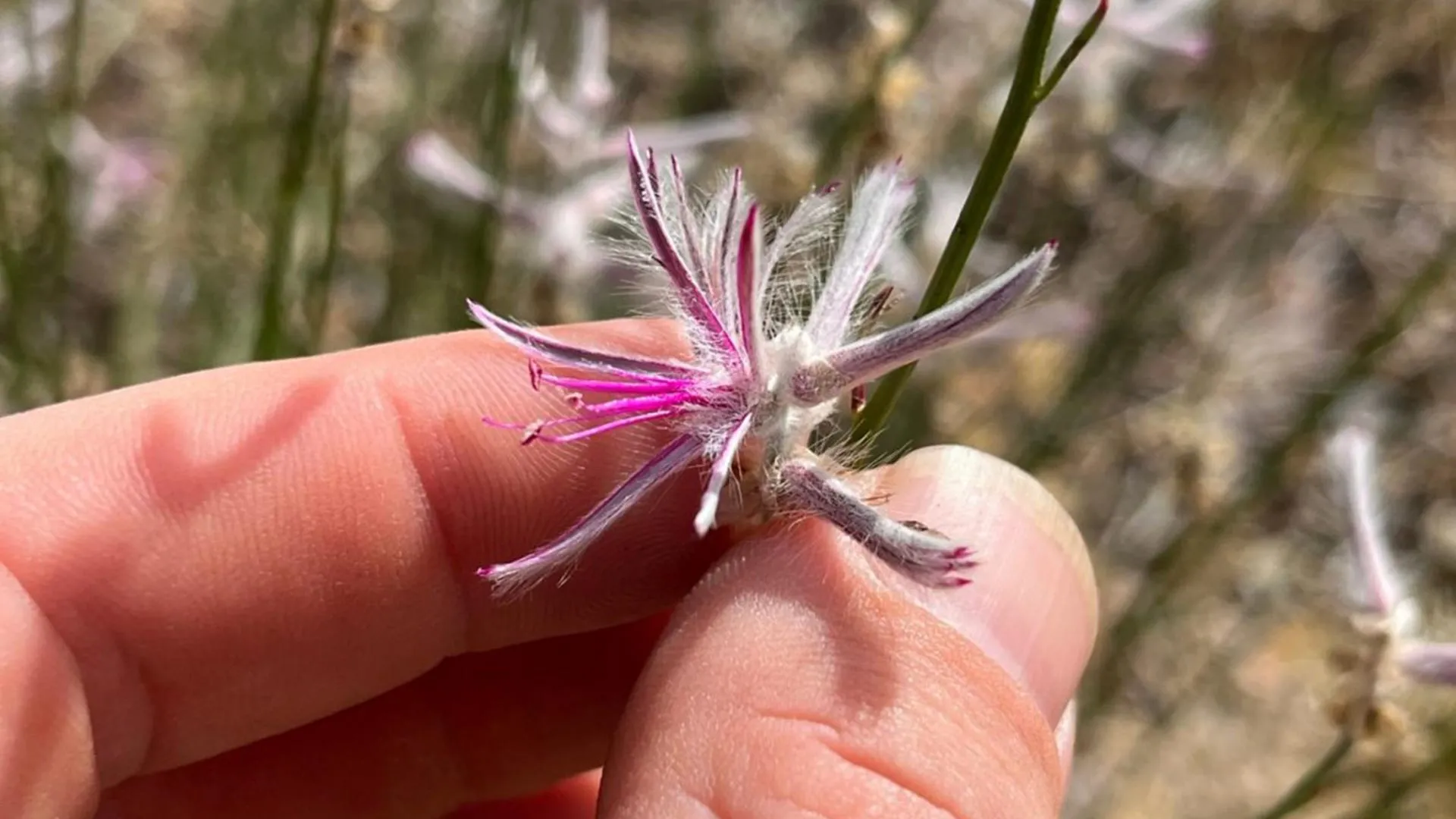
    A plant thought to have disappeared decades ago has been rediscovered in a remote part of northern Australia thanks to a chance observation uploaded to citizen science platform iNaturalist. Scientists say the surprising discovery highlights how everyday people are becoming increasingly important to modern biodiversity research and conservation.

    The discovery began when professional gardener Aaron Bean, who was helping raise banded birds on a vast outback property in Queensland, noticed an unusual plant growing in the landscape. He photographed it and uploaded the image to iNaturalist after phone service was restored.

    This simple upload set off a surprising chain of events.

    Among the millions of observations shared on the platform, the photo eventually caught the attention of botanist Anthony Bean from the Queensland Herbarium. He immediately recognized the species as Ptylotus senariusa rare plant that had not been recorded since 1967 and was widely thought to be extinct in the wild.

    Anthony Bean actually described the species himself ten years ago.

    “It was very serendipitous,” said Thomas Messario from UNSW’s School of Biological, Earth and Environmental Sciences, who documented the rediscovery. Australian Journal of Botany.

    “Aaron Bean is an avid iNaturalist user and happened to be taking photos of some of the interesting plants on the property.”

    Rediscovering Australia’s rare plants

    Ptylotus senarius It is a delicate shrub with purple-pink flowers that resemble tiny feather fireworks. This species grows only in the rugged terrain near the Gulf of Carpentaria in northern Australia.

    Until this rediscovery, there had been no confirmed sightings for nearly 60 years. Scientists believe the plant may have joined the approximately 900 species that have disappeared from the wild around the world since the 1750s.

    With Aaron Bean’s photography, Anthony Bean’s expertise, and the property owner’s help in collecting specimens, researchers were finally able to confirm that the species was still alive. Rather than being classified as extinct, the plant has now been moved to the endangered species list, allowing scientists and conservation groups to focus on its protection.

    “This was one of those situations where everything had to fall into place, and there was some luck involved,” Messario said.

    How citizen science is changing research

    Rediscovery is part of the growth pattern of science. Increasingly, members of the public are taking photos of the plants and animals they come across and uploading them to online databases such as iNaturalist. In some cases, these observations can reveal species that were thought to be lost. In other cases, it helps scientists identify organisms that are completely new to science.

    For researchers like Messario, citizen science platforms have become essential tools.

    Australia’s vast landmass and biodiversity make it impossible for scientists to explore every region themselves. About a third of the continent is privately owned, so access can be even more difficult.

    “If you’re a property owner or someone who has permission from the owner to be there, all of a sudden a whole new world opens up,” Mesario said.

    Scientists want better biodiversity data

    Researchers are now encouraging more people, especially landowners, to participate in citizen science projects and collect high-quality observations.

    In New South Wales, the Land Library Project, run by the state government’s Biodiversity Conservation Trust, provides training and equipment to enable landowners to record wildlife and plant species on their properties and upload this information to citizen science platforms.

    Messario supports expanding these types of programs because they improve scientific access to remote and private lands and help increase public interest in conservation.

    “By involving landowners themselves in science and the natural world and increasing their passion for diversity, landowners are much more likely to care and invest in protecting diversity,” Messario said.

    Tips for using iNaturalist

    Messario says the detailed observations are especially valuable to scientists.

    For example, if many related plants have similar flowers, a single close-up image of a flower may not be enough to identify the species. Taking more photos of leaves, bark, stems, or the entire plant may provide important clues.

    It also encourages users to include information that may not be visible in the photo, such as soil conditions, nearby vegetation, and whether pollinators were present.

    Details such as a plant’s odor can also help researchers determine what species it is.

    “The more information and context you can provide, the more uses that record can have in the future.”

    In a separate study, Mesaglio found that iNaturalist has already been cited in scientific papers on thousands of species in 128 countries, highlighting the platform’s growing role in global science.

    As millions of observations continue to pour in, scientists believe there are many more discoveries waiting to be discovered.


    Source link

    Visited 3 times, 3 visit(s) today
    Share. Facebook Twitter Pinterest LinkedIn Telegram Reddit Email
    Previous ArticleThe case for direct patient care is clear, but the challenge ahead is successful implementation
    Next Article ‘Miracle mineral’ asbestos linked to mesothelioma still kills veterans
    healthadmin

    Related Posts

    Scientists think they have solved the mystery of human right-handedness

    May 18, 2026

    This popular fermented food may help flush microplastics from your body

    May 18, 2026

    Scientists have discovered a cheaper way to make clean hydrogen fuel

    May 18, 2026

    The “impossible” LED that changes everything

    May 18, 2026

    A surprising new experiment in which quantum ghost imaging works using only sunlight

    May 18, 2026

    AI reveals the invisible magnetic chaos wasting energy inside electric motors

    May 18, 2026
    Add A Comment
    Leave A Reply Cancel Reply

    Categories

    • Daily Health Tips
    • Discover
    • Environmental Health
    • Exercise & Fitness
    • Featured
    • Featured Videos
    • Financial Health & Stability
    • Fitness
    • Fitness Updates
    • Health
    • Health Technology
    • Healthy Aging
    • Healthy Living
    • Holistic Healing
    • Holistic Health & Wellness
    • Medical Research
    • Medical Research & Insights
    • Mental Health
    • Mental Wellness
    • Natural Remedies
    • New Workouts
    • Nutrition
    • Nutrition & Dietary Trends
    • Nutrition & Superfoods
    • Nutrition Science
    • Pharma
    • Preventive Healthcare
    • Professional & Personal Growth
    • Public Health
    • Public Health & Awareness
    • Selected
    • Sleep & Recovery
    • Top Programs
    • Weight Management
    • Workouts
    Popular Posts
    • 1773313737_bacteria_-_Sebastian_Kaulitzki_46826fb7971649bfaca04a9b4cef3309-620x480.jpgHow Sino Biological ProPure™ redefines ultra-low… March 12, 2026
    • the-pros-and-cons-of-paleo-dietsThe Pros and Cons of Paleo Diets: What Science Really Says April 16, 2025
    • pexels-david-bartus-442116The food industry needs to act now to cut greenhouse… January 2, 2022
    • 1773729862_TagImage-3347-458389964760995353448-620x480.jpgDespite safety concerns, parents underestimate the… March 17, 2026
    • 1773209206_futuristic_techno_design_on_background_of_supercomputer_data_center_-_Image_-_Timofeev_Vladimir_M1_4.jpegMulti-agent AI systems outperform single models… March 11, 2026
    • Improve Mental Health10 Science-Backed Practices to Improve Mental Health… March 11, 2025

    Demo
    Stay In Touch
    • Facebook
    • Twitter
    • Pinterest
    • Instagram
    • YouTube
    • Vimeo
    Don't Miss

    The Biggest Clinical Trial Breakthroughs Shaping 2026 Medicine

    By healthadminMay 18, 2026

    Explore eleven pivotal clinical trials and breakthroughs in gene editing, oncology, and regenerative medicine set to redefine healthcare standards in 2026.

    ‘Miracle mineral’ asbestos linked to mesothelioma still kills veterans

    May 18, 2026

    A plant believed to be extinct for 60 years suddenly makes a comeback

    May 18, 2026

    The case for direct patient care is clear, but the challenge ahead is successful implementation

    May 18, 2026

    Subscribe to Updates

    Get the latest creative news from SmartMag about art & design.

    HealthxMagazine
    HealthxMagazine

    At HealthX Magazine, we are dedicated to empowering entrepreneurs, doctors, chiropractors, healthcare professionals, personal trainers, executives, thought leaders, and anyone striving for optimal health.

    Our Picks

    The case for direct patient care is clear, but the challenge ahead is successful implementation

    May 18, 2026

    Psychologists identify the main reasons why conversations with partners become negative

    May 18, 2026

    Ebola outbreak, Bill Cassidy, Tracy Beth Hogue: Morning rounds

    May 18, 2026
    New Comments
      Facebook X (Twitter) Instagram Pinterest
      • Home
      • Privacy Policy
      • Our Mission
      © 2026 ThemeSphere. Designed by ThemeSphere.

      Type above and press Enter to search. Press Esc to cancel.