


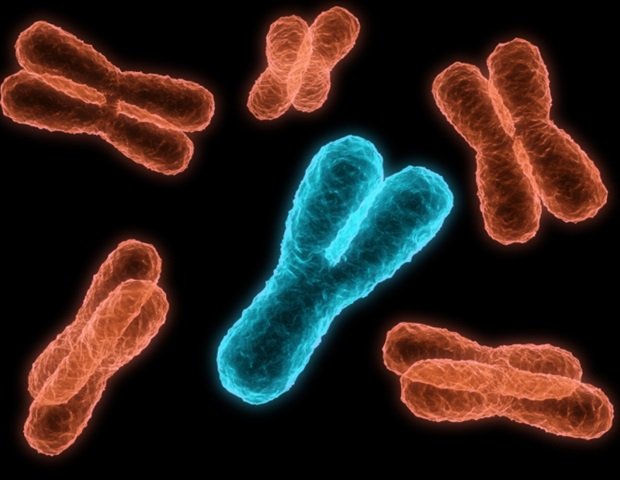
Researchers at the University of Texas Medical Branch (UTMB) have identified how a key enzyme called ATR protects DNA from destruction as cells copy damaged genetic material. This discovery could have implications for how certain cancer drugs are developed.
Funded by the National Institutes of Health; genes and developmentthis study shows how ATR helps stabilize the cell’s DNA copying machinery and prevent chromosome breakage during replication arrest.
Every time a cell divides, it must replicate DNA, the spiral-shaped molecules that make up chromosomes and carry genetic information. To do this, cells unzip and copy billions of DNA building blocks, known by the letters A, T, C, and G, and put them back together in the same order. In the process, some of these components can be damaged by everyday factors such as sunlight and normal cellular metabolism. When the copying machinery encounters damaged DNA, the replication process can stop.
Jung-Hoon Yoon and Karthi Sellamuthu, who work in the labs of Dr. Satya Prakash and Dr. Louise Prakash, discovered that the role of ATR is to hold the DNA copying machinery known as the replisome in place at the site of damage long enough for another enzyme to intervene and copy beyond the damage. Scientists call this rescue process translesion synthesis (TLS). Without ATR, the replication machinery collapses and chromosomes can become damaged. The experiments were performed on cultured human and mouse cells.
“ATR action holds the replication machinery in place at the lesion site, allowing TLS polymerase to copy across the lesion while the rest of the machinery remains intact,” said Sathya Prakash, senior author of the study. “That regulation is what protects us from chromosome breakage, which causes cancer.”
In cells where ATR is switched off, chromosome breakage occurs after a small amount of ultraviolet light increases approximately 10-fold. Approximately 1 in 10 chromosomes showed visible damage. If the ATR was functioning properly, the ratio was closer to 1 in 100.
To understand why, the researchers tracked what was happening on a protein-by-protein basis at sites of stalled replication. When ATR was present, the replication machinery remained intact. The TLS polymerase came in, copied the damaged DNA and moved on. Without ATR, the adjustment will fail. As the DNA continued to unzip, the copying proteins fell off, leaving longer exposed single-stranded DNA. A temporary backup system containing an enzyme called PrimPol took over. This enzyme has been primarily studied in cancer cells, but was not known to play this role in normal cells.
This discovery has important implications for the development of anticancer drugs. ATR is already a target for cancer drugs in clinical trials, based on the idea that cancer cells divide more rapidly than healthy cells and therefore rely more heavily on the enzyme for survival. New research suggests that blocking ATR may pose a greater risk to healthy tissue than previously thought.
“In normal human cells, the process of copying past DNA damage is tuned to be nearly error-free, thereby protecting chromosomes from instability,” said Sathya Prakash. “In cancer cells, the same process is performed much more sloppily and detached from the replisome, which actually increases instability.”
He added that in healthy tissues, inhibiting ATR would increase chromosome breaks, increasing sensitivity to chemotherapy such as cisplatin, and increasing the risk of new cancers developing from the treatment itself over time. This effect is thought to be first seen in tissues that divide most rapidly, such as the intestinal lining and bone marrow.
Sathya Prakash said it was good to see that efforts were underway to design ATR inhibitors that more precisely targeted cancer cells.
sauce:
University of Texas Medical School
