


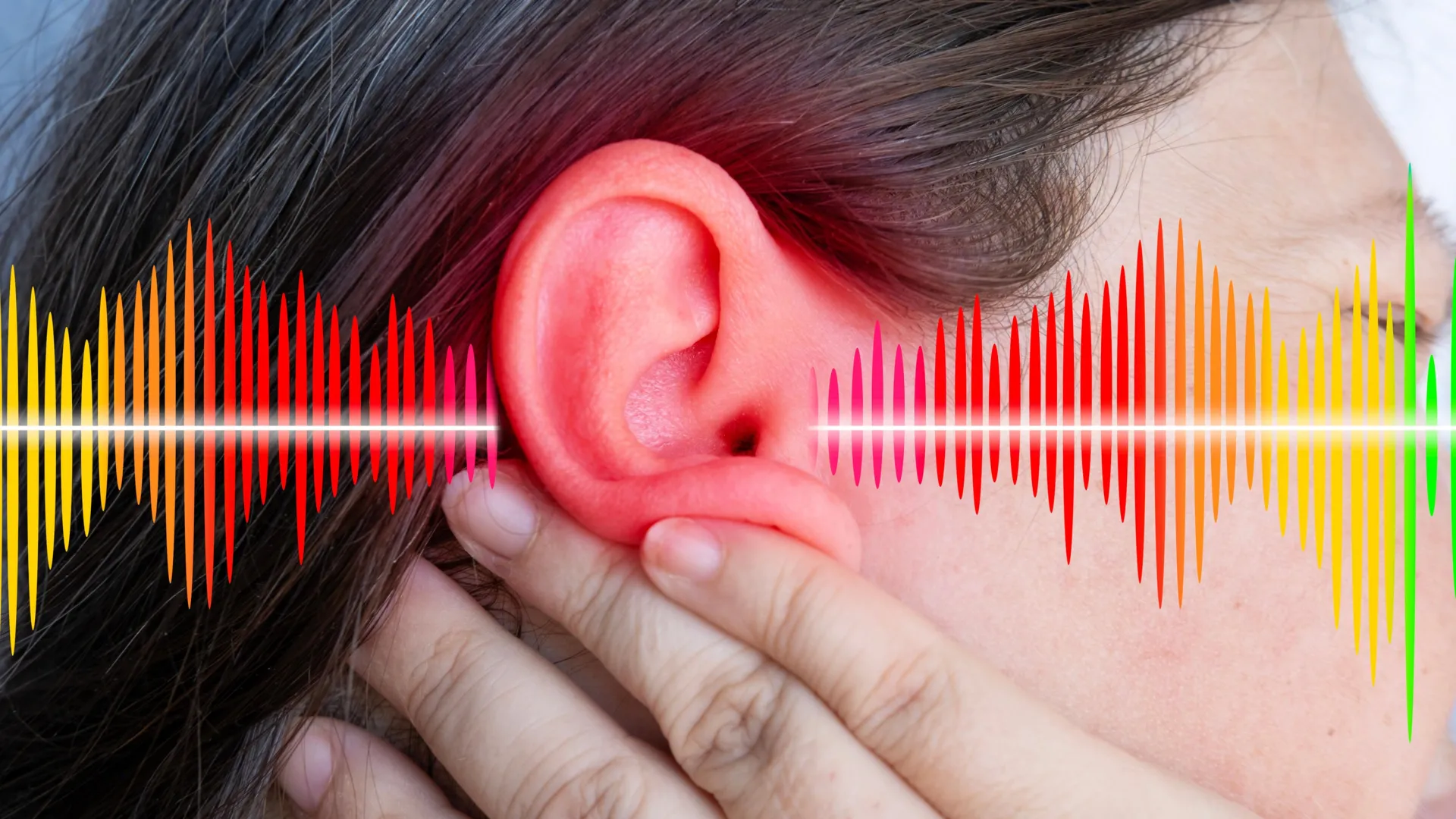
Scientists have found new evidence that serotonin, a brain chemical best known for helping regulate mood, can worsen tinnitus, a persistent ringing or buzzing sound that affects millions of people around the world. The study was published in the Proceedings of the National Academy of Sciences.
Tinnitus can range from mild irritation to severe distress. For some people, constant noise can cause anxiety and interfere with daily life. Researchers estimate that as many as 14% of people worldwide experience the condition, and many cases are severe.
A team from Oregon Health & Science University and China’s Anhui University studied mice and found that as serotonin levels increased in the brain, behaviors associated with tinnitus also increased.
The relationship between serotonin and tinnitus
The findings could have important implications for people living with tinnitus, especially those taking antidepressants that affect serotonin levels, said co-senior author Dr. Lawrence Trussell, professor of otolaryngology in the OHSU School of Medicine and scientist at the OHSU Boram Institute and Oregon Hearing Research Center.
“People with tinnitus should work with their prescribers to find a medication regimen that balances reducing psychiatric symptoms such as depression and anxiety while minimizing the experience of tinnitus,” Trussell said. “This study highlights the importance of clinicians recognizing and validating patient reports of increased tinnitus associated with medication therapy.”
The drugs discussed in this study include selective serotonin reuptake inhibitors, commonly known as SSRIs. These antidepressants increase serotonin levels in the brain, so they are widely prescribed for moderate to severe depression and anxiety.
Researchers have long suspected that serotonin plays a role in tinnitus, but the exact mechanism remained unclear.
“We suspected that serotonin was involved in tinnitus, but we didn’t really understand how,” said co-author Zheng Quantang, Ph.D., of Anhui University in China. “Now, using mice, we discovered a specific brain circuit that involves serotonin, which is sent directly to the auditory system, and that it can cause effects like tinnitus. When we turned that circuit off, we were able to significantly improve tinnitus.”
“This gives us a clearer picture of what’s going on in the brain and opens up new possibilities for treatment.”
Tan began the project while working as a postdoctoral researcher in Trussell’s lab.
Brain circuits related to tinnitus
The new study builds on a previous study published in 2017.
In the latest study, scientists used optogenetics, a technique that uses optical fibers and light to activate specific brain cells. By targeting neurons that produce serotonin, the researchers were able to trigger activity in the brain area involved in hearing. They then used a modified auditory startle test to measure how the mice responded.
“We find that when we stimulate these serotonergic neurons, we stimulate activity in the auditory areas of the brain,” Trussell said. “We also found that the animals behaved as if they were hearing tinnitus. In other words, they were producing the symptoms that humans would expect to experience as tinnitus.”
The researchers said their findings are consistent with reports from some patients that their tinnitus becomes more intense when taking serotonin-boosting drugs, such as SSRIs.
Future tinnitus treatment
“Our study suggests a delicate balance,” Trussell said. “It may be possible to develop cell- or brain-region-specific drugs that induce increases in serotonin in some brain regions but not in others. It may then be possible to separate the beneficial and important effects of antidepressants from their potentially harmful effects on hearing.”
Trussell’s research was supported by the National Institutes of Health through award RO1DC004450. The authors noted that the findings and conclusions are solely the responsibility of the authors and do not necessarily reflect the official views of the NIH.
