


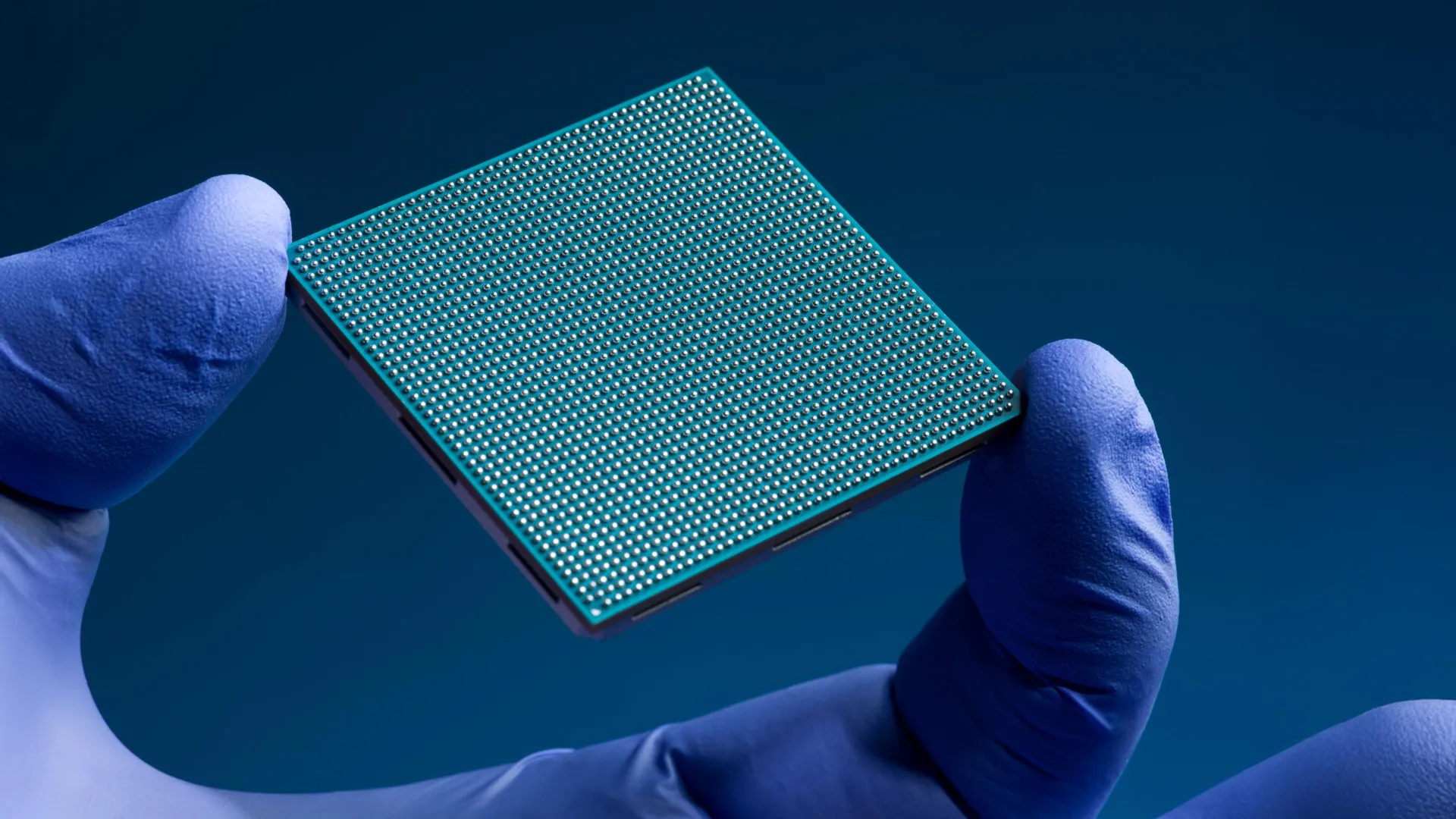
NASA is developing powerful new computer chips designed to dramatically improve the intelligence and performance of future spacecraft. Through commercial partnerships, the project is developing advanced processing technologies that will allow spacecraft to operate more independently during missions far from Earth.
NASA’s High Performance Spaceflight Computing Project focuses on improving the computing power of spacecraft used in space exploration. Current missions rely on older processors because they are durable enough to withstand the extreme conditions of space. These chips are reliable, but lack the performance needed for more advanced missions.
The agency says newer, much more powerful processors are essential for future autonomous spacecraft, faster onboard science analysis, and support for astronauts during missions to the Moon and Mars.
“We’re excited to be working with NASA to support our mission,” said Eugene Schwanbeck, program element manager for the NASA Transformation Development Program at NASA Langley Research Center in Hampton, Virginia. “NASA’s commitment to advancing spaceflight computing is a triumph of technical achievement and collaboration.”
Radiation hardened processors face grueling tests
At the heart of the project is a new radiation-hardened processor built to withstand the harsh environment of space while delivering up to 100 times the computing power of today’s spaceflight computers. Engineers at NASA’s Jet Propulsion Laboratory (JPL) in Southern California are running a wide range of tests designed to simulate these conditions.
“We are pressing these new chips through radiation, thermal and shock testing, while also evaluating their performance through a rigorous functional testing campaign,” said Jim Butler, JPL’s High Performance Space Computing Project Manager.
To be eligible for spaceflight, processors must withstand strong electromagnetic radiation and dramatic temperature fluctuations that can damage electronic equipment. High-energy particles from the sun or deep space can also cause computer errors, forcing spacecraft into “safe mode” and temporarily shutting down unnecessary systems until engineers can fix the problem.
NASA is also testing how the chip would address the challenges of planetary landings.
“To simulate real-world performance, we use high-fidelity landing scenarios from real NASA missions, which typically require power-hungry hardware to process large amounts of landing sensor data,” Butler said. “This is an exciting time for us as we work to develop the hardware that will enable NASA’s next big leap forward.”
Testing at JPL began in February and is expected to continue for several months. Early results have been very promising. According to NASA, the processor is working as intended, exhibiting performance levels roughly 500 times higher than radiation-hardened chips currently used in spacecraft.
The team also marked the start of the test as an iconic moment by sending an email titled “Hello Universe,” a reference to the famous introductory message used in the early days of computer programming.
AI-powered spacecraft and deep space missions
The processor is jointly developed by JPL and Microchip Technology Inc., based in Chandler, Arizona. The company is working with NASA through a commercial partnership, and sample chips have already been shared with defense and commercial aerospace partners.
This technology is expected to play a major role in the future of autonomous spacecraft. Equipped with artificial intelligence, a spacecraft could potentially respond to unexpected situations in real time, even when communication delays make human control impossible. The chip could also help deep space missions more efficiently process, store, and transmit large amounts of scientific data back to Earth.
NASA says the processor could eventually support human missions to the moon and Mars.
A small processor with huge computing power
This device is known as a system-on-a-chip (or SoC), meaning it combines the key components of a computer into one compact unit. Processors include central processing units, computational offloads, advanced networking systems, memory, and input/output interfaces.
SoCs are widely used in smartphones and tablets because they are compact and energy efficient. However, NASA’s version is designed to survive for years in deep space and could potentially travel millions (or billions) of miles from Earth without maintenance or repair.
Once the processor is certified for use in space, NASA plans to integrate it into a variety of missions, including Earth orbiters, planetary probes, deep space probes, and human habitats.
This technology could also have benefits on Earth. Microchip plans to adapt the processor to industries such as aviation and auto manufacturing.
NASA and industry collaboration
The project is managed by NASA Langley’s Space Technology Mission Directorate’s Game Changing Development (GCD) Program. The GCD program and JPL, managed by Caltech in Pasadena, Calif., oversaw the development process from mission planning and industry research to final delivery.
NASA JPL selected Microchip as a partner in 2022, and the company funded its own research and development work on the processor.
