

Close Menu

    Subscribe to Updates

    Get the latest creative news from FooBar about art, design and business.

    What's Hot

    Abortion SCOTUS ruling, Ebola outbreak: Morning rounds

    May 15, 2026

    NASA’s new AI space chip will allow spacecraft to think for themselves

    May 15, 2026

    The Digital Health Revolution: Why Health Tech Founders Need to Act Now

    May 15, 2026
    Facebook X (Twitter) Instagram
    Facebook X (Twitter) Instagram
    Health Magazine
    • Home
    • Environmental Health
    • Health Technology
    • Medical Research
    • Mental Health
    • Nutrition Science
    • Pharma
    • Public Health
    • Discover
      • Daily Health Tips
      • Financial Health & Stability
      • Holistic Health & Wellness
      • Mental Health
      • Nutrition & Dietary Trends
      • Professional & Personal Growth
    • Our Mission
    Health Magazine
    Home » News » Scientists have revealed the strange habits we have when leaving train stations.
    Mental Health

    Scientists have revealed the strange habits we have when leaving train stations.

    healthadminBy healthadminMay 15, 2026No Comments5 Mins Read
    Scientists have revealed the strange habits we have when leaving train stations.
    Share
    Facebook Twitter Reddit Telegram Pinterest Email


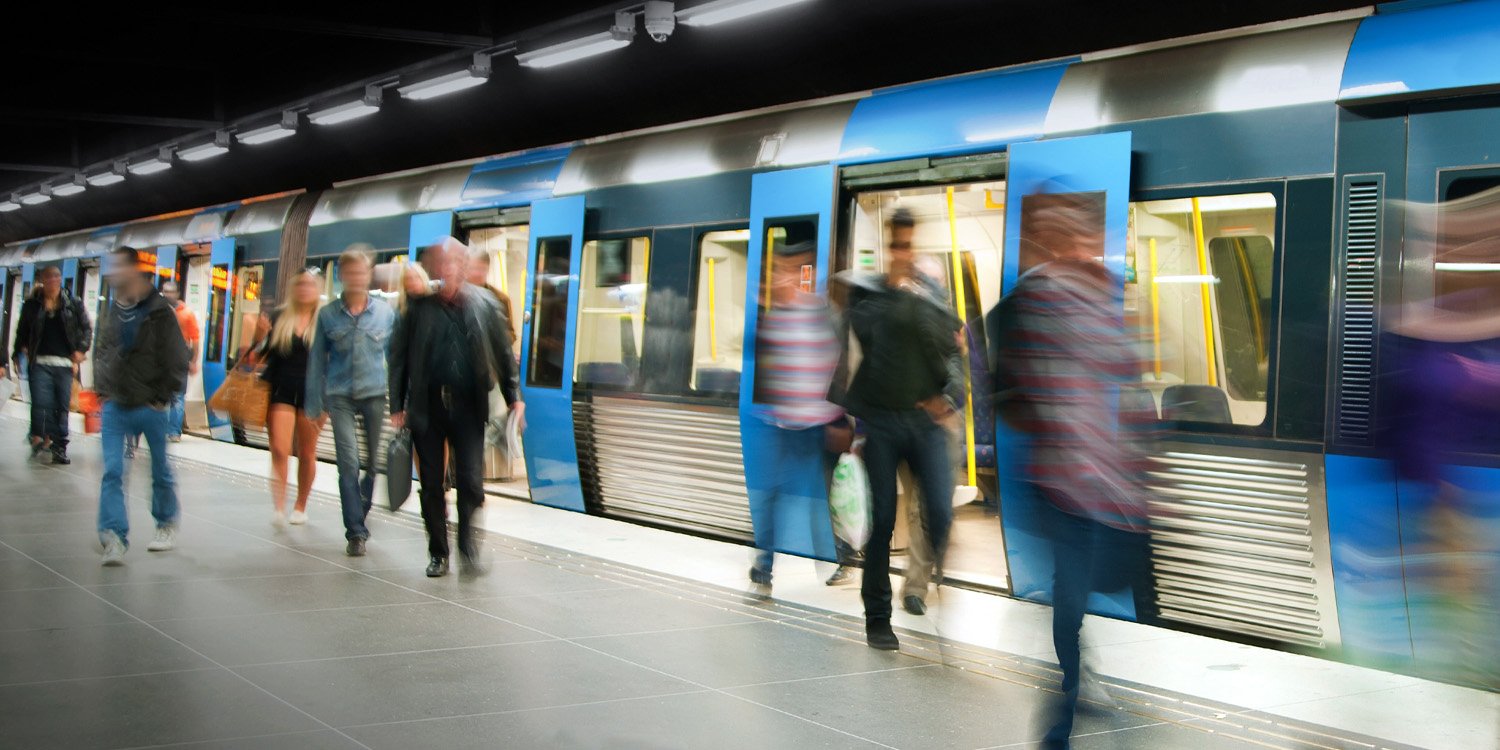
    An analysis of data collected by a pedestrian tracking system at Eindhoven Central Station in the Netherlands found that after people get off a train, they tend to follow the same walking path as the person in front of them. This happens even if you don’t know the person or if such a choice increases your travel time. This research was published in the *Proceedings of the National Academy of Sciences*.

    When walking through crowded spaces such as busy streets, train and bus stops, airports, and places where large groups of people gather, people typically try to reach their destination while avoiding obstacles, delays, collisions, and discomfort. Their routes are formed by physical features such as walls, doors, stairs, kiosks, hallways, signs, and bottlenecks. They also react to crowd density, often avoiding areas that seem too crowded or slow.

    Walking paths can be influenced by perceived travel time as well as actual distance. Because if it’s crowded, you might feel worse on the shorter route. Also, being in a crowd requires people to continually adjust their speed and direction in response to others moving around them. In these situations, they often follow the visible flow of pedestrians because the movements of others provide information about where available paths are. Social groups such as friends and family also form promenades because their members tend to stay together and follow the same routes.

    Using an advanced overhead pedestrian tracking system based on 3D stereoscopic imagery, study author Ziqi Wang and his colleagues used a large, high-resolution dataset of pedestrian streets collected on lines 3 and 4 of Eindhoven Central Station.

    These sensors covered approximately 1400 square meters of the station and captured data at 10 frames per second using overhead depth sensing, without recording any discernible images of pedestrians. The system also has very high spatial resolution and can detect changes of approximately 1 millimeter. From March 2021 to March 2024, the system captured a total of more than 30 million pedestrian movement trajectories. This includes people getting off the train and people already on the platform.

    In this analysis, the study authors focused on a subset of the trajectories of pedestrians who, after getting off the train, had to choose between taking a short, direct path to the exit or taking a longer path that bypassed a kiosk in the center of the platform. The authors analyzed the routes of passengers who exited trains from three specific door zones, containing approximately 100,000 passengers.

    To ensure they studied interactions between strangers rather than people traveling together, researchers developed a mathematical algorithm to detect social groups. The system analyzed how close people were, how well their speeds matched, and whether they were moving in the same direction. Once these groups are identified and excluded, researchers can focus solely on independent walkers.

    For each passenger included in the analysis, the study authors recorded their route choice after exiting the train and the relative order in which they exited the train. This allowed us to study how individuals and crowds decide which path to take in crowded situations, how differences in how spaces are organized, and how local social dynamics (especially among strangers) influence those choices.

    The results showed that after getting off the train, passengers were more likely to follow the same path as the person in front of them. This “stranger-chasing effect” occurred even in the absence of social connections, and travel times were still longer when chasing strangers.

    The study authors note that this tendency creates an “avalanche” of choices, where groups of people make the same decisions about their path in succession, leading to strong patterns of collective behavior.

    To confirm these findings, the researchers built a theoretical route model that simulates pedestrian behavior. They tested various factors, including the natural randomness of walking speed and the tendency of people to follow the majority (crowding). However, they found that only by including the “stranger following effect” could the model accurately reproduce the real-world patterns observed at the station. This indicates that local imitative behavior is the main driver of collective route selection in this scenario.

    “These findings highlight how brief, low-level interactions between strangers can scale up to impact large-scale pedestrian movement, with strong implications for crowd management, urban design, and a broader understanding of social behavior in public spaces,” the study authors concluded.

    This study contributes to scientific understanding of how people choose paths in crowded places. However, it should be noted that this study is based on data on the movement of passengers exiting the train at three relatively fixed locations and heading toward the station exit. This situation has greatly simplified and limited the routing choices people make. Results may vary in environments with broader routing and end goal options.

    The paper, “Avalanche of Selection: How Stranger-Stranger Interactions Shape Crowd Dynamics,” was authored by Ziqi Wang, Alessandro Gabbana, and Federico Toschi.


    Source link

    Visited 2 times, 2 visit(s) today
    Share. Facebook Twitter Pinterest LinkedIn Telegram Reddit Email
    Previous ArticleTo receive tariff exemptions, drug companies must disclose U.S. production plans.
    Next Article Study links use of new obesity drug to asthma exacerbations and reduced inhaler use
    healthadmin

    Related Posts

    Classic psychology research on the calming effects of nature has received a major update

    May 15, 2026

    Estrogen levels may influence the brain’s response to psychedelics, new animal study shows

    May 15, 2026

    Musicians show a small but steady advantage in sustained attention from childhood to adulthood

    May 14, 2026

    Making instant judgments about dating apps can hurt your sense of worth as a partner.

    May 14, 2026

    Women score higher than men on fluid intelligence tests when they can express uncertainty.

    May 14, 2026

    Brain cells store competing memories that promote or inhibit alcohol relapse

    May 14, 2026
    Add A Comment
    Leave A Reply Cancel Reply

    Categories

    • Daily Health Tips
    • Discover
    • Environmental Health
    • Exercise & Fitness
    • Featured
    • Featured Videos
    • Financial Health & Stability
    • Fitness
    • Fitness Updates
    • Health
    • Health Technology
    • Healthy Aging
    • Healthy Living
    • Holistic Healing
    • Holistic Health & Wellness
    • Medical Research
    • Medical Research & Insights
    • Mental Health
    • Mental Wellness
    • Natural Remedies
    • New Workouts
    • Nutrition
    • Nutrition & Dietary Trends
    • Nutrition & Superfoods
    • Nutrition Science
    • Pharma
    • Preventive Healthcare
    • Professional & Personal Growth
    • Public Health
    • Public Health & Awareness
    • Selected
    • Sleep & Recovery
    • Top Programs
    • Weight Management
    • Workouts
    Popular Posts
    • 1773313737_bacteria_-_Sebastian_Kaulitzki_46826fb7971649bfaca04a9b4cef3309-620x480.jpgHow Sino Biological ProPure™ redefines ultra-low… March 12, 2026
    • the-pros-and-cons-of-paleo-dietsThe Pros and Cons of Paleo Diets: What Science Really Says April 16, 2025
    • pexels-david-bartus-442116The food industry needs to act now to cut greenhouse… January 2, 2022
    • 1773729862_TagImage-3347-458389964760995353448-620x480.jpgDespite safety concerns, parents underestimate the… March 17, 2026
    • Improve Mental Health10 Science-Backed Practices to Improve Mental Health… March 11, 2025
    • 1773209206_futuristic_techno_design_on_background_of_supercomputer_data_center_-_Image_-_Timofeev_Vladimir_M1_4.jpegMulti-agent AI systems outperform single models… March 11, 2026

    Demo
    Stay In Touch
    • Facebook
    • Twitter
    • Pinterest
    • Instagram
    • YouTube
    • Vimeo
    Don't Miss

    Abortion SCOTUS ruling, Ebola outbreak: Morning rounds

    By healthadminMay 15, 2026

    In a debate about the best fruit, my STAT colleague Alexa Lee and I both…

    NASA’s new AI space chip will allow spacecraft to think for themselves

    May 15, 2026

    The Digital Health Revolution: Why Health Tech Founders Need to Act Now

    May 15, 2026

    BMS-Hengrui, Takeda Pharmaceutical’s workforce reduction, Daiichi-Fierce Pharma Asia

    May 15, 2026

    Subscribe to Updates

    Get the latest creative news from SmartMag about art & design.

    HealthxMagazine
    HealthxMagazine

    At HealthX Magazine, we are dedicated to empowering entrepreneurs, doctors, chiropractors, healthcare professionals, personal trainers, executives, thought leaders, and anyone striving for optimal health.

    Our Picks

    BMS-Hengrui, Takeda Pharmaceutical’s workforce reduction, Daiichi-Fierce Pharma Asia

    May 15, 2026

    Study links use of new obesity drug to asthma exacerbations and reduced inhaler use

    May 15, 2026

    Scientists have revealed the strange habits we have when leaving train stations.

    May 15, 2026
    New Comments
      Facebook X (Twitter) Instagram Pinterest
      • Home
      • Privacy Policy
      • Our Mission
      © 2026 ThemeSphere. Designed by ThemeSphere.

      Type above and press Enter to search. Press Esc to cancel.