


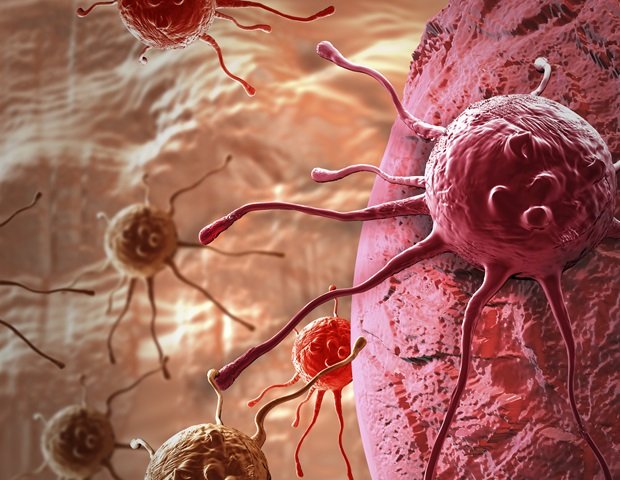
MIT engineers have developed a new method to amplify T cell responses to mRNA vaccines. This progress could lead to more powerful cancer vaccines and stronger protection against infectious diseases.
Most vaccines produce both antibodies and T cells that can target vaccine antigens by activating antigen-presenting cells such as dendritic cells. In this study, researchers used a new type of vaccine adjuvant (a substance that helps stimulate the immune system) to boost T cell responses. The new adjuvant is composed of mRNA molecules that encode genes that activate immune signaling pathways and promote exaggerated T cell responses.
In studies in mice, this mRNA-encoded adjuvant allowed the immune system to completely eradicate most tumors when delivered alone or with tumor antigens. The adjuvant also boosted T cell responses to vaccines against influenza and Covid-19.
“When these adjuvant mRNAs are included in a vaccine, they greatly increase the number of T cells that target the antigen. These T cells play an important role in the immune response, helping to eliminate virus-infected cells and, in the case of cancer, killing cancer cells,” says Daniel Anderson, a professor in the MIT School of Chemical Engineering and a member of the MIT Koch Institute for Integrative Cancer Research and the Institute for Biomedical Engineering and Science.
Anderson and Christopher Garris, an assistant professor at Harvard Medical School and Massachusetts General Hospital, are senior authors of the study, published today. nature biotechnology. The paper’s lead author is Akash Gupta, a former Koch Institute researcher and current assistant professor at the University of Houston. Kaylan Reed, MIT graduate student. and Riddha Das, a research fellow at Harvard Medical School and MGH. Robert Langer, professor at the David H. Koch Institute at MIT, and Ralph Weissleder, professor of radiology and systems biology at MGH and Harvard Medical School, are also authors.
more powerful vaccine
Vaccines that stimulate the body’s immune system to attack tumors have shown promise in clinical trials, and a small number of vaccines have been approved by the FDA for certain cancers. In some patients, these vaccines stimulate a strong response, while in others they have a weak response and fail to kill cancer cells.
The MIT-MGH team wanted to find a way to make these immune responses more powerful. One way to do this is to administer immune-stimulating molecules called cytokines with the vaccine. However, cytokines can overstimulate the immune system and cause serious side effects.
As an alternative approach, the researchers decided to deliver mRNA strands encoding IRF8 and NIK, two genes involved in antigen presentation and capable of switching immune cells to a more active state.
NIK is an enzyme that activates signaling pathways involved in immunity and inflammation, and IRF8 is a transcription factor that helps program a subset called cDC1 that is particularly effective at activating dendritic cells, especially T cells. These antigen-presenting cells digest foreign antigens and present them to T cells, which stimulate the T cells to mount an immune response against the antigen.
“We see that dendritic cells are starting to shift more towards a cDC1 phenotype, which is the most important dendritic cell phenotype and can trigger a stronger T-cell response,” says Gupta.
The researchers packaged the mRNA in lipid nanoparticles similar to those used to deliver mRNA Covid vaccines, but with a different chemical composition that facilitated delivery to the spleen after intravenous injection.
Inside the spleen, the particles encounter antigen-presenting cells, including dendritic cells. Within 24 hours, these cells begin to express IRF8 and NIK, and both of these pathways promote maturation and activation of dendritic cells, allowing them to mount an antitumor response.
Over several days to a week, the T cell population increases. These T cells, along with other immune cells such as natural killer (NK) cells, can recognize and attack tumors.
“Most cancer immunotherapies rely on external signals to activate immune cells. We take a different approach: reprogram immune cells from within by targeting their internal signaling mechanisms, enabling stronger and more durable anti-tumor responses,” says Das.
more powerful T cells
The researchers tested immune remodeling mRNAs in several mouse models of cancer, including aggressive bladder cancer, colon cancer, melanoma, and metastatic lung cancer. In nearly all of these mice, the injected mRNA stimulated strong T-cell responses, significantly slowing tumor growth and, in many cases, completely eradicating the tumors. This occurred even when the mice were not vaccinated against specific cancer antigens. When that happened, the reaction was even stronger.
“We showed that you can use these adjuvants to get an anti-cancer response, even without antigen, just by activating the immune system. But the cancer-specific antigen and adjuvant included in the vaccine improved the response even further,” Anderson says.
The mRNA adjuvant also enhanced the immune response to immunotherapy drugs called checkpoint inhibitors. These drugs work by releasing the brakes that tumor cells put on T cells, and are approved by the FDA to treat several types of cancer. Although these drugs may not be effective in all patients, combining them with mRNA vaccine adjuvants may provide a way to make them even more effective, the researchers said.
“The microenvironment of solid tumors is often hostile to T cells, posing a major barrier to effective immunotherapy. We found that immune remodeling with these adjuvants creates a permissive environment for T cells, promoting tumor rejection,” Garis said.
The researchers also investigated whether the new adjuvant could boost the immune response to vaccination against viral infection. When they delivered the mRNA particles along with a coronavirus or influenza vaccine, they found that the vaccine elicited a 10 to 15 times stronger T-cell response in mice.
The researchers now plan to test this approach in additional animal models with the hope of developing it for use in both cancer and infectious diseases.
“While there are differences between the mouse system we studied and humans, we are optimistic that these adjuvants will work in humans and have the potential to improve a variety of vaccines,” Anderson says.
This research was funded by a Koch Institute Support (Core) grant from Sanofi, the National Institutes of Health, the Marble Cancer Nanomedicine Center, and the National Cancer Institute.
sauce:
Massachusetts Institute of Technology
Reference magazines:
DOI: 10.1038/s41587-026-03115-2
