

Close Menu

    Subscribe to Updates

    Get the latest creative news from FooBar about art, design and business.

    What's Hot

    Scientists discover mathematical secrets hidden in the leaves of China’s money plant

    May 14, 2026

    Scientists discover new connection between gut, brain and heart that regulates blood pressure

    May 14, 2026

    The landscape of alcohol treatment is changing dramatically.

    May 14, 2026
    Facebook X (Twitter) Instagram
    Facebook X (Twitter) Instagram
    Health Magazine
    • Home
    • Environmental Health
    • Health Technology
    • Medical Research
    • Mental Health
    • Nutrition Science
    • Pharma
    • Public Health
    • Discover
      • Daily Health Tips
      • Financial Health & Stability
      • Holistic Health & Wellness
      • Mental Health
      • Nutrition & Dietary Trends
      • Professional & Personal Growth
    • Our Mission
    Health Magazine
    Home » News » New fMRI neurofeedback study trains the brain to reduce depressive rumination
    Discover

    New fMRI neurofeedback study trains the brain to reduce depressive rumination

    healthadminBy healthadminMay 13, 2026No Comments3 Mins Read
    New fMRI neurofeedback study trains the brain to reduce depressive rumination
    Share
    Facebook Twitter Reddit Telegram Pinterest Email


    Major depressive disorder (MDD) is far from a run-of-the-mill diagnosis. Although different patients report suffering from different subsets of symptoms, most patients are ultimately prescribed the same first-line treatment, usually a selective serotonin reuptake inhibitor (SSRI), regardless of their individual experience. This is important because, as the researchers point out, different symptoms are rooted in different brain disorders, which helps explain why 30 to 50 percent of MDD patients do not respond completely to standard treatments.

    The team behind the study set out to tackle this problem head-on using a concept known as “precision psychiatry.” Their central idea is to target the specific neural circuits that are causing each patient’s symptoms and try to return them to a healthier state, rather than applying a comprehensive treatment.

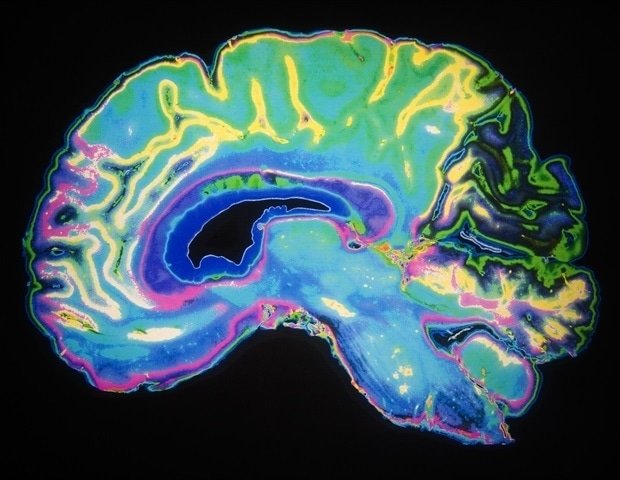
    As their first target, they chose rumination, an exhausting mental loop of repetitive, intrusive negative thoughts. Research suggests that this results, in part, from disrupted connections between the posterior cingulate cortex, an area involved in internal self-referential thinking, and the dorsolateral prefrontal cortex, which is associated with external goal-directed behavior. The goal was to use real-time fMRI neurofeedback to train people to revert this connectivity pattern back to that seen in healthy brains.

    To make this more approachable, researchers turned brain training into something similar to a video game. All participants had to do was lie in an MRI scanner, observe a green circle on the screen, and use their brain to tell the circle to get bigger. Behind the scenes, their brain scans were being processed in real time, and the size of the circles reflected how close to healthy their neural connections were. Participants got creative in trying to regulate this brain activity, with some doing mental arithmetic, others playing word association games, and still others imagining a little person running around the edge of a circle.

    The study conducted multiple sessions with 68 participants and tested variables such as whether training on consecutive days is more effective than spreading out sessions and whether stronger financial incentives would improve performance, to understand not only whether the approach works, but how to best make it work. Those who trained on consecutive days with the highest potential for profit showed the greatest improvement.

    The results were promising on a number of fronts. Healthier brain patterns persisted during rest periods, suggesting real changes in brain activity rather than just momentary performance effects. This change extended beyond the two targeted brain regions to the broader networks to which they belonged. Most surprisingly, the more participants’ brain activity improved, the more their rumination and depressive symptoms decreased, while untargeted anxiety symptoms did not change with brain activity. This specificity is exactly what the precision psychiatry framework predicts.

    Researchers’ long-term dream is that patients will one day be able to go into a doctor’s office, have their brain scanned, and be prescribed a portable EEG headset for neurofeedback targeted to their specific symptoms, which they can use from the comfort of their own home. This study represents an important step toward that vision.

    sauce:

    ATR Brain Information and Communication Research Group

    Reference magazines:

    Taylor, J. Others. (2026). Paving the way to precise treatment of psychiatric symptoms through functional connectivity neurofeedback. translational psychiatry. DOI: 10.1038/s41398-026-04040-3. https://www.nature.com/articles/s41398-026-04040-3


    Source link

    Visited 2 times, 2 visit(s) today
    Share. Facebook Twitter Pinterest LinkedIn Telegram Reddit Email
    Previous ArticleTargeted ultrasound stimulation changes brain processing and reduces chronic pain
    Next Article Find a new FDA chief who falls into the same problems that ousted Mr. McCurry.
    healthadmin

    Related Posts

    Regular art and physical activity are linked to delayed aging

    May 14, 2026

    4-week dietary intervention changes biological markers of aging

    May 14, 2026

    Early helping behavior shaped by caregiver interaction and motor skills

    May 14, 2026

    A new mRNA adjuvant dramatically boosts T cell vaccine responses in mice

    May 14, 2026

    AI-based generative framework creates all-atom models of proteins in motion

    May 14, 2026

    Medical image processing may improve diagnostic accuracy for highly malignant head and neck tumors

    May 14, 2026
    Add A Comment
    Leave A Reply Cancel Reply

    Categories

    • Daily Health Tips
    • Discover
    • Environmental Health
    • Exercise & Fitness
    • Featured
    • Featured Videos
    • Financial Health & Stability
    • Fitness
    • Fitness Updates
    • Health
    • Health Technology
    • Healthy Aging
    • Healthy Living
    • Holistic Healing
    • Holistic Health & Wellness
    • Medical Research
    • Medical Research & Insights
    • Mental Health
    • Mental Wellness
    • Natural Remedies
    • New Workouts
    • Nutrition
    • Nutrition & Dietary Trends
    • Nutrition & Superfoods
    • Nutrition Science
    • Pharma
    • Preventive Healthcare
    • Professional & Personal Growth
    • Public Health
    • Public Health & Awareness
    • Selected
    • Sleep & Recovery
    • Top Programs
    • Weight Management
    • Workouts
    Popular Posts
    • 1773313737_bacteria_-_Sebastian_Kaulitzki_46826fb7971649bfaca04a9b4cef3309-620x480.jpgHow Sino Biological ProPure™ redefines ultra-low… March 12, 2026
    • the-pros-and-cons-of-paleo-dietsThe Pros and Cons of Paleo Diets: What Science Really Says April 16, 2025
    • pexels-david-bartus-442116The food industry needs to act now to cut greenhouse… January 2, 2022
    • 1773729862_TagImage-3347-458389964760995353448-620x480.jpgDespite safety concerns, parents underestimate the… March 17, 2026
    • Improve Mental Health10 Science-Backed Practices to Improve Mental Health… March 11, 2025
    • 1773209206_futuristic_techno_design_on_background_of_supercomputer_data_center_-_Image_-_Timofeev_Vladimir_M1_4.jpegMulti-agent AI systems outperform single models… March 11, 2026

    Demo
    Stay In Touch
    • Facebook
    • Twitter
    • Pinterest
    • Instagram
    • YouTube
    • Vimeo
    Don't Miss

    Scientists discover mathematical secrets hidden in the leaves of China’s money plant

    By healthadminMay 14, 2026

    People often find familiar shapes in random places. You may have looked at a cloud…

    Scientists discover new connection between gut, brain and heart that regulates blood pressure

    May 14, 2026

    The landscape of alcohol treatment is changing dramatically.

    May 14, 2026

    Regular art and physical activity are linked to delayed aging

    May 14, 2026

    Subscribe to Updates

    Get the latest creative news from SmartMag about art & design.

    HealthxMagazine
    HealthxMagazine

    At HealthX Magazine, we are dedicated to empowering entrepreneurs, doctors, chiropractors, healthcare professionals, personal trainers, executives, thought leaders, and anyone striving for optimal health.

    Our Picks

    Regular art and physical activity are linked to delayed aging

    May 14, 2026

    Who are the Japanese? Huge DNA discovery rewrites history

    May 14, 2026

    4-week dietary intervention changes biological markers of aging

    May 14, 2026
    New Comments
      Facebook X (Twitter) Instagram Pinterest
      • Home
      • Privacy Policy
      • Our Mission
      © 2026 ThemeSphere. Designed by ThemeSphere.

      Type above and press Enter to search. Press Esc to cancel.