


Mike Smith was a U.S. fighter pilot for more than a decade before leaving the Navy in what he described as a “terrible transition.”
He decided to trade a life of deployment, fighter jets, and cruise missile operations for a life of tree planting and sustainability.
Although he didn’t realize it at the time, the seeds for that change in pace and course were planted when he was just 9 years old and watched a huge fire burn through the forest near his home in central Idaho.
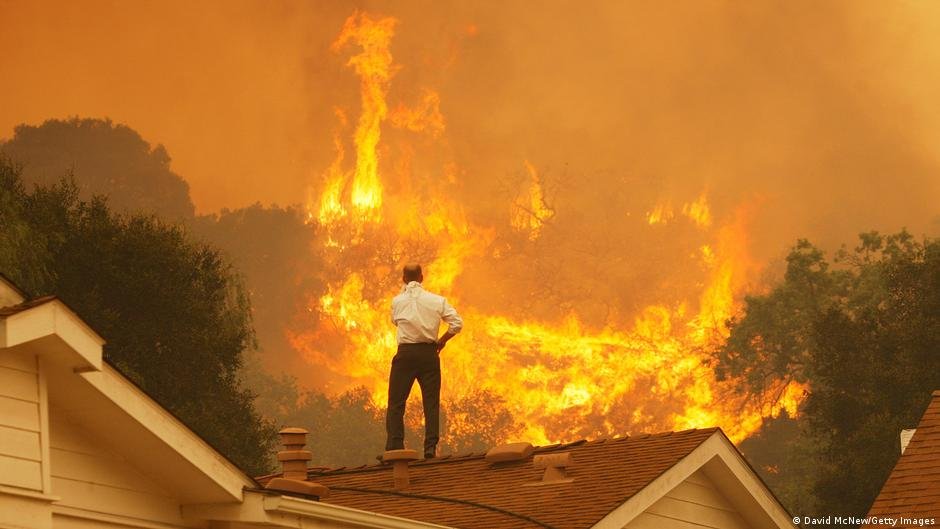
The Lowman Fire wasn’t huge by today’s standards, but to a boy who grew up outdoors it felt apocalyptic. The flames burned so intensely that they formed what appeared to be a nuclear mushroom cloud.
“It felt like the whole state was on fire at the time. That was a very memorable moment for me,” Smith said.
A fire that tore through land near Mike Smith’s childhood home inspired him to start reforestation. Image: Mike Smith
The fire left a scar not only on his memory, but also on the land. More than 20 years later, when Mike returned to Idaho with his wife to show them where he grew up, what he saw left him cold.
“You know, when you go back to where you grew up, you see all the things that have changed. So it became uncomfortable to see things that hadn’t changed. After 22 years, it was just black, still black dirt.”
He founded a company focused on post-fire reforestation for carbon offset production. He participated in planting millions of trees and founded a climate change technology company that helps companies reduce emissions.
Along the way, he realized that there are more women than men in the climate field.
Do men and women think differently about the climate crisis?
What Smith was seeing is not unique to his experience and is actually a widely documented phenomenon known as the green gender gap. In short, the idea is that women care more about the climate than men.
And Amanda Clayton, a political scientist at the University of California, found during her research on the topic that “the gender gap increases with a country’s wealth.”
As countries become richer, women are more likely to express greater concern about climate change. But not because they suddenly became more concerned.
“In fact, as countries become richer, men tend to be less concerned about climate change,” Clayton said. “The widening gender gap is actually increasing men’s skepticism.”
Donald Trump has done everything he can to hang on to fossil fuels. Image: AP Photo/Alex Brandon/picture Alliance
One reason for this may be fear of the perceived economic and cultural costs of transitioning to a clean energy future. Costs that men find especially threatening, arising from traditional expectations as health care providers. Politics comes into play here because we also realize that as countries get richer, climate change becomes more politicized.
“And as climate change becomes a right-wing political issue, we see politicians and industry elites begin to promote climate change skepticism,” Clayton said.
This may include stories that target men more than women. The message is that you are being forced to give up your gasoline car. Or the threat to jobs in the male-dominated fossil fuel sector. In other words, burning oil, gas, and coal can become part of an identity that is sometimes referred to as petromasculinity.
And, as other recent studies have revealed, there is a direct link between concerns about climate change and perceived threats to masculinity.
Different ways to talk to men about the climate
Psychologist Vidal Wetterfolk is working to unravel this idea. In his role with MÄN, a Swedish organization that engages men and boys to challenge static masculinity, he asks groups of men to express what they love about the natural world and their fears about its future.
Instead of assigning guilt or responsibility for the climate crisis, he said, “it creates connection.”
Connection, he says, is what is missing from norms of masculinity, and for many participants the experience is difficult but also highly valued.
“Many men have already shared after the first round that they have never talked to another man like this before or heard another man talk like this.”
Make climate change a mission
The men who attend such workshops are likely to already have some interest in climate change, but reaching those who have never been interested before can be more difficult.
Mike Smith spent more than a decade in the U.S. Navy before turning his attention to sustainability Image: Mike Smith
Mike Smith believes that real, non-blaming conversations can go a long way in getting men interested in why caring for the planet is important. And he found his own background useful here.
“One thing I can tell you, former fighter pilot, no one can take away my man card,” Smith said. “It gives me a little more wiggle room when talking about things that are traditionally described as feminine.”
He also believes men are more likely to be interested in tackling climate change if they know how they can improve their lives, for example by installing solar power to save on fuel costs or driving electric cars. Seeing “manly” men being environmentally friendly can also help change thinking and behavior.
This is something that car companies are also starting to take advantage of. Some companies are now marketing EVs as primary man-machines that can charge drills or act as generators in the event of a power outage in a storm.
A big car doesn’t have to be a gas guzzler. Image: David Zalubowski/AP Photo/picture Alliance
“They’re just trying to make electricity look masculine instead of making gas and oil look masculine,” Clayton said. “And if that’s what it takes to win over groups that have a cultural attachment to fossil fuels, I’m here for that.”
But ultimately, Smith said, it’s all about creating the same kind of motivation that led him to join the Navy when he was younger.
“For most people, what they really need is a sense of purpose, drive, and a sense of mission,” he says. “I think that’s probably the key to how we move forward with masculinity and climate.”
Editor: Sarah Stephan
This article was adapted from the DW Living Planet podcast. To listen to the entire episode, click here.
