


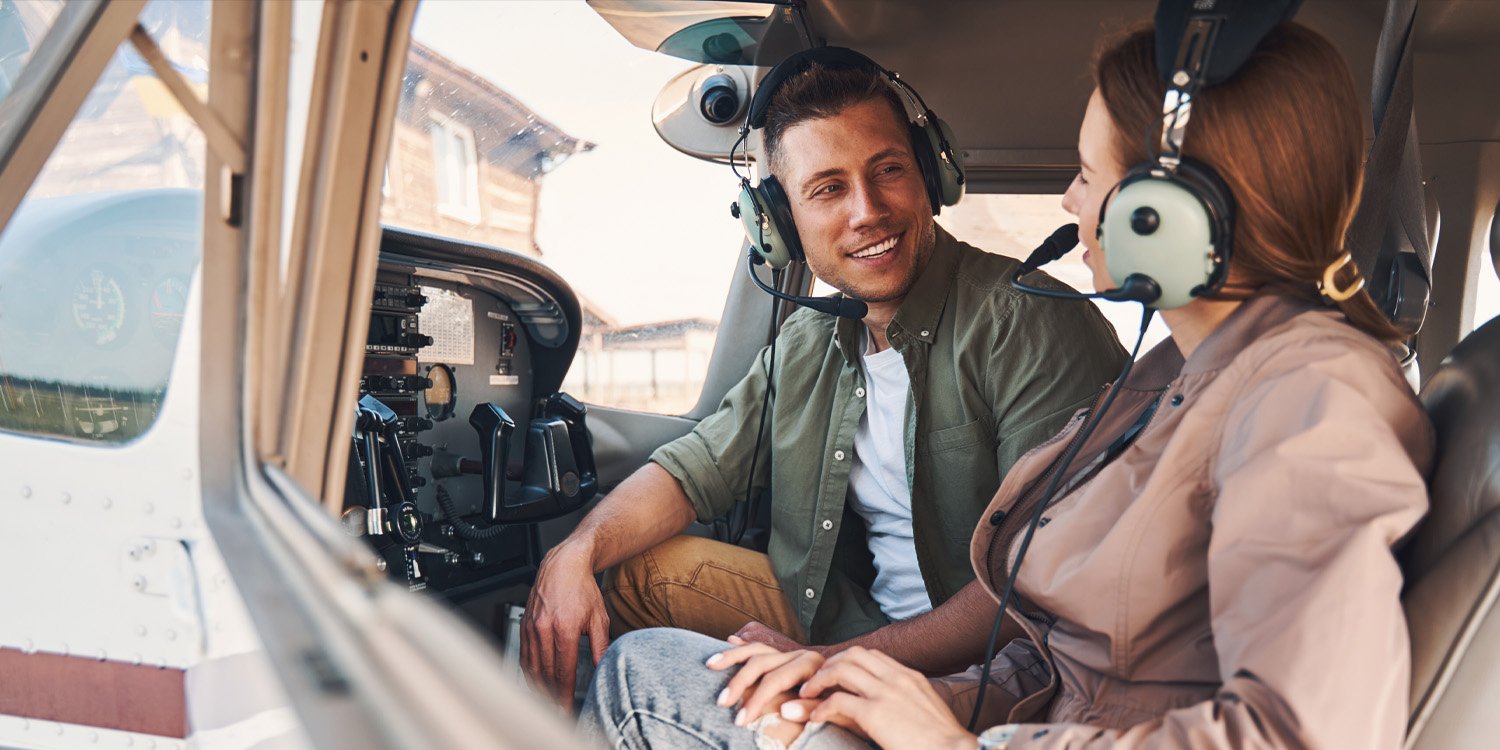
Recent research published in Aviation psychology and applied human factors suggest that flight instructor personality and school safety culture are strong predictors of on-duty safety behavior. The findings provide evidence that highly organized and responsible instructors are more likely to strictly follow safety protocols, especially when flight schools prioritize safety. These insights provide new ways for flight schools to hire and train instructors to reduce aviation accidents.
Researchers Vivek Sharma and Meredith Carroll conducted this study to understand the human factors that influence safety during flight training. The National Transportation Safety Board recorded more than 1,600 accidents related to flight instruction in the United States between 2015 and 2023. Almost 10% of these accidents were fatal. Previous accident reports suggest that poor decision-making and unsafe behavior are common causes of these accidents.
Sharma, a department director, head of online programs, and assistant professor in the Department of Aeronautics at Florida Tech, wanted to explore these human factors. “Since my childhood, I have always been inspired by my teachers. I strongly believe that teachers have a very strong influence on their students,” Sharma said. “During my master’s degree in aviation safety, I learned about personality trait theory and its impact on human performance and behavior.”
Unlike commercial pilots, flight instructors must balance teaching student pilots while simultaneously maintaining control of the aircraft and ensuring safety. “Flight instructors are also teachers, so they play a critical role in shaping the performance and safety attitudes of the next generation of aviators,” Sharma explained. “Therefore, we felt that investigating the relationship between flight instructor personality traits and safety behaviors was important and could help flight schools better understand the role of flight instructor personality traits in influencing safety behaviors.”
Although many experts have studied the personalities of pilots in general, few studies have focused specifically on flight instructors. Sharma and Carroll proposed a model that focuses on three main areas: personality traits, emotional or cognitive attitudes, and the flight school safety environment.
To measure personality, the authors used the Big Five personality model. This well-known psychological framework divides human personality into five main traits: extraversion, agreeableness, directness, conscientiousness, and neuroticism. Extraversion refers to being sociable, and agreeableness refers to being cooperative. Openness involves a willingness to try new things, conscientiousness reflects how organized and responsible a person is, and neuroticism refers to emotional instability or a tendency to easily experience negative emotions.
The second area of focus concerns what psychologists call the affective area, which refers to a person’s feelings and attitudes. In this study, researchers focused on self-efficacy and risk perception. Self-efficacy is an individual’s belief in his or her ability to succeed in a particular situation or accomplish a task. Risk perception is how a person views the seriousness and likelihood of a dangerous situation.
The third area was the safety environment of the flight school itself. Safety climate refers to how employees perceive an organization’s commitment to safety based on its policies, procedures, and management practices. Researchers wanted to know whether schools with strict safety rules and supportive leadership would naturally encourage better safety behaviors from leaders.
To collect the data, Sharma and Carroll used an online survey to collect responses from certified flight instructors working in the United States. They recruited participants from professional flight instructor organizations and various flight training schools. A total of 134 flight instructors completed all sections of the survey. The sample included 116 male instructors and 17 female instructors, with one participant choosing not to report his or her biological sex.
On average, female participants had more than 3,000 hours of flight time, and male participants had more than 6,000 hours of flight time. The instructors also came from a variety of work environments. About 43 percent of participants worked in less regulated flight schools, and about 25 percent worked in highly structured, federally sanctioned flight programs. The remaining participants worked independently as freelance instructors.
The study asked participants to complete five separate questionnaires to measure the variables of interest. First, the researchers measured the Big Five personality traits using a standard 20-item personality test. Participants rated how accurately a particular statement described them on a 5-point scale. They then took an eight-item test to measure self-efficacy, answering questions about their confidence in overcoming challenges.
To measure risk perception, flight instructors completed a 13-item questionnaire asking them to rate the level of risk of a particular flight scenario. The survey also included an 18-item test to assess each instructor’s flight school safety climate. In this section, participants were asked to rate statements about how well management understands operational issues and maintains safety standards. Finally, the researchers measured their primary outcome, safety behaviors, using a six-item scale that assessed how well instructors adhered to safety regulations and participated in safety programs.
When researchers analyzed the data, they found that conscientiousness was a significant predictor of safety behavior. Instructors who scored high on conscientiousness reported much higher levels of safety compliance. This makes sense from a psychological perspective, as conscientious people tend to be proactive, thorough, and responsible.
“This result was consistent with previous research, so I wasn’t surprised,” Sharma said. “Flight instructors had high scores for conscientiousness and agreeableness, and low scores for neuroticism. This indicates that the majority of flight instructors were responsible, duty-bound, goal-oriented, empathetic to student pilots, and mentally stable. These results were consistent with commercial pilots.”
This analysis also revealed that the flight school safety environment has a significant impact on safety behavior. Instructors who felt that their supervisors prioritized safety policies were much more likely to exhibit positive safety behaviors themselves. When flight school leaders actively promote a strong safety culture, instructors are more likely to adopt the same values during training flights.
Interestingly, the researchers did not find a significant relationship between self-efficacy and safety behaviors. Whether flight instructors are confident in their abilities does not seem to determine whether they follow safety procedures. Similarly, risk perception was not found to be a significant predictor in this particular model. Overall results indicate that instructors’ innate sense of responsibility and school safety culture are the main drivers of safe flight training.
“This finding suggests that aviation safety is not only influenced by technical flying skills, but also by human factors such as personality and organizational culture,” Sharma said. “This means flight schools could benefit from emphasizing safety culture, safety training, and potentially considering personality traits during recruitment and training processes.”
Although the findings of this study provide useful insights, there are some potential limitations that should be kept in mind. Because this study is based on a self-reported online survey, it means that participants may rate their safety behaviors higher than their actual behavior in real life. The researchers also used a general safety behavior scale rather than a test specifically designed for flight instructors’ unique duties.
Sharma cautioned against oversimplifying the results. “Safety behavior is influenced by multiple operational, environmental, and organizational factors, so the results of this study should not be interpreted to mean that personality traits alone determine whether flight instructors behave safely,” he explained.
The sample size of 134 participants is relatively small compared to the tens of thousands of active flight instructors in the country. Differences in the types of flight schools in which participants worked may also influence the data. Some instructors work in highly structured programs, while others work independently as freelance instructors. These different work environments can also have very different safety environments.
The authors suggest that future research should test these theories using larger and more diverse pilot samples. They recommend investigating how personality traits influence the safety behaviors of airline pilots, military pilots, and student pilots. The main goal of future research is to develop a specific safety behavior scale fully tailored to the aviation field.
Sharma also aims to extend this research into emerging areas of aviation. “My long-term goal is to better understand the personality traits of unmanned aircraft system (UAS) pilots and drone pilots,” Sharma said. “As the commercial use of drones rapidly expands across a variety of sectors, it is important to understand the human factors associated with UAS operators.”
He wants to determine how individual differences influence drone operators’ decision-making, risk perception, and operational performance. “These findings could support the development of the future UAS workforce by providing more effective training and selection criteria,” Sharma added.
The study, “Investigating Flight Instructor Safety Behavior through Personality Traits, Emotional Domains, and Safety Climate in the United States,” was authored by Vivek Sharma and Meredith Carroll.
