


Listen to the audio version of this article (generated by AI).
Levels of ammonia in the air, which can negatively impact people’s ability to breathe, are increasing three times faster each year on Colorado’s Front Range, where concentrated animal feeding operations (CAFOs) are concentrated, compared to nearby urban areas without large livestock farms, according to a new study.
The study was published in a peer-reviewed journal last month atmospheric environmentthere is growing evidence that large dairy farms and livestock farms are creating hot spots for airborne ammonia. Ammonia can irritate people’s eyes and respiratory systems and can also react with other airborne pollutants to form particulate matter pollution (PM2.5). PM2.5 particles are small air pollutants one-thirtieth the width of a human hair, and inhaling PM2.5 particles has been linked to asthma, heart and lung problems, and premature birth. Ammonia contributes to 30% of PM2.5 pollution in the United States, according to estimate.
The study comes amid a lawsuit challenging the state’s monitoring of air and water pollution by CAFOs and highlights human health concerns as well as the role of agricultural ammonia emissions in the “ecological crisis” in the state’s mountains, including nearby Rocky Mountain National Park, said Jeremy Nichols, senior advocate at the Center for Biological Diversity.
group sued the state of colorado In April, a large slaughterhouse was indicted for allegedly failing to comply with state air pollution regulations. in separate lawsuitThe Center for Biological Diversity and the Food and Water Monitoring Center argue that Colorado’s CAFO permits lack the type of water monitoring needed near lagoons where large amounts of animal waste and waste are stored.
“Colorado’s air regulators have completely failed to protect clean air and the environment from these large-scale animal feeding practices,” Nichols said. “Without reporting, Big Ag remains willfully ignorant while air pollution suffocates the region,” he says.
“Colorado’s air regulators have completely failed to protect clean air and the environment from these large-scale animal feeding operations.” – Jeremy Nichols, Center for Biological Diversity
In the study, researchers at Colorado State University measured ammonia in the air in various areas around northeastern Colorado from 2013 to 2023. They found that ammonia concentrations were highest in areas with high concentrations of CAFOs and were increasing three times faster in such areas compared to the Denver metropolitan area.
“The largest increases in atmospheric ammonia closely match the distribution of CAFOs,” the authors write.
Ammonia and CAFO
Estimation 80% of ammonia in the atmosphereis a nitrogen-based gas that comes from agriculture through fertilizers and animal waste. in 2023researchers looked at the prevalence of CAFOs and ammonia air pollution across the United States and found that levels were highest in counties with high livestock densities. The authors write, “The major source of controllable ammonia in the United States is livestock waste, which is three times more than all other sources combined, including fertilizer use.”
This new study comes as Colorado’s CAFOs are expanding. According to one report, the state’s cattle CAFO population currently averages about 13,000 cattle, an increase of about 80% over the past 20 years. Food and water monitoring analysis. The same analysis found that the state’s CAFOs emit more than 34 billion pounds of fertilizer each year. This is more than four times the amount of human waste produced in the state.
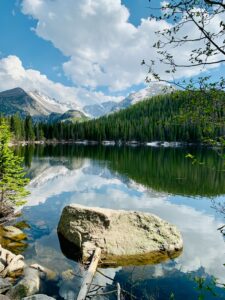 In addition to human health concerns, nitrogen deposits in Rocky Mountain National Park, including ammonia, continue to harm native species and habitat. (Credit: Aveedibya Dey/Unsplash +)
There are other potential causes of the surge in ammonia air pollution. For example, the researchers looked at the impact of several major wildfires in the region during a 10-year period of measurement. However, wildfire smoke would have affected urban and rural areas alike, and did not cause the increase in just one area.
“Wildfire smoke is increasing across the region, but it seems unlikely to account for much of the observed increase in atmospheric ammonia,” the authors wrote.
The role of climate change
Lead author Jeffrey Collette Jr., a university professor in Colorado State University’s School of Atmospheric Sciences, said climate change and CAFOs may be playing a combined role in emissions.
“One hypothesis is that rising temperatures across the region are increasing ammonia volatilization and emissions from enclosure surfaces where animal waste accumulates.”
In addition to human health concerns, nitrogen deposition (including ammonia) in Rocky Mountain National Park is also a problem. continue to cause harm Native species and habitats, promotion state action The aim is to reduce these pollutants.
The Colorado Cattlemen’s Association did not respond to a request for comment on the new study, but it has led the industry’s response to any attempts to regulate CAFOs in the state. The association is a “key player” in the ongoing discussion about ammonia deposition in Rocky Mountain National Park, according to its website.
The association said it is “advocating on behalf of the livestock industry, engaging in stakeholder meetings and research on this issue, and seeking to improve our understanding of the effectiveness of best management practices to reduce ammonia emissions, costs, and challenges to implementation.”
Leah Schleifer, a spokeswoman for the Colorado Department of Public Health and Environment, said the agency does not review new studies but welcomes “studies that examine air pollutants.”
she pointed to the state Air Toxics Reporting System Some facilities are required to report ammonia emissions. Rocky Mountain National Park Subcommittee In an ongoing effort to understand and reduce air pollution from ammonia.
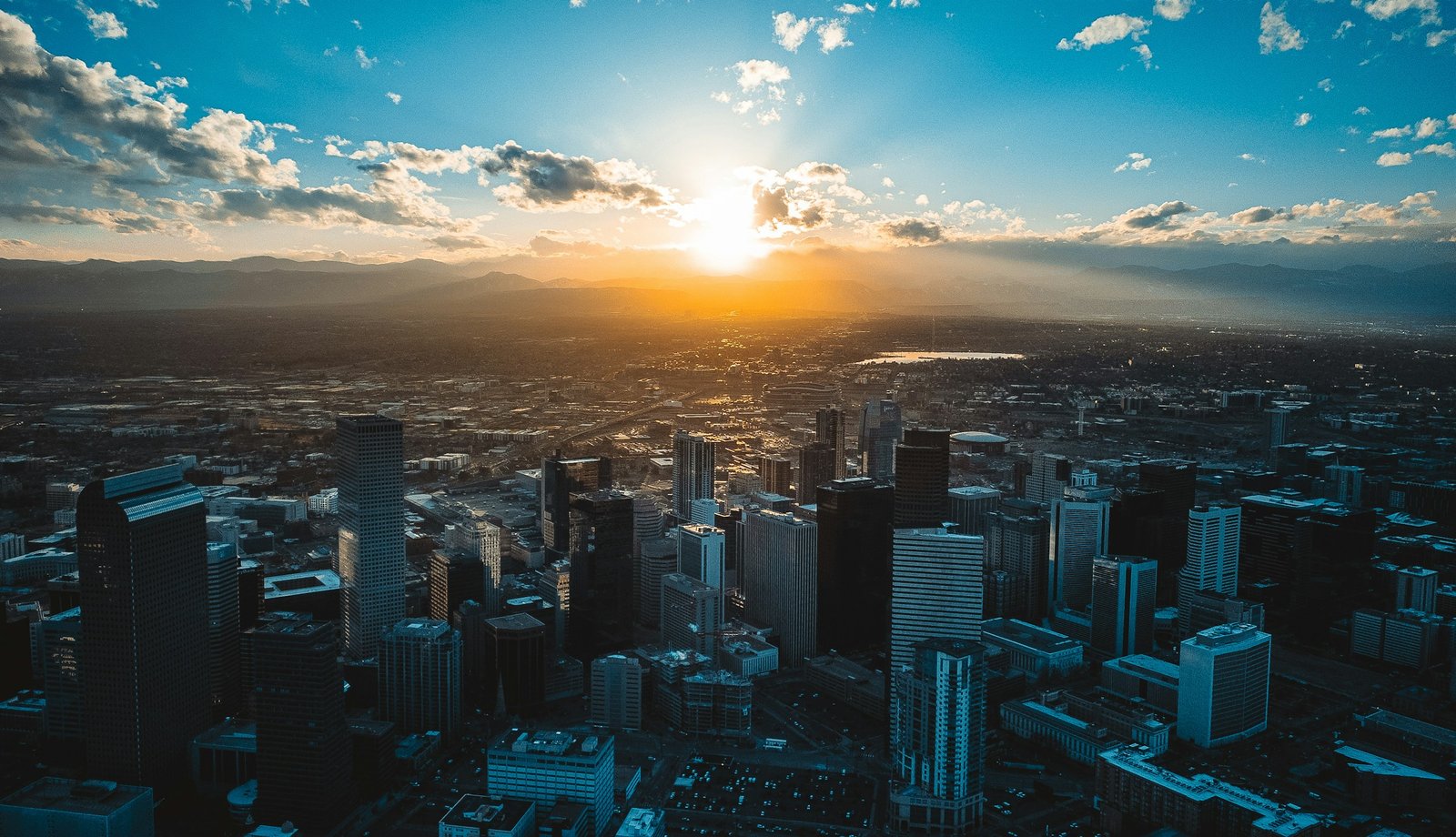
Featured image: Denver skyline. Credit: Nils Huenerfuerst/Unsplash +
-

Brian Bienkowski is the editor-in-chief of The New Lede. He is a veteran journalist with over 15 years of experience covering the environment and human health. Prior to joining TNL, he was a senior editor at Environmental Health News for nearly a decade, overseeing the newsroom and two local bureaus. He was also the founder, producer, and host of the EJ podcast Agents of Change from 2020 to 2024.
Bienkowski has received multiple awards for her editing and reporting, including honors from the Healthcare Journalists Association, Columbia School of Journalism, Hunter College, and the Environmental Journalists Association. He has a master’s degree in environmental journalism from Michigan State University and lives in northern Michigan.
