


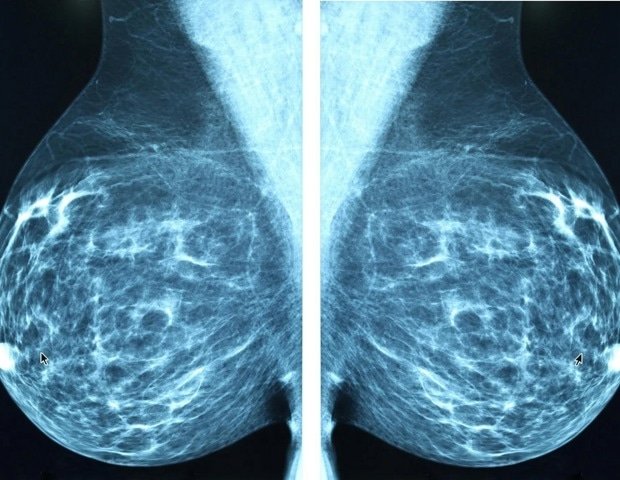
At low doses, the investigational drug endoxifen reduces breast density as much as the standard treatment tamoxifen, but without the troubling side effects. This is shown by a new study published by Karolinska Institutet. National Cancer Institute Journal. The results may have implications for future breast cancer preventive treatments.
Tamoxifen is an established drug that has been used for more than 40 years to reduce the risk of recurrence in breast cancer patients. This drug is also approved for the prevention of breast cancer in women who are at high risk.
However, tamoxifen’s side effects are a major problem. Because many women experience menopause-like symptoms such as hot flashes, many do not complete treatment.
Endoxifen is the most active metabolite formed when tamoxifen is broken down in the body. A new study investigated whether endoxifen in pill form could provide the same biological effects as tamoxifen, but with more predictable effects.
A total of 240 healthy premenopausal women were randomized to receive either a placebo or 1 to 2 mg of endoxifen daily for 6 months. Next, the researchers measured breast density using mammography. High mammogram density may increase breast cancer risk, but reduction during treatment can be a good measure of treatment outcome.
“Both 1 and 2 milligrams of endoxifen produced a clear reduction in breast density compared to placebo,” says co-author and doctoral candidate Matthias Hammerström from the Department of Medical Epidemiology and Biostatistics at Karolinska Institutet.
Results showed that 1 mg of endoxifen reduced breast density by an average of 19 percent and 2 mg reduced breast density by 26 percent. Data from previous studies indicate that 20 mg of tamoxifen reduces density by about 18.5 percent. Therefore, the effects of low doses of endoxifen were consistent with those seen with tamoxifen.
Participants receiving 2 mg of endoxifen reported greater worsening of hot flashes and night sweats compared to the lower-dose group, but the 1 mg group had a safety profile similar to placebo in terms of serious side effects and biomarkers.
Our results suggest that lower doses may be sufficient to affect breast density, but also appear to be well tolerated. ”
Matthias Hammerström, Karolinska Institutet
Research is called proof of concept This means that the treatment is designed to demonstrate that it produces the expected biological effect before large-scale, long-term trials are conducted. However, this study cannot show whether endoxifen reduces the risk of breast cancer or recurrence.
This research was funded by Atossa Therapeutics. Several researchers have reported relationships with the company. See the study for more information.
