


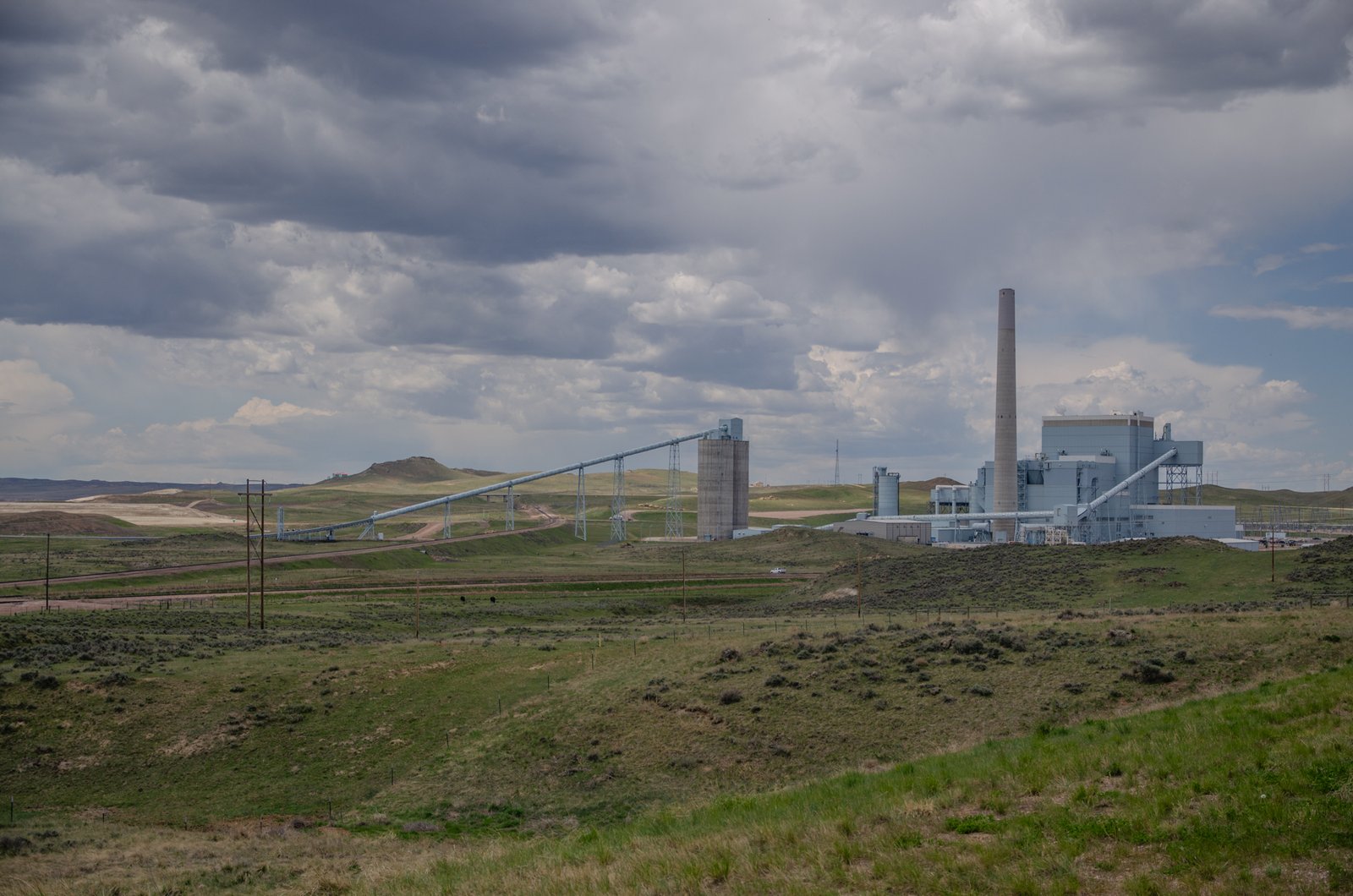
Lawmakers in Texas and Wyoming recently introduced bills that would give fossil fuel companies sweeping legal immunity and shield energy producers from strict compliance with the Clean Air Act.
Republican Harriet Hageman, Wyoming’s only U.S. representative, and Sen. Ted Cruz (R-Texas) led legislation that would protect fossil fuel companies from liability for damages from storms, wildfires and other climate change disasters. Sen. Cynthia Lummis (R-Wyo.) and Rep. August Pfluger (R-Texas) collaborated on another bill called the Fence Act that would make it easier for states to argue that foreign emissions are causing local pollution.
“Energy security is national security, and we will not let a critical industry self-destruct with a barrage of costly lawsuits and extreme penalties that jeopardize American drilling,” Hageman said in a statement accompanying the bill’s announcement. “America’s energy producers should be protected from the dangerous precedent that would be set by retroactive penalties for lawful activities.”
Hageman’s statement included words from fossil fuel lobbyists and executives thanking him and Cruz, whose Senate bill is co-sponsored by Sen. Ted Budd (R-Ark.) and Sen. Tom Cotton (R-Ark.). Sen. Mike Lee (R-Utah) helped introduce the bill. This bill is called the “Climate Change Suppression Act.”
The Fence Act, which Mr. Lee also co-sponsored in the Senate, passed the House on April 16 and was co-sponsored by Rep. Dan Crenshaw (R-Texas) and Rep. Jeff Krank (R-Colo.).
“I am pleased that the Fence Act is one step closer to becoming law,” Lummis said in a press release. “This legislation will help foster innovation and economic growth across Wyoming by cutting unnecessary red tape. At the same time, the FENCES Act upholds strong Clean Air Act standards while implementing common sense policies that account for pollution beyond the state’s control.”
The American Petroleum Institute, the nation’s largest fossil fuel industry group, is lobbying in support of each bill, according to recent disclosures.
A spokeswoman for Ms. Lummis said the fossil fuel industry did not lobby her for or help write the fence law. Other lawmakers supporting these bills did not respond to questions about whether they had heard from industry lobbyists.
“Homemade contamination”
Under the Clean Air Act, EPA maintains thresholds for two types of harmful pollution: ozone and community haze. If a state or city does not meet these standards, it must submit a “regional haze plan” detailing how it will reduce pollution. Emissions from other countries move into the United States and can contribute to poor local air quality, but are not necessarily the primary cause.
“That argument is typically a red herring to distract from the reality that the homegrown pollution that harms our national parks, air pollution, is very much controllable,” said Ulla Reeves, director of the Clean Air Program at the National Park Conservation Association.
One such homegrown resource is fossil fuels, which pollute even before they are burned during extraction, crushing, pumping, and refining. Texas is the largest energy producer in the United States, with Colorado and Utah ranking in the top 17.
Scientists have long known about the effects of air pollution on human health. Brian Moench, president and co-founder of the Utah Medical Association for a Healthy Environment, said long-term exposure to ozone pollution can have effects on a person’s lungs similar to those of smoking cigarettes.
“The idea that clean air standards meant to save lives and protect health will burden and penalize people is simply absurd.”
— Brian Mench, Utah Physician for a Healthy Environment
He estimated that air pollution causes as many as 8,000 stillbirths each year in the United States.
On April 21, the day before Earth Day, Environmental Protection Agency Administrator Lee Zeldin proposed lowering the severity of air quality violations in the greater Salt Lake City area.
“It doesn’t matter where the ozone comes from, it’s going to have the same impact on public health either way,” Moench said. “The idea that clean air standards meant to save lives and protect health will burden and penalize people is simply absurd.”
In Colorado, contamination along the Front Line has been worrying residents and regulators for decades, and while the state has taken steps to address the problem, it needs to step up its efforts, said Andrew Klooster, Earthworks’ Colorado field advocate.
“Colorado is a state that calls itself an outdoor paradise. Outdoor activities and outdoor recreation are truly Colorado’s selling point,” he said. “If you’re forcing a segment of the population into a situation where they can’t safely reproduce outdoors, it’s not just a public health issue, it’s an equity issue.”
This story is funded by readers like you.
Our nonprofit newsroom provides free advertising for our award-winning climate coverage. We rely on donations from readers like you to continue our work. Donate now to support our work.
donate now
Cyrus Reed, legislative and conservation director for the Lone Star Chapter of the Sierra Club, said the fence law would be a setback for human health in Texas, where the presence of large industry and population growth are negatively impacting air quality.
“That means more people get sick, which has an even bigger impact on health care costs, premature deaths and asthma problems,” he said. “We feel as a government we should be working to protect our people and improve air quality, rather than looking for excuses not to work.”
Immunization companies, vulnerable citizens?
Mr. Hageman and Mr. Cruz’s bill would protect fossil fuel companies from climate superfund laws and lawsuits seeking damages for climate disasters related to the climate impacts of their products, and is seen by some as part of a campaign to delegitimize climate science.
“This is part of a broader attack on attribution science, the study that quantifies how much emissions from fossil fuels have contributed to particular climate disasters,” said Kathy Mulvey, director of the Climate Accountability Campaign at the Union of Concerned Scientists. Attribution science is “recognized by the United Nations Intergovernmental Panel on Climate Change as an important tool for understanding the impacts of climate change.”
This year, the effects were felt in many parts of the West with the warmest and driest winter on record.
Across the Colorado River Basin, irrigators, cities and industrial users are grappling with record low snowfall, an ongoing drought and the potential loss of water and electricity to the 40 million people in the United States, Mexico and 30 tribal nations who rely on federal dams.
In Wyoming, “people are really worried about what the summer will be like,” said Emma Jones, an associate organizer with the Wyoming chapter of the Sierra Club. “It’s really upsetting that[Wyoming’s congressional delegation]just continues to give benefits to these industries that have already harmed our communities for so long.”
Texas has experienced a full range of climate-related environmental disasters, from snowstorms to wildfires, heat waves, and floods. In Corpus Christi, where petrochemical plants, refineries and other industries account for more than half of the city’s daily water use, schools and hospitals are drilling for underground water as city officials watch the prospect of depletion.
The cost of rebuilding after these events will ultimately fall on Texans, but restitution from fossil fuel companies could ease that burden, Reed said. (Texas has not filed suit against fossil fuel companies seeking damages for climate disasters.)
“I’m disappointed that Mr. Cruz is using his position as a senator from the great state of Texas to do the bidding of big oil and gas and industrial corporations, instead of looking out for the health and economic well-being of average Texans,” he said.
Mr. Hageman and Mr. Cruz’s bill was referred to each chamber’s Judiciary Committee. The fence legislation is awaiting a hearing in the Senate Environment and Public Works Committee, where Lummis is a member of the Republican majority.
About this story
As you may have noticed, this article, like all news we publish, is free to read. That’s because Inside Climate News is a 501c3 nonprofit organization. We don’t charge subscription fees, keep our news behind paywalls, or fill our website with ads. We provide climate and environmental news free to you and anyone who wants it.
That’s not all. We also share our news for free with dozens of other news organizations across the country. Many of them cannot afford to do environmental journalism themselves. We’ve established bureaus across the country to report on local news, partner with local newsrooms and co-publish stories to ensure this important work is shared as widely as possible.
The two of us started ICN in 2007. Six years later, we won the Pulitzer Prize for national reporting and now run the nation’s oldest and largest dedicated climate newsroom. We tell the story in its entirety. We hold polluters accountable. We expose environmental injustice. We debunk misinformation. We explore solutions and inspire action.
Donations from readers like you fund all aspects of our work. If you haven’t already, will you support our ongoing work, our coverage of the biggest crises facing our planet, and help us reach more readers in more places?
Please make a tax-deductible donation. Each one makes a difference.
thank you,

Jake Bolster
Wyoming and Western Reporters
Jake Bolster reports on Wyoming and the West for Inside Climate News. Previously, she worked as a freelancer covering climate change, energy, and the environment across the United States. He holds a master’s degree in journalism from Columbia University.
