


Researchers at Brown University and their collaborators have developed a new method to measure cell properties. They say this is an important advance because accurately measuring changes in cell elasticity can help better understand diseases, diagnose patient symptoms and provide more accurate prognoses.
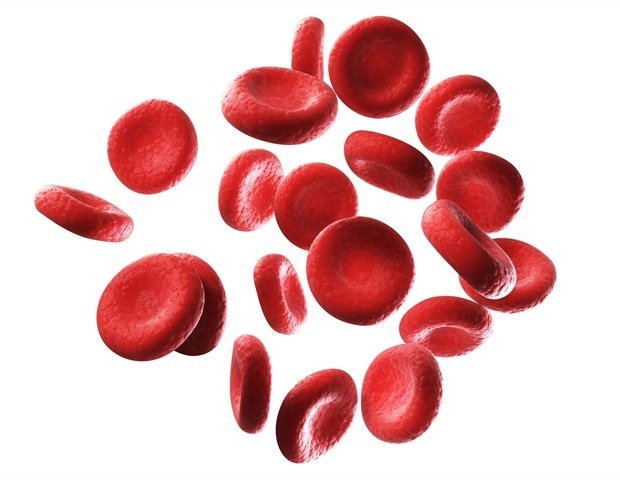
For example, cancer cells from a tumor typically soften as they become more dangerous and spread more easily, whereas blood diseases such as malaria and sickle cell can harden red blood cells. Mechanical changes at the cellular level are also observed in neurodegenerative, cardiovascular, and chronic inflammatory diseases.
As detailed in a study in the journal lab on chipThe researchers have developed what they call a “mechanophenotyping cytometer,” a microfluidic device designed to measure the physical size and softness of cells, known as mechanophenotyping.
Mechanophenotyping is an underutilized tool, said study lead author Dr. Graylen Chickering. candidate in biomedical engineering in the laboratory of Brown University Associate Professor Eric Darling. This is mainly because the measurement technology lags behind other methods of analyzing cell properties.
Chickering explained that the gold standard for measuring cell softness or hardness is atomic force microscopy. This requires attaching the cells to a surface and examining them one by one with a small indenter.
This method basically works by poking cells. Imagine seeing a water balloon. It may feel different if you poke the end and center of the balloon. Poking cells is also quite slow, making it difficult to study large numbers of cells in a reasonable amount of time. ”
Dr. Graylen Chickering Candidate in Biomedical Engineering, Brown University
Cell travel time: a key measurement
In developing the new technique, the scientists focused instead on a measurement called time-of-flight, which is the time it takes for a cell to pass through a small channel filled with liquid.
“The cell is essentially moving from one checkpoint to another, and it takes timestamps from each checkpoint to determine flight time,” Chickering said.
The researchers determined cell size using existing fluorescence signals from a cytometer, a device that counts and measures cells, and then used a time-of-flight method to determine cell stiffness. Soft cells move towards the center of the channel where fluid moves fastest, while stiffer cells stay at the edges where fluid moves more slowly.
Chickering said that compared to atomic force microscopy, where experienced scientists can measure one cell every about 30 seconds, the new approach can be used to observe 60 to 100 cells per second, making it possible to observe up to hundreds or even thousands of cells per second.
“The proof of concept was that Graylen produced data showing that cell particles of different stiffness and different sizes have different correlated flight times, which in theory matched what we expected,” said study author Darling, an associate professor of medicine, engineering and orthopedics at Brown University. “This method was much cleaner and more reproducible than previous methods, which could give different measurements depending on how it was used.”
The findings are the result of a multi-year collaboration between researchers at the Brown Institute of Biology, Engineering, and Medicine and a team at the National Institute of Standards and Technology (NIST) in Maryland. Darling said Brown provided the ideal synthetic cell-like particles for the experiment, and NIST scientists created the basic design for the cytometer device.
“We brought polymer cell mimics into the collaboration that served as calibration particles of specific size and stiffness and mapped how these properties affected various metrics recorded from the device,” Darling said. “The NIST cytometer has the unique feature of multiple measurement zones that allow us to quantify the error of each particle flowing through it. This allowed us to show how much biological and technical variation exists in the measurements.”
Future research will use a mechanophenotyping cytometer to study the mechanical properties of cells from human blood and tissue samples provided by Brown’s clinical partners.
“We would expect there to be differences between healthy people and people with certain types of diseases, such as cancer,” Darling said. “The ultimate hope is that this type of device can support diagnosis and prognosis alongside existing methods.”
Funding for this research was provided by the National Science Foundation (grant CMMI 2054193) and the National Institute of Standards and Technology.
sauce:
Reference magazines:
Chickering, G.R. others. (2026). Estimating the elastic modulus of single cells in a serial microfluidic cytometer from time-of-flight and fluorescence signal analysis. lab on chip. DOI: 10.1039/D5LC00930H. https://pubs.rsc.org/en/content/articlelanding/2026/lc/d5lc00930h
