


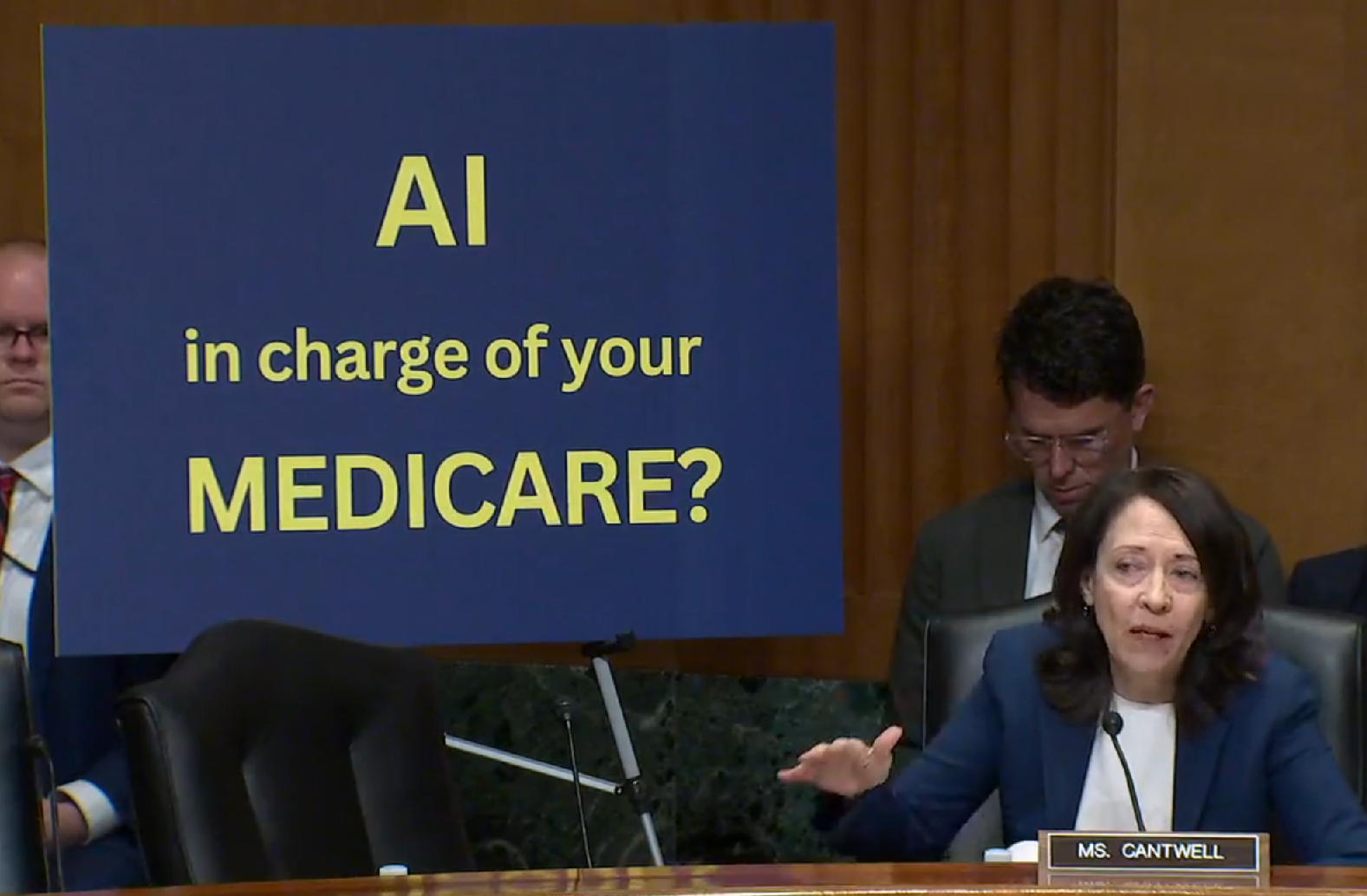
Early hospital data highlighted on Capitol Hill suggests Medicare patients are waiting significantly longer to receive care due to a federal pilot program exploring automatic evaluation of prior authorization applications in traditional Medicare.
The Wasted and Inappropriate Services Reduction (“WISeR”) model is a one-year pilot in six states that was announced by the Centers for Medicare and Medicaid Services’ (CMS) Innovation Center (CMMI) last summer and began on January 1.
In line with the Trump administration’s efforts to root out fraud, waste, and abuse in Medicare, WISeR aims to leverage artificial intelligence to expedite pre-authorization for 13 medical services deemed “low value” or “vulnerable” that are susceptible to exploitation, such as skin and tissue substitutes. Beyond its technical elements, the model also strengthens prior authorization in traditional Medicare, which has not been widely used to date.
The approach, which has raised red flags among provider groups, nonprofit groups and some lawmakers, was initially unpopular among Washington hospitals, according to a report released this week by Sen. Maria Cantwell (D-Wash.) based on data from 16 hospitals in the Washington State Hospital Association.
The report (PDF) topline says procedures are taking two to four times longer to complete than patients experienced before the model was introduced “due to approval delays.” For example, the report said procedures that previously were approved in hospitals within “approximately” two weeks took four to eight weeks after WISeR, and patients “often had to reschedule multiple times while waiting for approval, causing prolonged pain and worsening of underlying conditions.”
At the University of Washington Medical System, one of the organizations profiled in the report, the average approval time for emergency approvals (previously one day) and standard approvals (previously three days) increased from 15 to 20 days after implementing WISeR. It also said delays in the model left nearly 100 patients waiting for an epidural steroid pain injection, one of the included procedures.
More than 18,600 Washington state residents received long-term care services through traditional Medicare in 2024, but are now eligible for prior authorization under the WISeR model, according to the report.
Cantwell, who serves on the Senate Finance Committee, addressed the findings Wednesday during a budget hearing with Health and Human Services Secretary Robert F. Kennedy Jr., saying that the delays in care reported by voters suggest that “AI is being used as a denial device by CMS.”
“Hospitals are calling about this, doctors are calling about this, patients are calling about this,” she told her secretary. “…Using AI as an app or tool that could turn people away and potentially disconnect them from Medicare when this part of Medicare was never referrals makes me worry that someone really thinks AI should be used to determine Medicare services.”
President Kennedy said the delays described in the report were “unacceptable” and that his team would work to iron out “perhaps the kinks in the system.” He defended the approach more broadly, saying CMS was being “cheated” when it came to billing for the services selected in the pilot.
During Wednesday’s hearing, Cantwell also touched on unanswered questions about transparency and how the AI tools used in the models make decisions. Kennedy responded that the program is “assumed to have a human supervisor” who would approve claims identified as denied by the AI.
Other issues cited in the report include concerns among hospitals about increased administrative burden and conflicts of interest due to the model’s structure, in which third-party administrators receive a portion of the amount of denied claims that are not later reversed. Such a structure could encourage contractors to “arm AI medical decisions in pursuit of opportunities to maximize profitability.”
“Patients are our top priority, and we are concerned that adding a layer of for-profit technology companies between clinicians and care decisions could unintentionally create barriers for the people the system is meant to serve,” Tammy Buyok, president of MultiCare-owned Yakima Memorial Hospital, said in a quote included in the report.
Last year, when reviewing CMS’ plans to deploy the WISeR model, the potential for extended delays, misaligned incentives, and increased workload were among provider organizations’ primary objections.
The American Hospital Association, for example, called for an extension of the rollout period or a more gradual implementation, citing “challenges faced by our members due to improperly administered prior authorization programs” outside of traditional Medicare. The American Medical Association said in an advocacy message to its members last year that it is “particularly concerned that prior authorization requirements could be further expanded into traditional Medicare, with this model setting a precedent for future mandatory programs.”
In a new statement, Washington State Hospital Association President and CEO Kathy Sauer praised Cantwell for bringing the experiences of its members to Kennedy’s attention and said the group “strongly opposes the use of (AI) in Medicare when it interferes with patient care.”
CMS’s pilot expansion of prior authorization in traditional Medicare comes as the practice faces widespread backlash from the public and, by extension, lawmakers. A KFF poll conducted in January found that 32% of patients considered prior approval to be a “major burden” when proceeding with treatment, ahead of understanding medical costs (23%) and arranging appointments (20%).
Due to the negative publicity of previous approvals, the industry’s largest insurers have committed to reversing their use of the practice, but revenue cycle data and earnings commentary from insurer organizations suggest that approval denials are still having an impact.
