


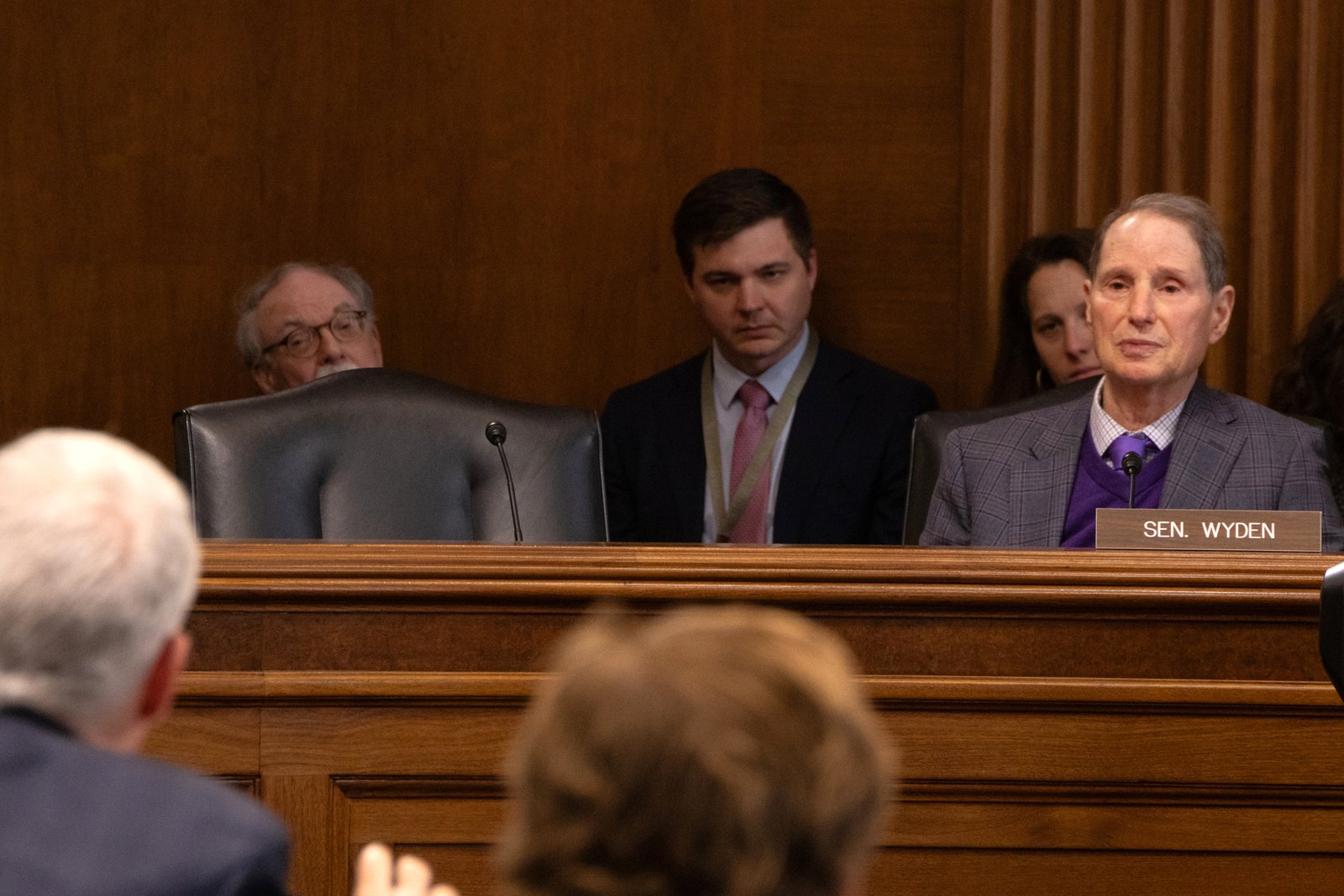
Democrats on the Senate Energy and Natural Resources Committee are objecting to the Energy Department’s proposal to divert money from solar and wind power while keeping fossil fuel plants open beyond their retirement date.
During the April 21 hearing on the fiscal year 2027 budget, Sen. Ron Wyden (D-Ore.) strongly disagreed with Secretary Chris Wright’s prioritization of fossil fuel plants over clean technologies.
“We liked the fact that we had a clean energy tax credit role (for wind and solar) and the private sector was technology neutral,” Wyden said. “They were voluntary, there was no mandate. You ripped it out at its core, over the objections of natural gas people from all industries who said, ‘Look, we love gas, but we also need renewable clean energy to sustain gas.'”
Congressional Democrats have championed the transition to renewable resources, but some Republicans argue that these sources are not as reliable as fossil fuels. The problem has become more pressing as the Iran conflict has driven up fuel prices and crippled key energy infrastructure.
Since May last year, the department has issued a series of emergency orders requiring coal-fired power plants in the continental United States and Puerto Rico to continue operating despite plans to decommission them.
These federal actions are having ripple effects across the nation’s utilities. Southern Company announced it would continue operating coal-fired power plants in Mississippi and Georgia, and North Carolina’s state legislature passed the Electricity Bill Reduction Act, allowing Duke Energy to roll back legally mandated carbon emissions reductions.
At the hearing, Wright defended his proposal to subsidize fossil fuel power generation as a way to “restore reliability to the grid.” He said the ministry separated out additional funding for these plants after an internal outage risk analysis found that the odds could rise by up to 100 times by 2030 due to supply shortages.
However, the country’s coal-fired power plants are older and have higher operating costs, which may make investing in coal-fired power less attractive to investors than renewable energy.
“The market doesn’t seem to agree with you,” Sen. Angus King of Maine told Wright. “The Energy Information Administration says we’re talking about increasing capacity this year. The market is saying these technologies will work.”
“There were a lot of distortions in that data,” Wright responded.
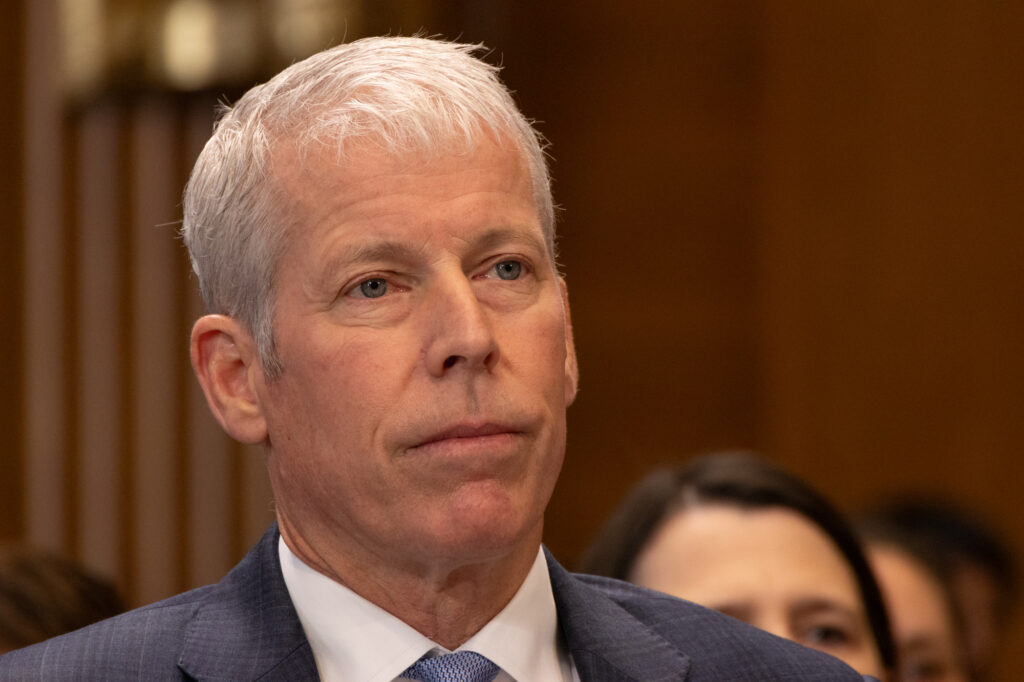 Energy Secretary Chris Wright held a two-hour hearing before a Senate committee Tuesday. Credit: Gabriel Matias Castilho/Inside Clean Energy
He added that the accumulation of wind and solar energy over the past year was the result of federal subsidies under the Biden administration, rather than market forces. “If you look at where the capital is going… you’ll see that natural gas is in the clear lead,” he said.
Republicans on the committee praised Wright’s budget proposal. Some praised the Secretary’s decision to refocus research and provide reliable and predictable energy. “The U.S. Department of Energy will continue to advance our efforts to get our country back on the right track when it comes to energy,” said its chairman, Sen. Mike Lee (R-Utah).
The rise in oil prices due to the Iran war was also discussed.
Wright said in an interview with CNN on Sunday that U.S. gas prices could remain high for months, contradicting statements he made in early March that average gasoline prices in the country would fall below $3 a gallon within “a few weeks” after the first airstrikes against Iran in late February. The statement also contradicts President Trump’s previous claim that rising fuel prices are “short-term.”
Wright said at the hearing that he doesn’t know what the future holds for energy prices. “Gasoline prices seem to have peaked about a week ago,” he said.
Sen. Maria Cantwell (D-Wash.) also questioned Wright’s decision to cut programs she described as “the future” to solving the fuel crisis, such as hydrogen programs for research and development of hydrogen storage and transportation fuel cells, and tax credits for sustainable aviation fuels that were repealed in the One Big Beautiful Bill Act. “You’re really disrupting the next generation of jet fuel,” she said. Mr. Wright assured Mr. Cantwell that these prices would “get cheaper over time.”
Big increases in nuclear power, big cuts in science and renewable energy
The Trump administration has requested a $53.9 billion budget for the Department of Energy in fiscal year 2027, a 10% increase from fiscal year 2026. However, all of the increase would go toward the National Nuclear Security Administration and defense-related programs such as counterterrorism and managing and modernizing the nation’s nuclear weapons stockpile. The non-defense-related portion of the budget will be reduced by 16.5% to $12.5 billion, and funding for renewable energy research will be significantly reduced.
About 15 percent of the budget goes toward environmental management: nuclear waste removal from legacy government research and weapons facilities across the country, and soil and groundwater remediation. Significant cuts to river protection efforts will reduce that funding by 5 percent.
This story is funded by readers like you.
Our nonprofit newsroom provides free advertising for our award-winning climate coverage. We rely on donations from readers like you to continue our work. Donate now to support our work.
donate now
Wright also proposed two entirely new programs: baseload power and artificial intelligence and quantum.
The Baseload Power Program would provide $3.5 billion to subsidize the renovation and modernization of power plants scheduled for retirement by 2030, mostly coal-fired plants, and to build new “baseload” facilities and pipelines. The investment also includes funding for the renewal of nuclear and hydroelectric power plants.
The Trump administration has argued that the amount of new generation scheduled to come online by 2030 will not be a sufficient replacement, even though it will be more than twice the amount that will be retired in gigawatt capacity. Most of the new generation in the project pipeline are wind, solar and battery storage projects, which Wright and his team argue are not as reliable as so-called “baseload” power, which runs at a constant rate and can be delivered at any time.
The budget says the country will not be able to meet projected demand for manufacturing, reindustrialization and data centers unless it addresses “the accelerated retirement of existing generation capacity and the lack of a reliable pace of addition of dispatchable generation.”
An additional $1.2 billion in investments was allocated to artificial intelligence and quantum. The new budget is intended to support multiple AI supercomputers at Argonne National Laboratory and Oak Ridge National Laboratory. The fund is also set up to oversee the Genesis mission, described as a national initiative to build the world’s most powerful AI-generated science platform to “accelerate discovery, strengthen national security, and advance energy innovation.”
In contrast, science spending would see the largest decline in absolute terms, at about $1.1 billion. Biological and environmental research budgets face a 54% decline. The budget also ends more than $15 billion in subsidies for renewable energy infrastructure.
Rep. Frank Pallone Jr. (D.N.J.) addressed Wright during a House budget hearing on April 16, calling the Trump administration’s energy policy an “absolute disaster” and blaming the current Iran conflict for raising energy prices for Americans.
“Instead of trying to soften the blow for Americans, the Department of Energy has only made things worse under your leadership,” he said. “DOE has attacked energy efficiency standards, canceled or postponed clean energy projects, and delayed critical cost-cutting programs.”
The House and Senate will now incorporate the Department of Energy’s requests and their own priorities into spending bills.
About this story
As you may have noticed, this article, like all news we publish, is free to read. That’s because Inside Climate News is a 501c3 nonprofit organization. We don’t charge subscription fees, keep our news behind paywalls, or fill our website with ads. We provide climate and environmental news free to you and anyone who wants it.
That’s not all. We also share our news for free with dozens of other news organizations across the country. Many of them cannot afford to do environmental journalism themselves. We’ve established bureaus across the country to report on local news, partner with local newsrooms and co-publish stories to ensure this important work is shared as widely as possible.
The two of us started ICN in 2007. Six years later, we won the Pulitzer Prize for national reporting and now run the nation’s oldest and largest dedicated climate newsroom. We tell the story in its entirety. We hold polluters accountable. We expose environmental injustice. We debunk misinformation. We explore solutions and inspire action.
Donations from readers like you fund all aspects of our work. If you haven’t already, will you support our ongoing work, our coverage of the biggest crises facing our planet, and help us reach more readers in more places?
Please make a tax-deductible donation. Each one makes a difference.
thank you,

Gabriel Matias Castillo
fellow
Gabriel Matias Castillo reports on the Washington, DC area. Previously, he worked at Capitol News in Illinois, covering environmental policy, energy and utilities across the state. He is currently pursuing a master’s degree at Northwestern University.
