


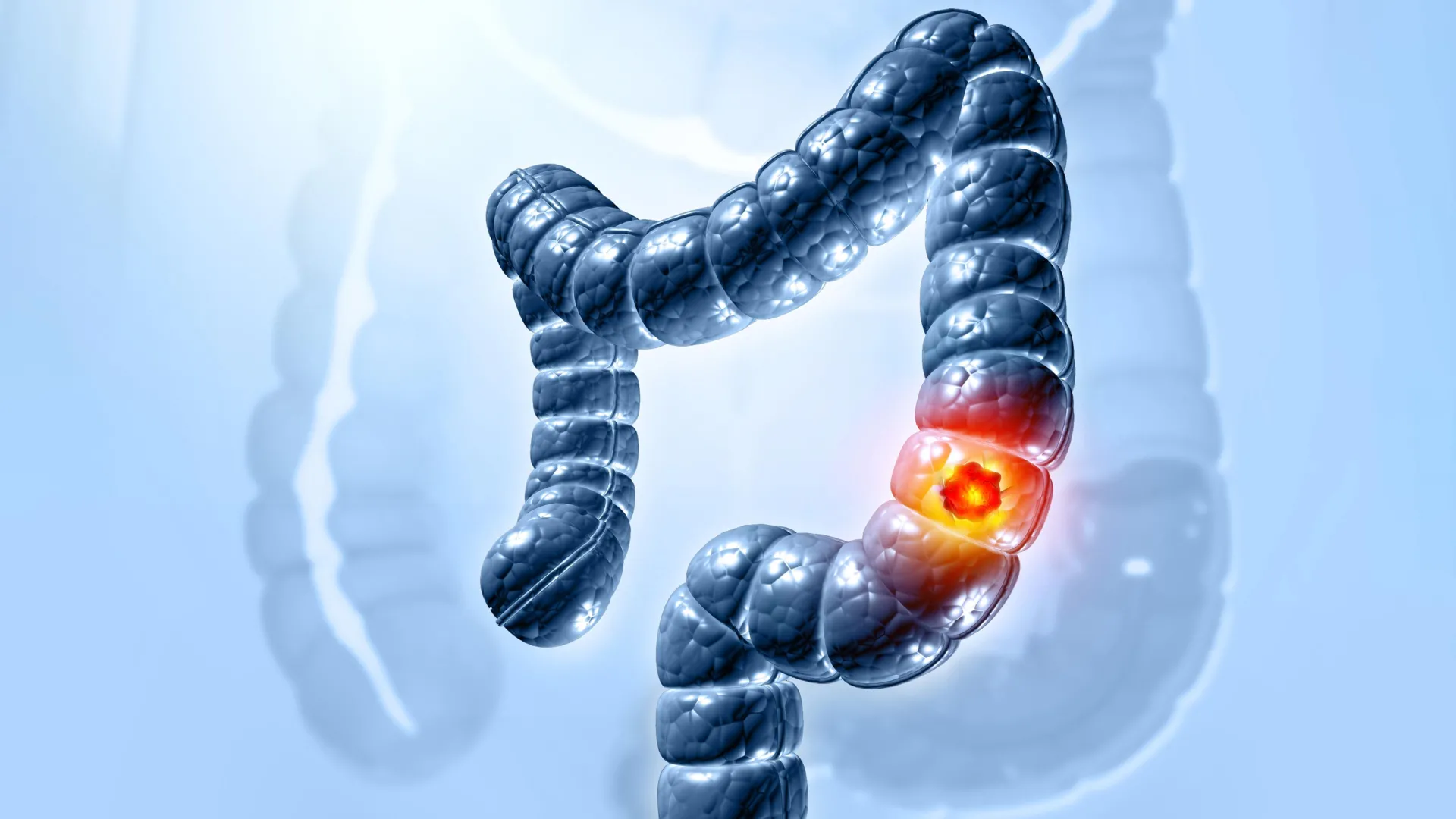
Colorectal cancer is one of the most common cancers in Western countries and remains the leading cause of cancer-related deaths. The exact triggers behind this disease are still not fully understood, although factors such as age, diet, and lifestyle are known to influence risk.
In recent years, scientists have increasingly focused on the gut microbiome, the vast ecosystem of bacteria, viruses, and other microorganisms that live in the digestive system.
Now, researchers from the University of Southern Denmark and Odense University Hospital have identified a previously unknown virus within common gut bacteria. This virus appears frequently in patients with colorectal cancer, providing new clues about how the disease develops.
Common intestinal bacteria with a long-standing mystery
Researchers have been linking certain bacteria for years. Bacteroides fragilisfor colorectal cancer. However, this relationship has been difficult to explain because the same bacteria are present in most healthy people.
“It is paradoxical that the same bacteria associated with colorectal cancer are repeatedly found in a completely normal part of the intestines of healthy people,” says Fleming Damgaard, MD, PhD, from the Department of Clinical Microbiology at Odense University Hospital and the University of Southern Denmark.
To resolve this discrepancy, the research team investigated whether there were important differences within the bacteria themselves.
They discovered it existed.
Discovery of viruses in intestinal bacteria
It turns out that the crucial difference is that viruses live inside bacteria. In patients who subsequently develop colorectal cancer, Bacteroides fragilis They were much more likely to carry certain bacteriophages, which are viruses that infect bacteria.
“We discovered a previously unreported virus that appears to be closely related to bacteria found in colorectal cancer patients,” says Fleming-Damgaard.
Researchers believe this virus is an entirely new type of virus that has not been identified before.
“What’s interesting is not just the bacteria themselves, but the interaction between them and the viruses they carry,” he explains.
Although this study shows a strong statistical association between the virus and colorectal cancer, it does not prove that the virus causes the disease.
“We don’t yet know whether the virus is a contributing factor or whether this simply indicates that something in the gut has changed,” Fleming-Damgaard says.
Large-scale data reveals clear patterns
The discovery began with data from a large Danish population survey of about 2 million people. Researchers focused on patients who experienced serious bloodstream infections due to: Bacteroides fragilis. A small percentage of these people are diagnosed with colorectal cancer within a few weeks.
By comparing bacterial samples from patients with cancer and those without cancer, the researchers identified a clear pattern. Bacteria taken from cancer patients were more likely to contain certain viruses.
Although the initial findings were from a relatively small group of Danish samples, they provided a strong starting point for further investigation.
“It was in the Danish material that we first detected a signal, which gave us a concrete hypothesis that we could then investigate in a larger data set,” says Fleming-Damgaard.
Confirmed in approximately 900 patients worldwide
To test whether this pattern holds globally, researchers analyzed stool samples from 877 people from Europe, the United States, and Asia.
The results were consistent. Colorectal cancer patients were about twice as likely to carry these viruses in their intestines.
“It was important for us to see if this association could be replicated in completely independent data, and it was,” says Fleming-Damgaard.
Although this strengthens the association, it does not show that the virus directly causes cancer.
A new way of looking at cancer risk
Up to 80% of colorectal cancer risk is thought to be influenced by environmental factors, such as the microbes in your gut.
The gut microbiome is incredibly complex, containing thousands of bacterial species and even more genetic variation. This complexity makes it difficult to pinpoint exactly what separates those who are healthy from those who develop the disease.
“The number and diversity of bacteria in the gut is huge. Until now, it was like looking for a needle in a haystack. Instead, we studied whether something inside the bacteria, a virus, could help explain the differences,” says Fleming-Damgaard.
Viruses change the behavior of bacteria, which can change the gut environment and influence cancer risk. This possibility is currently under investigation.
“We still don’t know why this virus exists, but we are investigating whether it contributes to the development of colorectal cancer,” he says.
Could this lead to new screening tests?
Currently, colorectal cancer screening often involves a stool test that looks for hidden blood.
In the future, researchers believe it may be possible to screen for these newly identified viruses as well.
“In the short term, we can investigate whether the virus can be used to identify individuals at increased risk,” Fleming-Damgaard said.
Initial analyzes suggest that certain viral markers may identify about 40% of cancer cases, but that most healthy people do not carry them.
However, the researchers stress that this research is still in its early stages. Further research is required before it can be used in clinical practice.
Factbox: Key terms
Bacteroides fragilis
Common intestinal bacteria found in most healthy people. It has been linked to colorectal cancer, but it also exists in people without the disease.
Viruses inside bacteria (bacteriophages)
Some viruses live inside bacteria. They can affect the properties of bacteria and in some cases change its behavior.
microbiome
A general term for all microorganisms that live in or on the body, such as bacteria, viruses, and fungi.
3 questions to Fleming Damgaard about research
What did you look into?
We investigated how gut bacteria are involved in the development of colorectal cancer.
What was your most important discovery?
We have discovered a new, previously undescribed virus that infects the intestinal bacteria of colorectal cancer patients.
How can the results be used?
In the long term, testing for these viruses in stool samples may help assess colorectal cancer risk and improve prevention and treatment.
Factbox: Ongoing research projects
Fleming-Damgaard and his research colleagues continue their work in three separate projects.
- we are cultivating Bacteroides fragilis We will deliver viruses to an artificial intestine model and study how intestinal tissue, viruses, and bacteria interact. This project is funded by the Louis Hansen Foundation.
- We’re inoculating colorectal cancer tumors and looking for bacteria and viruses directly within the tumor tissue. This project is funded by the Novo Nordisk Foundation.
- We plan to use mice that are genetically predisposed to developing cancer to test whether they develop cancer more quickly if they carry the virus-carrying bacteria in their intestines. This project is funded by the Eriksen Family Memorial Foundation.
About research
The researchers began by studying a Danish patient who experienced a severe bloodstream infection caused by intestinal bacteria. Bacteroides fragilis. They compared bacterial samples taken from patients who later developed colorectal cancer with samples taken from patients who did not develop colorectal cancer.
This finding was then tested in stool samples from 877 colorectal cancer patients with and without colorectal cancer from several countries to determine whether the same virus occurs more frequently in cancer patients.
This research was supported by the Southern Denmark Region, the Harbaugh Foundation and the Novo Nordisk Foundation.
