

Close Menu

    Subscribe to Updates

    Get the latest creative news from FooBar about art, design and business.

    What's Hot

    Acupuncture modulates immune function through activation of specific neural circuits

    April 22, 2026

    Manipulative people use both kindness and gossip as separate tools to control their social circles

    April 22, 2026

    DNA reveals species of pit viper hiding in China

    April 22, 2026
    Facebook X (Twitter) Instagram
    Facebook X (Twitter) Instagram
    Health Magazine
    • Home
    • Environmental Health
    • Health Technology
    • Medical Research
    • Mental Health
    • Nutrition Science
    • Pharma
    • Public Health
    • Discover
      • Daily Health Tips
      • Financial Health & Stability
      • Holistic Health & Wellness
      • Mental Health
      • Nutrition & Dietary Trends
      • Professional & Personal Growth
    • Our Mission
    Health Magazine
    Home » News » Federal housing assistance improves survival chances for prostate cancer patients
    Discover

    Federal housing assistance improves survival chances for prostate cancer patients

    healthadminBy healthadminApril 22, 2026No Comments5 Mins Read
    Federal housing assistance improves survival chances for prostate cancer patients
    Share
    Facebook Twitter Reddit Telegram Pinterest Email


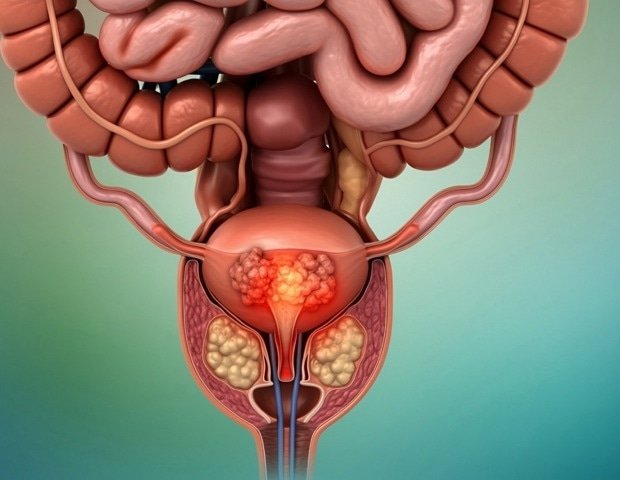
    Older men who receive federal housing assistance when they are first diagnosed with prostate cancer are more likely to survive two years than demographically and clinically similar men who do not receive the assistance, a new UCLA-led study suggests.

    The findings, to be published in the peer-reviewed National Cancer Institute Journal, suggest that expanding housing subsidies could lead to improved survival odds for prostate cancer patients who are unable to find affordable housing due to socioeconomic factors.

    Prostate cancer causes more than 36,000 deaths each year, making it the second leading cause of cancer-related death among men in the United States, said Dr. Katherine Chen, assistant professor in the Department of General Internal Medicine and Health Services Research at the David Geffen School of Medicine at UCLA and lead author of the study. Survival varies by socioeconomic status, race, and ethnicity.

    Receiving appropriate prostate cancer treatment may help reduce these survival disparities, but is often limited by socioeconomic barriers. Housing insecurity, defined as inadequate access to safe, stable, and affordable housing, is increasingly recognized as one of the barriers to optimal cancer treatment. Reducing the negative impact of housing insecurity on prostate cancer outcomes is particularly urgent for older adults of low socioeconomic status, who face record housing affordability burdens and the fastest increasing homelessness rates of any age group. ”


    Dr. Katherine Chen, Assistant Professor of Medicine, Division of General Internal Medicine and Health Services Research, David Geffen School of Medicine, UCLA

    Previous research by Chen and colleagues has found an association between receipt of housing assistance and early cancer diagnosis in individuals with several common cancers, including breast cancer, colorectal cancer, and non-small cell lung cancer. For this new study, researchers investigated the potential association between housing assistance and overall survival and cancer treatment.

    Researchers used federal housing assistance data, Surveillance, Epidemiology, and End Results (SEER) cancer registry data, and Medicare claims to analyze workup and treatment receipt and two-year survival rates for men ages 66 to 95 diagnosed with prostate cancer between 2007 and 2019. In the researchers’ workup and treatment model, there were 1,800 men receiving housing assistance and 5,500 men receiving no housing assistance. For the survival model, researchers found that 4,450 men received assistance and 13,300 received no similar housing assistance.

    They found that men who received housing assistance had a 12% lower risk of dying over a period of time after diagnosis compared to men who did not receive housing assistance.

    The researchers expected to find a link between housing assistance and increased participation in prostate cancer work-up and treatment. They were surprised that such a significant association did not exist. “However, it is important to note that this finding may not be generalizable to other cancers,” she said. “Prostate cancer is unique in that most men are diagnosed early, making active surveillance the guideline-compliant treatment strategy in the absence of active treatment.”

    But housing subsidies can help low-income patients gain access to other medical care, engage in healthy behaviors, and reduce stress, which may support their health and longevity. This makes them not less likely to die from prostate cancer itself compared to a comparison group, but less likely to die from non-cancer-related conditions. However, most income-eligible people are unable to receive the aid because housing subsidy funds are limited, Chen said.

    “Our findings suggest that policies that expand housing assistance to more eligible households may help improve survival rates for low-income older adults with prostate cancer and ultimately help reduce socioeconomic and perhaps racial/ethnic disparities,” she said.

    The study has some limitations. The data linkage may have prevented some from receiving Housing and Urban Development (HUD) assistance, the analysis may have obscured differences in how state and local governments administer federal housing assistance programs, and the researchers may have been unable to distinguish between patients’ preferences for curative treatment and active surveillance.

    An important next step is to investigate whether housing assistance improves prostate cancer survival by improving non-cancer comorbidities and other factors associated with survival, Chen said. “We are also currently investigating the association between housing assistance and treatment and survival for other cancers,” she said.

    The National Cancer Institute of the National Institutes of Health (R01CA269488, R50CA304954) funded this study.

    Co-authors of the study are Johns Hopkins University’s Taylor Craig, Amanda Blackford, Dr. Daniel Song, Rebecca Smith, Jordan Kaplan, Dr. Robin Jordan, Daniel Polsky, and Dr. Craig Evan Pollack. Joan Warren. Qinjin Fan, Margaret Katana Ogongo, and K. Robin Yabroff of the American Cancer Society; Dr. SM Qasim Hussaini of the University of Alabama at Birmingham. Shin Fu of Emory University. and Dr. Carrie Gross of Yale University.

    sauce:

    University of California, Los Angeles Health Sciences

    Reference magazines:

    Kuala Lumpur, Cheng, Others. (2026). Federal housing assistance, cancer treatment, and overall survival for older men with prostate cancer. JNCI: Journal of the National Cancer Institute. DOI: 10.1093/jnci/djag099. https://academic.oup.com/jnci/advance-article/doi/10.1093/jnci/djag099/8659270


    Source link

    Visited 1 times, 1 visit(s) today
    Share. Facebook Twitter Pinterest LinkedIn Telegram Reddit Email
    Previous ArticleResearchers identify ADHD and social characteristics in preschoolers with heart defects
    Next Article Cystic fibrosis treatment significantly reduces need for pediatric lung transplants
    healthadmin

    Related Posts

    Acupuncture modulates immune function through activation of specific neural circuits

    April 22, 2026

    New ‘plug-and-play’ AI outperforms pathologists in detecting lymph node metastases

    April 22, 2026

    New algorithm allows surgeons to make high-stakes transplant decisions in minutes

    April 22, 2026

    Large-scale brain mapping dataset expanded with new set of cognitive tasks

    April 22, 2026

    Cystic fibrosis treatment significantly reduces need for pediatric lung transplants

    April 22, 2026

    Researchers identify ADHD and social characteristics in preschoolers with heart defects

    April 22, 2026
    Add A Comment
    Leave A Reply Cancel Reply

    Categories

    • Daily Health Tips
    • Discover
    • Environmental Health
    • Exercise & Fitness
    • Featured
    • Featured Videos
    • Financial Health & Stability
    • Fitness
    • Fitness Updates
    • Health
    • Health Technology
    • Healthy Aging
    • Healthy Living
    • Holistic Healing
    • Holistic Health & Wellness
    • Medical Research
    • Medical Research & Insights
    • Mental Health
    • Mental Wellness
    • Natural Remedies
    • New Workouts
    • Nutrition
    • Nutrition & Dietary Trends
    • Nutrition & Superfoods
    • Nutrition Science
    • Pharma
    • Preventive Healthcare
    • Professional & Personal Growth
    • Public Health
    • Public Health & Awareness
    • Selected
    • Sleep & Recovery
    • Top Programs
    • Weight Management
    • Workouts
    Popular Posts
    • the-pros-and-cons-of-paleo-dietsThe Pros and Cons of Paleo Diets: What Science Really Says April 16, 2025
    • Improve Mental Health10 Science-Backed Practices to Improve Mental Health… March 11, 2025
    • How Healthy Living Is Transforming Modern Wellness TrendsHow Healthy Living Is Transforming Modern Wellness… December 3, 2025
    • Kankakee_expansion.jpgCSL releases details of $1.5 billion U.S.… March 10, 2026
    • urlhttps3A2F2Fcalifornia-times-brightspot.s3.amazonaws.com2Fc32Fcd2F988500d440f2a55515940909.jpegA ‘reckless’ scrapyard with a history of… October 24, 2025
    • Healthy Living: Expert Tips to Improve Your Health in 2026Healthy Living: Expert Tips to Improve Your Health in 2026 November 16, 2025

    Demo
    Stay In Touch
    • Facebook
    • Twitter
    • Pinterest
    • Instagram
    • YouTube
    • Vimeo
    Don't Miss

    Acupuncture modulates immune function through activation of specific neural circuits

    By healthadminApril 22, 2026

    Traditional explanations of acupuncture focus on local stimulation and endpoint physiological changes, often emphasizing direct…

    Manipulative people use both kindness and gossip as separate tools to control their social circles

    April 22, 2026

    DNA reveals species of pit viper hiding in China

    April 22, 2026

    JAMA study: 988 hotline linked to 11% reduction in youth suicide deaths

    April 22, 2026

    Subscribe to Updates

    Get the latest creative news from SmartMag about art & design.

    HealthxMagazine
    HealthxMagazine

    At HealthX Magazine, we are dedicated to empowering entrepreneurs, doctors, chiropractors, healthcare professionals, personal trainers, executives, thought leaders, and anyone striving for optimal health.

    Our Picks

    JAMA study: 988 hotline linked to 11% reduction in youth suicide deaths

    April 22, 2026

    Ancient DNA reveals lost inhabitants near Paris replaced by strangers

    April 22, 2026

    Merck partners with Google to advance AI, forming a partnership worth up to $1 billion

    April 22, 2026
    New Comments
      Facebook X (Twitter) Instagram Pinterest
      • Home
      • Privacy Policy
      • Our Mission
      © 2026 ThemeSphere. Designed by ThemeSphere.

      Type above and press Enter to search. Press Esc to cancel.