


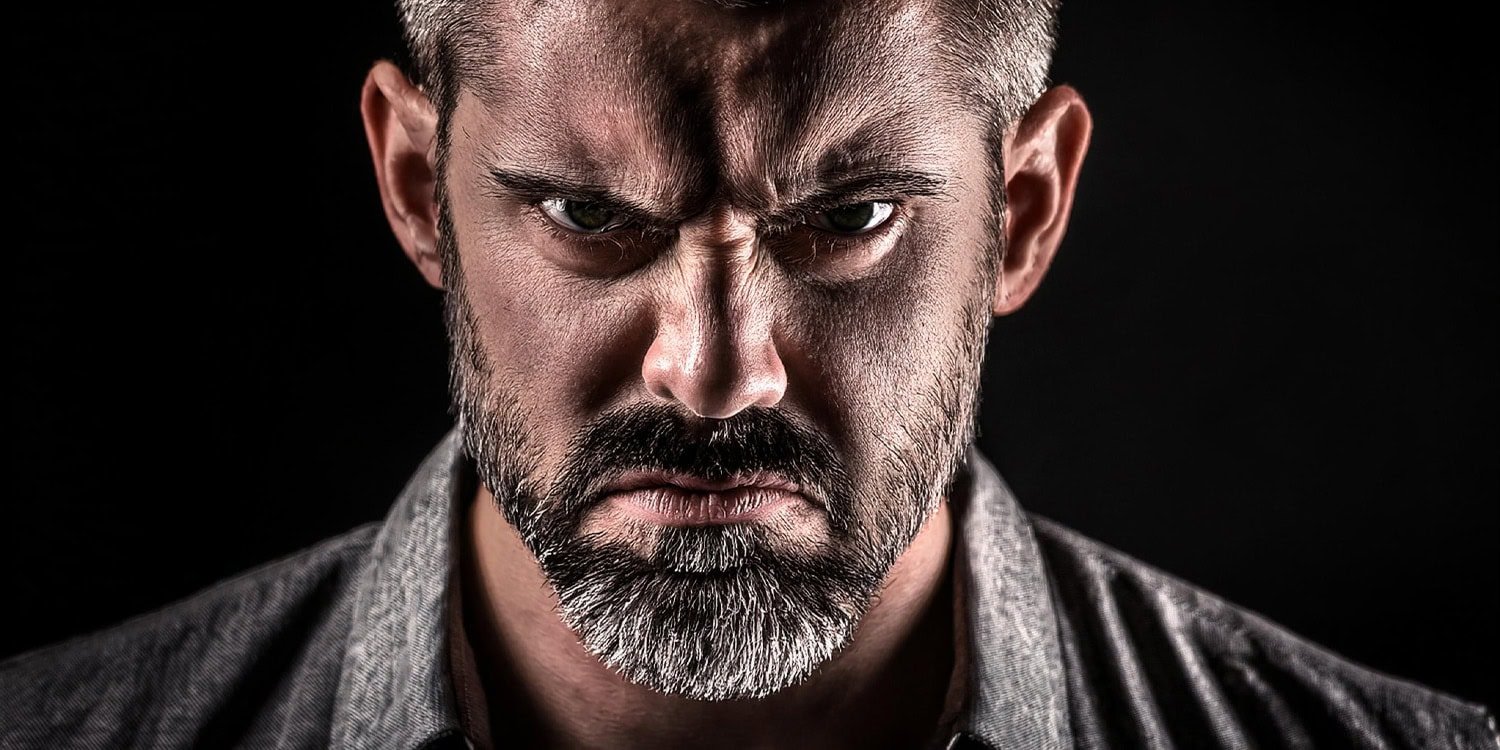
People with hostile personality traits, such as being manipulative and cruel, tend to judge immoral people more leniently than the average person. However, a new study has been published in a journal. personality and individual differences Hostile people still find immoral individuals less physically attractive, suggesting that there are clear boundaries to this tolerance. This provides evidence that hostile individuals are fully capable of recognizing moral shortcomings but may evaluate bad behavior less harshly in order to protect their self-image.
Hostile personality traits, sometimes referred to as dark personality traits, represent a broad category of self-centered behaviors such as aggression, entitlement, greed, and manipulativeness. People who score high on these traits tend to lack basic empathy and often act coldly toward others in order to get what they want.
Most people naturally distance themselves from people who lie, exploit others, or ignore established social norms. This avoidance behavior serves practical evolutionary purposes, as avoiding toxic individuals protects personal safety and maintains cooperative relationships. However, past psychological research has revealed a pattern known as darkness tolerance. This is a tendency for people with highly hostile personalities to judge immoral behavior less harshly.
“One question is whether this reflects a genuine moral deficiency (i.e., difficulty distinguishing right from wrong) or something more strategic, such as a self-protective reaction (e.g., not condemning people who are similar to oneself).” “We wanted to see if this tolerance extended to less self-suggestive judgments of physical attractiveness, which are known to be influenced by a subject’s morality,” explained William Hart, an associate professor at the University of Alabama in Tuscaloosa.
For the study, researchers conducted a detailed online experiment with 710 undergraduate students. Participants were told that they were evaluating local politicians based on a short random sample of non-policy interview responses. These responses were specifically designed and pilot tested to make a hypothetical male politician seem either highly moral or highly immoral.
In moral terms, the politician’s assumed answers conveyed deep humility, fairness, and true respect for others. Politicians’ statements under immoral circumstances strongly reflected their arrogance, extreme selfishness, and highly manipulative nature. Participants were randomly assigned to read only one of these two different sets of interview responses.
After reading their assigned interviews, students rated the politician on three specific scales to gauge their overall impressions. Aspects of these ratings include perceptions of how much participants like the politician, how similar they are to the politician, and the politician’s overall moral views. Participants responded to multiple survey items for each category using a numbered agreement scale.
Following these initial character ratings, participants viewed photos of hypothetical politicians. The scientists utilized pre-tested images of men who are generally considered to be moderately attractive. The students then rated the politician’s physical attractiveness on a scale of 1 to 10 based on how good-looking and handsome they personally found the politician to be.
Finally, participants completed a comprehensive standardized personality questionnaire to measure their own personal characteristics. In addition to tracking basic levels of honesty and humility, these studies measured traits ranging from agreeableness to hostility. By statistically combining these survey scores, scientists were able to accurately determine each participant’s overall level of interpersonal conflict.
The results revealed that nearly all participants evaluated moral politicians far more favorably than immoral politicians in every category. However, the researchers observed a different pattern, particularly among participants who scored high on interpersonal conflict. Hostile participants rated immoral politicians less negatively in terms of likeability, similarity, and morality compared to highly agreeable participants.
This particular result conceptually replicated previous scientific findings regarding the presence of darkness tolerance in general character evaluation. Highly hostile people reliably showed reduced preference for moral politicians over immoral politicians when making broad judgments about character. However, this established pattern of generosity changed completely when participants were asked to rate the appearance of politicians.
The researchers found that all participants, regardless of their personality type, rated immoral politicians as much less physically attractive than moral politicians. The generosity that hostile people displayed on personality ratings did not fully carry over to judgments of physical attractiveness. Highly hostile participants were just as disgusted by the appearance of immoral politicians as were highly agreeable participants.
“A hostile person is less tolerant of other people’s immoral behavior,” Hart told SciPost. “Instead, this tolerance appears to be selective for evaluations (e.g., liking and morality) of immoral others, but they still have the same basic responses as other people when it comes to evaluating more immoral objects as less physically attractive than immoral objects.”
These findings provide evidence that tolerance for darkness is unlikely to result from an inability to distinguish between right and wrong. If hostile people actually lacked a functioning moral compass, they would have shown exactly the same leniency in their assessments of physical attractiveness. Rather, experimental data support the idea that tolerance to darkness acts as a self-protective psychological shield for individuals with dark personality traits.
Hostile perceivers can easily recognize immorality but may unconsciously soften their character judgments to avoid feeling bad about similar flaws in themselves. At the same time, basic physical attractiveness judgments may act as an automatic gut-level warning system for the human brain. This automatic visual response helps steer both hostile and non-hostile people away from potentially harmful individuals before defensive rationalizations take over.
Although hostile people show leniency in certain situations, the researchers stress that this does not mean they actually prefer bad behavior.
“The data do not suggest that hostile individuals lack moral understanding or prefer people who behave immorally. They clearly showed a preference for moral and non-moral objects in both evaluative and physical attractiveness judgments. They are slightly more tolerant of immoral objects in their evaluative judgments, but they do not prefer these objects over moral objects.”
One potential limitation of this study is that it relies only on a small number of photographs depicting male politicians. Scientists note that future studies should include different images, contexts, and gender targets to see whether the findings apply to different demographic settings. Another limitation is that the sample consisted only of young undergraduate students and may not be fully representative of the general adult population.
The scientists suggest that future studies should attempt to precisely reproduce these steps in a highly controlled laboratory environment to ensure better data quality. They also recommend using timed response tasks to investigate exactly how quickly these particular attractiveness judgments form in the brain. Investigating these fast-paced cognitive responses may reveal more about how hostile people navigate everyday social interactions.
In addition to studying these quick visual reactions, the researchers hope to directly test the ego-defense theory. “We need to understand the mechanisms, including the role of self-defense processes in creating tolerance to darkness,” Hart said. “For example, if a hostile individual feels more secure in his or her own worth, will his tolerance for darkness decrease or disappear?”
The study, “Not Too Disgusting, Still Less Attractive: Hostile People’s Tolerance of Immoral Others Ends with Evaluations of Their Physical Attractiveness,” was authored by William Hurt, Braden T. Hall, Joshua T. Lambert, Daniel E. Wahlers, and Vera C. Roberts.
