


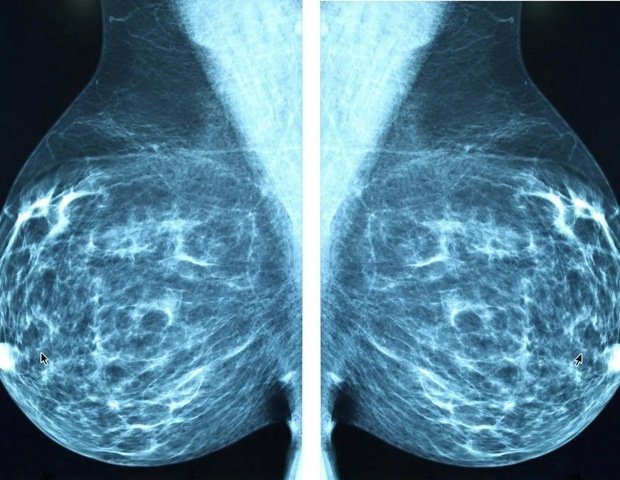
Understanding which cells within a tumor form metastases remains one of the major challenges in cancer research. A study led by the Laboratory of Cellular Plasticity in Development and Disease, headed by Ángela Nieto at the Institute of Neuroscience (IN), a joint center of Spain’s National Research Council (CSIC) and Miguel Hernández University (UMH) in Elche, provided an unexpected answer. The idea is that the cells that cause metastasis can already be identified within the primary tumor.
This study nature communicationscombines analysis of mouse models of breast cancer with patient data. This result indicates that there are specific cell populations at the invasive front of tumors that are capable of both invasion and proliferation or transition to a dormant state. This balance determines whether cells that escape the tumor may cause new tumor growth, or metastasis, in distant organs.
Nieto’s team has been studying epithelial-to-mesenchymal transition (EMT) for decades. EMT is a program that controls cell migration during embryonic development and is reactivated within tumors, allowing cancer cells to spread and form metastases. In this new study, the researchers go a step further by showing that the ability to metastasize does not occur randomly and is not solely driven by the target organ’s microenvironment. Instead, metastatic potential is already determined within a subset of cells present in the primary tumor, and these cells adopt a highly metastatic state regulated by key factors. Prrx1 gene.
Key regulators of metastasis
According to Raul Jimenez Castaño, lead author of the study, the Prrx1 gene functions as a true master regulator of tumor behavior. “We recently discovered that Prrx1 is important for cancer metastasis. Thanks to this study, we now know that Prrx1 not only activates a program that causes cells to detach from the primary tumor, but also controls the ability of cells to proliferate and form metastases or enter a dormant state that lasts for years,” he explains.
The most surprising thing is that the level Prrx1 Find out its effect on cancer cells. ”
Angela Nieto, Neuroscience Institute
This finding helps explain the discrepancies observed in many tumors. This means that highly invasive cells do not always cause metastasis, and highly proliferative cells also tend not to metastasize.
“No it Prrx1cells are not seeded. At very high levels, they can spread massively but lose the ability to seed and multiply in other organs. “Only at intermediate levels can cells achieve an optimal balance between mobility and growth,” the researchers explain. In these conditions, the cells are both invasive and proliferative, making them the most dangerous from a clinical perspective.
To reach these conclusions, the research team combined mouse genetic models, single-cell analysis, chromatin studies, and spatial transcriptomics techniques that allow researchers to directly observe the organization and behavior of cells within tumor tissue. Processing and analysis of the large data set generated from thousands of cells was led by researcher Nitin Narweid, a bioinformatics expert on Nieto’s team. Additionally, in collaboration with Professor Gema Moreno Bueno, Autonomous University of Madrid In collaboration with the Spanish Foundation and MD Anderson Cancer Center, researchers analyzed samples from breast cancer patients and detected a similar pattern. Prrx1 This expression suggests that the described mechanism may be directly relevant to tumor classification and clinical prognosis.
Taken together, the findings provide new insights into the origins of metastatic potential and open the door to the development of strategies to prevent tumor cells from reaching this particularly dangerous state. It also provides a framework to improve patient stratification by identifying markers that predict the risk of metastasis.
This research was made possible thanks to funding from the State Research Agency of the Ministry of Science, Innovation and Universities, the Severo Ochoa Program for Centers of Excellence, the Spanish Association Against Cancer (AECC), the PROMETEO program of Valenciana Generalitat, and the Momentum Program of the Spanish National Research Council (CSIC).
sauce:
Miguel Hernández University of Elche (UMH)
Reference magazines:
Jiménez Castaño, R. others. (2026). Hormesis transcriptional programs co-regulate invasion, proliferation, and dormancy to define metastatic potential. nature communications. DOI: 10.1038/s41467-026-70242-4. https://www.nature.com/articles/s41467-026-70242-4
