


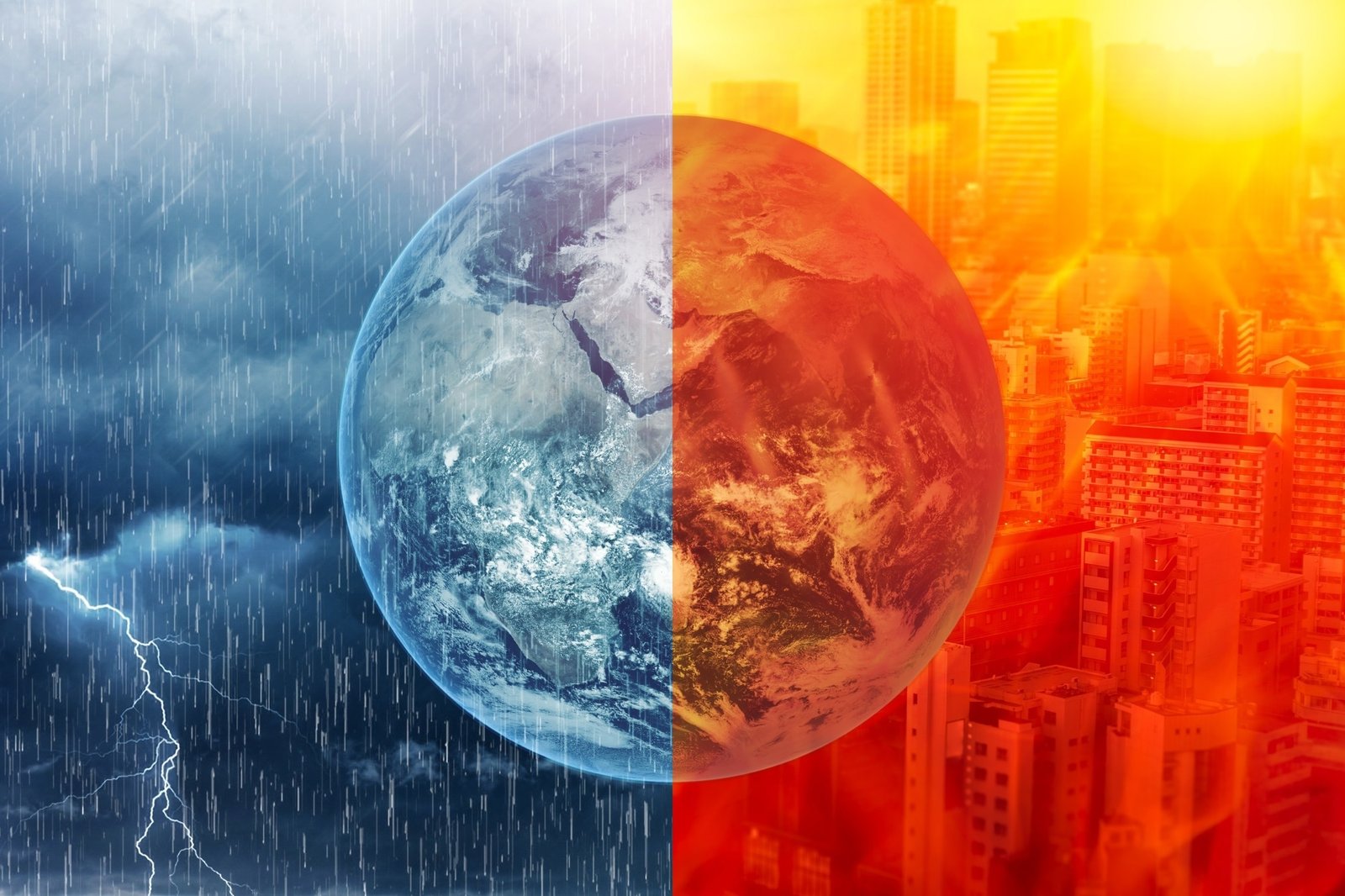
Temperature alone can cause you to miss the real danger. This study shows that humidity can sharply increase health risks in both hot and cold weather, and that these combined threats may become more common with climate change.
Research: In the context of climate change, humidity can amplify temperature-related health risks. Image credit: Quality Stock Arts / Shutterstock
In a recent study published in the journal scientific reporta group of researchers assessed how combined exposure to temperature and humidity affects health risks and identified high-risk thresholds under climate change scenarios.
Temperature and humidity risk background
What if the real danger during extreme weather is not just heat or cold, but is amplified by humidity?Extreme temperatures kill thousands of people every year, but temperature is not the only risk. Humidity affects how our bodies adapt to temperature changes. As climate change increases extreme temperatures and humidity, it is essential to understand how these factors interact to impact human health, and further research is needed to improve risk assessment processes.
China’s ambulance dispatch climate survey design
Researchers analyzed ambulance dispatch data from 13 large cities across China from 2013 to 2019, using daily data collected from local Centers for Disease Control (CDC) and ambulance services. These data provided indicators of acute health outcomes.
Daily average temperature and relative humidity were obtained from a national weather database. Environmental confounders were accounted for using average air pollution levels, including particulate matter smaller than 2.5 micrometers (PM2.5), ozone (O3), and sulfur dioxide (SO2). Climate projections were generated using 12 global climate models participating in the Coupled Model Intercomparison Project Phase 6 (CMIP6) with Shared Socioeconomic Pathways (SSP) and Representative Concentration Pathways (RCP).
A time series quasi-Poisson regression model with distributed lag nonlinear model (DLNM) was applied to assess delayed health effects over 7 days. Temperature and humidity were categorized into percentile-based categories and 400 composite exposure scenarios were generated, grouped into warm-humid, warm-humid, warm-humid, cool-humid, and cool-dry categories.
The researchers used traditional meta-analysis techniques to integrate city-specific estimates into national-level risk estimates. Thresholds for high-risk events were identified based on relative risk (RR) patterns and statistical inflection points.
Research results on health risks due to combined temperature and humidity
The analysis included approximately 2.46 million ambulance dispatch records and revealed a clear link between weather conditions and health risks. Additionally, the association between temperature and ambulance dispatch follows a U-shaped curve, indicating that both extreme heat and extreme cold are associated with a higher risk of dispatch.
Analysis of the combined effects of temperature and humidity showed that all four combined event types were associated with increased risk, with combined temperature and humidity events posing a higher risk than single temperature exposures under the same temperature threshold. The greatest risk assessed was the cold-dry event type (RR = 1.102; 95% CI = 1.045 – 1.161), followed by the warm-wet event type (RR = 1.093; 95% CI = 1.068 – 1.118). Warm-dry and cool-wet events also showed increased risk, with pooled RRs of 1.091 and 1.081, respectively.
Importantly, this finding suggests that temperature does not need to be at the extremes of the distribution to pose a high risk when combined with unfavorable humidity. This finding suggests that relying solely on temperature thresholds may underestimate real-world health risks. This study also demonstrated that under the same threshold, combined events produced consistently higher risks than single temperature exposures.
Age-specific vulnerability and climate projections
Older people were more likely than younger people to call an ambulance during hot, humid and hot dry periods. Additionally, older adults aged 80 years and older were at highest risk during warm-wet events, and people aged 60 to 79 years were also at increased risk. Young and middle-aged adults were more vulnerable during cold and wet events, but increased susceptibility was also observed in those aged 80 years and older and younger than 17 years, indicating that risk patterns differ by age group.
Spatial analysis revealed that complex phenomena occur frequently in the warm and humid southeastern and central climate regions. Historically, these regions experienced 20 to 40 complex events each year. However, in projected future climate scenarios, especially in high-emission scenarios such as SSP585, the frequency and extent of complex events are expected to increase significantly.
The number of ambulance calls for complex events is expected to increase in the coming decades, reaching its highest level around the middle of the 21st century, and then decreasing in the second half of this century. Heat-related events, especially hot and humid conditions, are predicted to be a major contributor to health risks. In contrast, cold-related risks are expected to decrease over time.
Early warning and public health impact
This study suggests that humidity significantly amplifies the health risks associated with extreme temperatures, and that the combined phenomenon of temperature and humidity is more dangerous than temperature alone. Both hot and cold conditions, when combined with unfavorable humidity levels, become dangerous, especially for vulnerable populations. As climate change continues, these combined risks will occur regularly, shifting the burden to heat-related risks. To achieve more accurate predictions, it is important to include multiple meteorological factors in health risk assessments. These results highlight the importance of improved early warning systems and public health strategies based on cumulative environmental exposures.
Reference magazines:
- He, Y., Dong, W., Zhao, L., Wang, H., Cai, W., Liu, Z., Lin, H., Ma, W., and Huang, C. (2026). In the context of climate change, humidity can amplify temperature-related health risks. Science MP DOI: 10.1038/s41598-026-48668-z, https://www.nature.com/articles/s41598-026-48668-z
