


The Trump administration’s move to exempt oil and gas activity in the Gulf of Mexico from endangered species status could provide an opportunity for public engagement that environmentalists don’t want.
Last month’s activation of the so-called “God Squad” to grant exemptions to the oil industry for more than 600,000 square miles put a spotlight on whales and sea turtles, charismatic species cherished by conservationists and the general public alike. In particular, it highlights the plight of rice whales, of which only a few dozen of this species remain.
“This action by the Trump administration could be a galvanizing moment for a whole new generation of advocates and voters who support the Endangered Species Act and the wildlife and ecosystems it protects,” said Ben Gruel, Sierra Club national wildlife campaigns manager.
Environmentalists say the Trump administration would have been better off not working with God’s forces. But the unusual nature of the meeting could draw national attention to threats to species in the Gulf region, which provides much of the oil and gas produced by the United States.
Everything about the exemption granted by the Endangered Species Commission was unusual. The commission, a panel of cabinet ministers and other senior officials led by Interior Secretary Doug Burgum, has only met a few times in its nearly 50-year history since it was added to the Endangered Species Act. Until they met on March 31st, they had not met for decades.
In issuing the blanket order that oil and gas activities are no longer subject to routine endangered species considerations, the committee cited a national security provision that had never been invoked before. Secretary of Defense Pete Hegseth himself attended, saying oil development in the Gulf of Mexico is too important to “allow our own rules to weaken our standing and strengthen those who seek to harm us.”
 In this 2024 image provided by NOAA Fisheries, a gray whale is seen from aboard a NOAA Twin Otter aircraft off the coast of Texas in the Gulf of Mexico. |Paul Nagelkirk/NOAA Fisheries/AP
While endangered species may not be top of mind when people vote, environmentalists say the attention brought by God Squad could have political implications.
“I think they know it’s inherently unpopular,” said Brett Hartl, director of government relations at the Center for Biological Diversity. He said he hopes environmental groups will use the committee as an example to illustrate “the reality that this administration really can’t do enough for the fossil fuel industry.”
Spokesman Mike Saccone said God Squad’s efforts led to a “surge” in involvement with the National Wildlife Federation and “increased public motivation.”
“The Endangered Species Commission’s decision has inspired people from all walks of life, including those who identify as conservationists and those simply passionate about wildlife,” he said.
Angelo Villagomez, the author of the post, said an analysis of God Squad posted last week by the Center for American Progress received the most attention on the liberal think tank’s website.
“This topic clearly resonated with the public,” Villagomez said.
In response to questions about the environmental movement and God Squad’s involvement in the work, the Interior Department sent a statement from the White House press secretary saying the commission “has full authority to grant waivers to the requirements of the Endangered Species Act (ESA)” and that the Gulf waiver is necessary “to ensure that the flow of U.S. energy is not disrupted or held hostage.”
whale and sea turtle
The Trump administration’s wide-ranging maneuver has already led to a series of lawsuits that are sure to unfold over the coming months. Environmental activists have already filed four lawsuits over the issue.
Oil companies do not support the exemption, but American Petroleum Institute spokeswoman Andrea Woods said in a statement that the oil industry “has a long track record of protecting wildlife while responsibly developing offshore energy.”
“Long term, it will be up to America’s energy leaders to get the balance right while meeting growing energy demands through reasonable, science-based protections,” Woods said.
As the case plays out in court, some environmentalists see an opportunity to rally voters around the Endangered Species Act, which remains widely popular among voters, according to polls.
Those questions can be existential: Do species live or die?
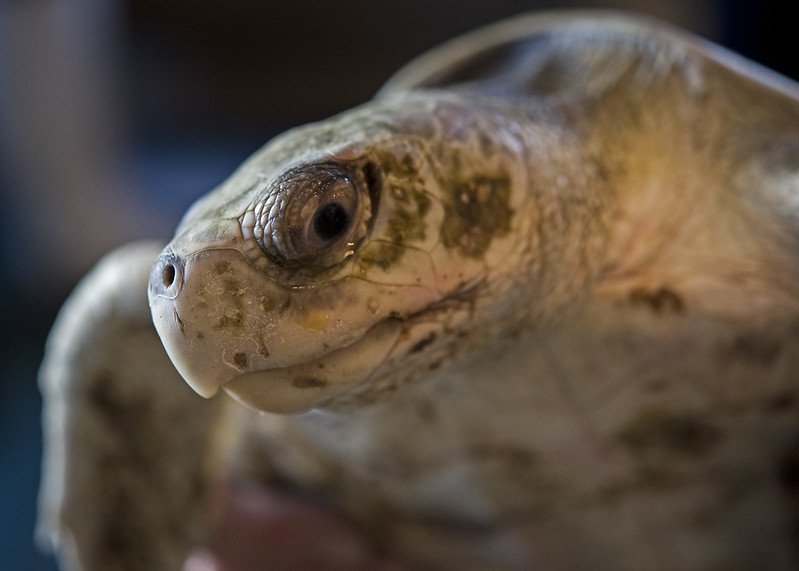
The Gulf of Mexico, dubbed the “Gulf of America” by President Donald Trump, is home to more than 20 endangered species, but two of the most endangered are the rice whale and the Kemp Ridley sea turtle, the world’s smallest turtle of its kind.
Kemp’s tortoise populations hit a low in the 1980s, but have since rebounded thanks to conservation efforts. But NOAA fishermen said progress stalled in the 2010s.
There are only about 50 rice whales left in the Gulf, and they are believed to be one of the species most affected by the 2010 Deepwater Horizon disaster and oil spill.
The focus on whales has also drawn attention to President Trump’s past comments on whether offshore wind power harms whales.
Mr. Trump and his surrogates have repeatedly claimed that wind turbines kill whales, a claim that researchers have dismissed as unsubstantiated.
Pat Parenteau, a professor emeritus at Vermont Law School, said it is “hypocrisy on steroids” to oppose whales “when it comes to promoting oil” but support whales when it comes to wind.
White House officials said the wind project was halted due to national security concerns.
“These same environmentalists are pushing for a transition to so-called ‘renewable’ energy sources like windmills, which are sure to kill wildlife like the bald eagle, America’s national bird,” the official said. “Are we supposed to believe that these environmentalists are suddenly interested in an energy source that kills wildlife? If they are, they’re hypocrites.”
Despite the increased attention, Ken Bouley, executive director of the Turtle Island Restoration Network, said the situation cannot be viewed as an “opportunity” and called the Trump administration’s actions “unprecedented” in the group’s 40 years of working on wildlife issues along the Gulf Coast.
“It’s taxing the capacity of the entire environmental community, and perhaps intentionally so. These actions threaten to push many species to the brink,” he says.
And environmental lawyers who are challenging national security exemptions in court remain concerned about the implications.
“I think this is a really dangerous moment,” said Drew Caputo, vice president of land, wildlife and ocean litigation at Earthjustice, one of the groups suing the Trump administration over national security exemptions. Caputo noted that lawmakers who passed the Endangered Species Act in the 1970s recognized that extinction was “forever.”
“I hope the extremeness and absurdity of the decisions made by the administration will draw attention, but I don’t get any enjoyment out of it,” he said. “Because we are really at risk.”
