


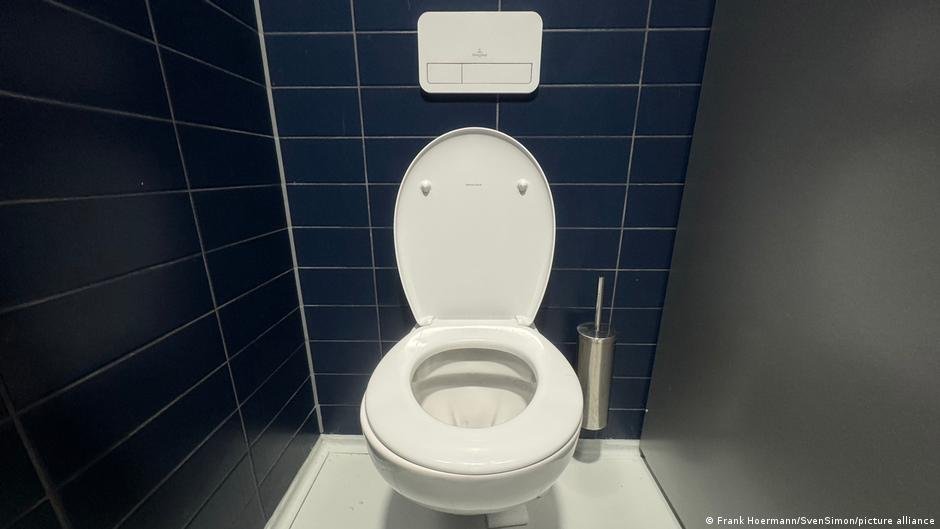
If you flush a toilet in the United States, you’re probably familiar with that signature hissing sound as a jet of water fills the toilet bowl and sucks up the contents with a dramatic gulp.
In Europe, on the other hand, the process is very different. Most have the option of a lighter or stronger flash, depending on your needs. And the water is not sucked in, it just pushes the waste down. In stark contrast, in Germany and the Netherlands, waste may be deposited on ceramic shelves directly above puddles.
All of this bathroom conversation is more than just a rude dinner table conversation. How you flush your toilet has a significant impact on your water supply. Water scarcity is becoming an increasingly urgent problem in the United States as climate change exacerbates droughts, with many communities across the country, particularly in Western states, facing water shortages.
The country’s unique siphon design once required gallons of water to create the suction effect with each flush. But in 1992, the landmark Water Efficiency Act overhauled America’s plumbing and restricted the use of water in new toilets. This saved an estimated 18.2 trillion gallons (68.9 trillion liters) over 20 years.
President Donald Trump is currently pushing to repeal this regulation. Environmental engineers argue that such a move would run counter to the actions needed to strengthen the country’s water supply.
“It took a very long time to actually change the way Americans think about water conservation even a little bit,” Samuel Sandoval Solis, a water resources expert at the University of California, Davis, told DW. He sees the proposal as a “regressive” move.
Parts of the United States are running out of water, as seen on the dry lakebed of California’s Nicasio Reservoir Image: Terry Schmitt/newscom/picture Alliance
What is Mr. Trump proposing?
The US president wants to repeal “useless water pressure standards,” calling them a “burden.”
Metin Duran, an environmental engineer at Villanova University in Pennsylvania, said the move is part of a long American tradition of opposition to environmental governance.
“Culturally, people in the United States don’t like regulation,” Duran said. “In Europe, people are more tolerant of this kind of regulation if it’s for the greater good.”
In May, the Trump administration announced a directive suspending enforcement of toilet water limits under the Water Efficiency Act of 1992. He also recommended that Congress repeal the law. That would create more lasting change than any other president.
House Republicans took up the cause and passed the colorfully named “Don’t Tamper with Appliances Act,” which would make it easier for the Department of Energy to relax energy efficiency standards. It is unlikely to pass the Senate.
President Trump has complained for years about weak toilets and showerheads and has vowed to “make showers great again” and eliminate home energy standards.
“People are flushing the toilet not once, but 10, 15 times,” he said in 2019. “People go into new buildings, new homes, and there’s no water and virtually no way to wash their hands. There’s very little water coming out of the taps.”
Engineering experts say this is an outdated claim. Restroom redesigns in the 1990s sparked a public backlash over “low flow,” but things have come a long way since then.
“If the president complains about a toilet that doesn’t flush, that’s in the past. Maybe there are some old toilets that didn’t work a long time ago. That’s possible. But today’s toilets are subject to rigorous testing,” said Ron Burke, who runs the Chicago-based nonprofit Water Efficiency Alliance.
Where current toilets are outdated
Despite this, toilets in the United States still use large amounts of water. A 1992 law required newly installed toilets to use only 1.6 gallons per flush. In Europe, this is the standard for power flushing, but many toilets across the continent also offer dual-flush options for less than 1 gallon of liquid waste per flush. Despite being a water-efficient option, dual flush has not gained much popularity in the United States.
Moreover, the old wasteful model remains prevalent across the country. More than one in five toilets still uses more than 3.5 gallons of water per flush, according to a 2019 study by industry group Plumbing Manufacturers International (PMI). If manufactured before 1980, some may use more than 5 gallons.
Berlin adapts — tackling water scarcity with innovation
To view this video, please enable JavaScript and consider upgrading to a web browser that supports HTML5 video.
PMI estimates that about 2.4 million of these so-called legacy toilets are still in use in drought-stricken California. By replacing them with more efficient models, the state could save 14.1 billion gallons of water.
With the prospect of a major drought in the future, and water shortages in the Colorado River and the nation’s two largest reservoirs about a third of their normal capacity, the state is trying to conserve water wherever possible.
“What the Trump administration is proposing is truly inconsistent with the challenges many communities across the country face in maintaining reliable and affordable water supplies,” Burke said.
Editing: Jennifer Collins, Sarah Steffen
